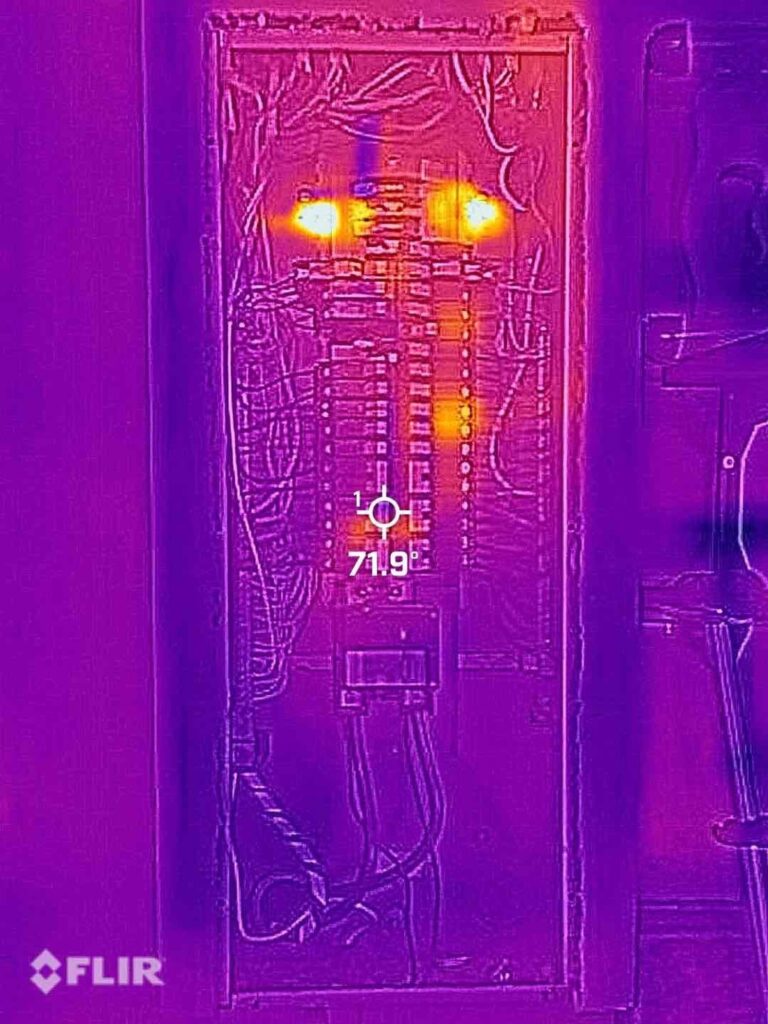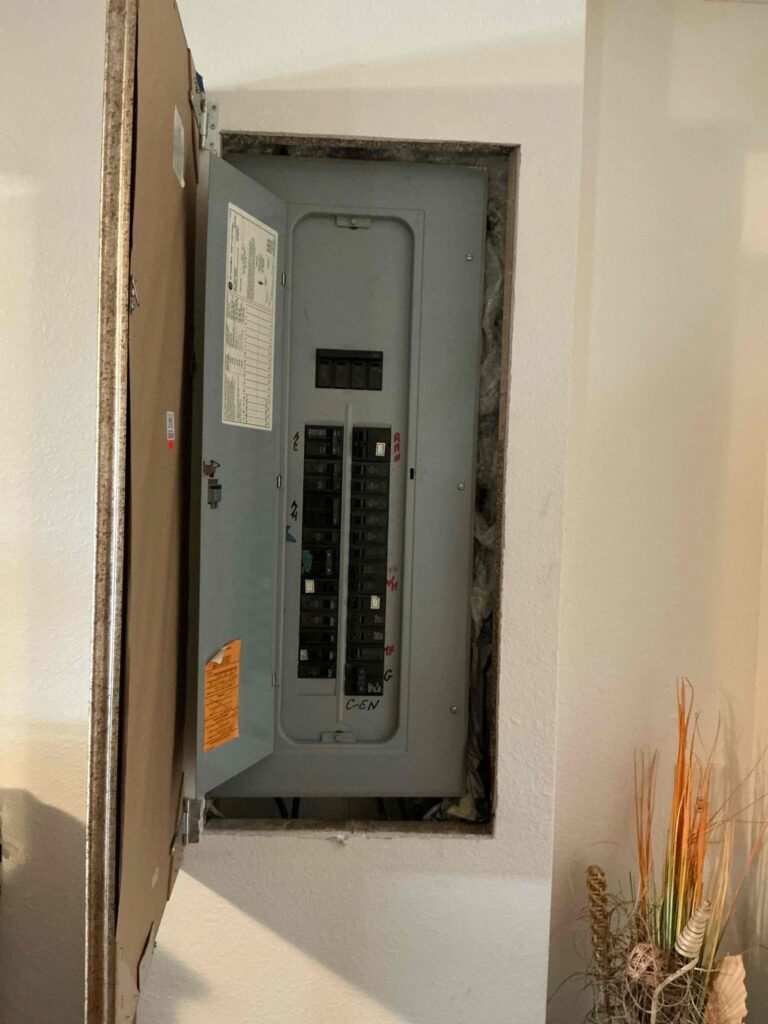
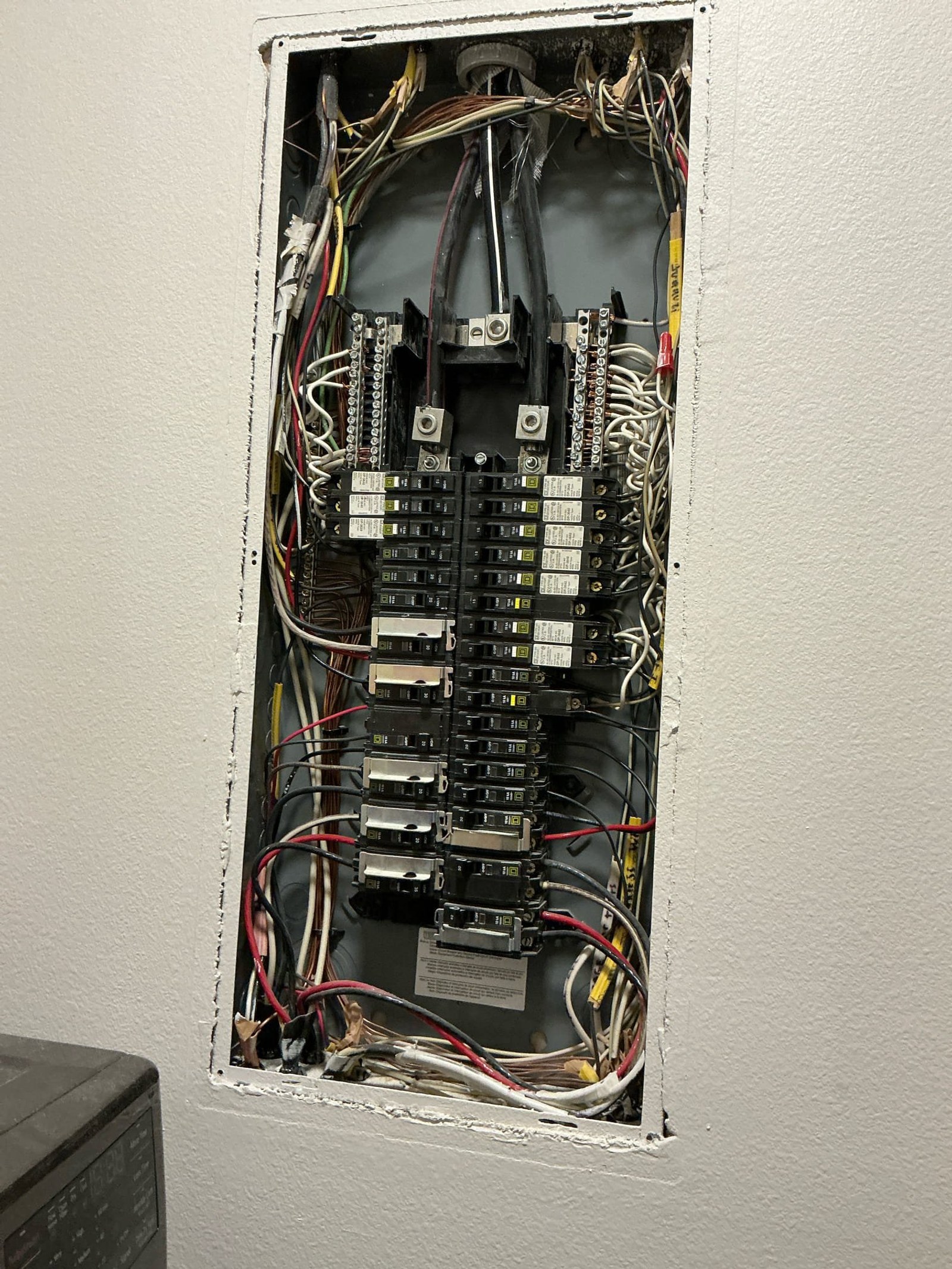
This Tampa old wiring case study walks through the real diagnosis, the fix, and the code details from a recent service call. A homeowner in Tampa, FL (33611) called us to plan a garage sub-panel with 240V service — the groundwork for a future mini-split and EV charger. During the visit, our field team discovered several conditions inside the main home that were worth addressing first, including an incomplete grounding system, backstabbed outlets and switches, and bathroom receptacles that pre-dated current GFCI requirements. This report walks through every finding and the full set of recommendations we provided.
The Problem
The original request was straightforward: bring the detached garage from a single 120V circuit — with no dedicated panel — up to the capacity needed for modern loads.
“The garage only has one outlet right now. I want to add a mini-split and eventually charge my car out there. I also noticed a strange sensation on some outlets inside the house.”
That last detail — a mild sensation on certain outlets — prompted a full visual safety inspection before we sized any new circuits.
Investigation
Our technician on-site worked through a comprehensive inspection of the existing Square D QO 150A service. Here is what the inspection turned up.
Grounding System
No ground rod was located at the meter can. Additionally, the grounding system was flagged as obsolete — meaning the electrodes and conductors in place pre-date the current NEC requirements for a complete grounding electrode system. A grounding system that doesn’t meet current code can allow stray voltage to linger on metal surfaces and equipment housings, which is consistent with the mild sensation the homeowner described on some outlets. This is a common finding in Tampa-area homes built before the late 1990s, and it’s exactly the kind of condition that a thorough inspection is designed to catch.
Backstabbed Outlets and Switches
Every outlet and switch in the home was found to be backstabbed — meaning the conductors were inserted into spring-loaded push-in terminals rather than secured under screw terminals. Backstabbing was a widely used installation shortcut through the 1990s and into the early 2000s. Over time, the spring tension in those terminals relaxes, contact resistance climbs, and the result is the kind of intermittent sensation and voltage drop the homeowner noticed. Re-devicing the entire home with properly screw-terminated connections is the right long-term fix.
GFCI Coverage
The bathroom receptacles were not GFCI-protected — a common condition in homes wired before the current NEC 210.8 requirements were in place. The inspection also flagged GFCI coverage in other required areas as needing a closer look. Additionally, no AFCI protection was present on branch circuits, which pre-dates the NEC 210.12 requirements that now apply to living areas in dwelling units.
Other Findings
The inspection identified several additional items: – Double-tapped breakers were present in the Square D QO panel — a condition where two conductors share one breaker terminal not rated for it. – Panel directory labeling was incomplete, making it difficult to identify circuits quickly. – Open splices were found, meaning wire connections existed outside of an approved enclosure. – No whole-home surge protection was present — relevant for both the existing equipment and the new loads being planned. – The weatherhead mounting, meter can condition, smoke detector coverage, and carbon monoxide detector were all flagged at the “concern” level, worth monitoring or updating. – Tamper-resistant receptacles were not installed throughout the home, which pre-dates the current NEC 406.12 requirement for all dwelling-unit receptacles.
What We Fixed
On this visit, our team focused on investigation and delivered a complete set of documented options for the homeowner to review. No remediation work was performed during this call — the homeowner received a prioritized plan covering:
1. Grounding electrode system upgrade — installing a new ground rod at the meter can and bringing the grounding electrode conductor sizing and connections up to NEC 250.50/250.52 standards. 2. Whole-home surge protection — installing a Type 2 surge protective device at the Square D QO panel per NEC 230.67, plus a dedicated SPD on the air conditioning equipment per NEC 285.25. With a future EV charger and mini-split on the way, whole-home surge protection becomes even more valuable. 3. GFCI protection — replacing bathroom receptacles (and any other required-area receptacles) with GFCI-protected outlets per NEC 210.8. 4. Re-devicing outlets and switches — removing all backstabbed devices and replacing them with properly screw-terminated receptacles and switches. Tamper-resistant receptacles would be installed per NEC 406.12. 5. Panel corrections — resolving the double-tapped breakers, completing the panel directory label per NEC 408.4, and closing open splices. 6. Garage sub-panel with 240V service — once the main home’s system is in good shape, running a new feeder to the detached garage with a dedicated sub-panel sized for a mini-split and a Level 2 EV charger per NEC 625.41.
Why All This Old Wiring Matters for Tampa Homeowners
For the family in this Tampa home, the garage project was the starting point — but the inspection made clear that the home’s electrical system had several areas that had simply aged past what current standards recommend. None of these findings are unusual for a home of this era. They reflect how installation practices and code requirements have evolved over the decades.
Additionally, addressing these items now means the household gets more than just a working garage circuit. A properly grounded system, screw-terminated devices, and GFCI-protected bathrooms all contribute to the kind of reliability that lets a family go about their morning routine, their weekends, and their evenings without a second thought about what’s happening behind the walls.
Furthermore, adding whole-home surge protection before the new 240V loads are connected is simply good planning. The future mini-split, EV charger, and every other appliance in the home — the refrigerator, the TV, the home office — all benefit from a Type 2 SPD sitting quietly at the panel and smoothing out every voltage spike that comes in from the grid. Every storm season in Tampa, that protection earns its place.
In short, what started as a garage upgrade conversation became a clear roadmap for bringing the whole home up to current standards — so everything keeps running the way the family expects it to, now and for years ahead. Learn more about electrical system fundamentals from the Electrical Safety Foundation International (ESFI).
Code Compliance Cited in This Job
Every fix above maps to a specific section of NEC 2023. Each card links to NFPA’s public NEC index.
Grounding Electrode System
NEC 250.50 requires that all grounding electrodes present at a structure — including ground rods, metal water pipe, and concrete-encased electrodes — be bonded together into a single grounding electrode system. On this Tampa property, no ground rod was found at the meter can, and the existing grounding system was identified as obsolete, meaning it does not meet current code requirements. Bringing the grounding electrode system up to NEC 250.50 standards is the first recommended step before adding any new 240V loads. NFPA reference ›
GFCI Protection for Personnel
NEC 210.8 requires GFCI protection on receptacles in bathrooms, kitchens, garages, outdoors, and other specified locations in dwelling units. The bathroom receptacles in this Tampa home were not GFCI-protected — a condition consistent with homes wired before GFCI requirements expanded to cover these areas. Replacing those receptacles with GFCI-protected outlets brings the home in line with current code. NFPA reference ›
AFCI Protection
NEC 210.12 requires arc-fault circuit-interrupter protection on branch circuits supplying outlets in virtually all living areas of a dwelling unit. The inspection confirmed no AFCI protection was present in this home, which pre-dates the current requirement. Adding AFCI-rated breakers to the Square D QO panel is included in the recommended upgrade path. NFPA reference ›
Surge Protective Device at Service
NEC 230.67 requires a listed surge protective device at the service equipment of a dwelling unit. No whole-home surge protection was present at this 150A Square D QO service. With new 240V loads — including an EV charger and mini-split — planned for the garage, installing a Type 2 SPD at the panel is both a code requirement and a practical step to protect the home’s electronics and appliances. NFPA reference ›
Circuit Directory and Panel Labeling
NEC 408.4 requires every circuit in a panelboard to be legibly identified as to its purpose or use. The panel directory in this home was incomplete, making it difficult to identify which breaker controls which circuit. Completing the directory is a straightforward but important step — especially before adding new circuits for garage equipment. NFPA reference ›
Tamper-Resistant Receptacles
NEC 406.12 requires tamper-resistant receptacles throughout all areas of a dwelling unit. The inspection found that the receptacles in this Tampa home were not tamper-resistant — consistent with homes wired before this requirement was adopted. When re-devicing is performed to correct the backstabbed connections, installing tamper-resistant receptacles fulfills this current-code requirement at the same time. NFPA reference ›
Common Questions
Questions homeowners ask after seeing this kind of work.
Can I add a garage sub-panel before fixing issues found inside the main home?
Technically, a sub-panel can be installed as a separate scope of work — but our team recommends resolving grounding system deficiencies first. A garage sub-panel fed from a service with an incomplete grounding electrode system simply extends the same condition to the new structure. Addressing the grounding, double-tapped breakers, and open splices first gives the new garage circuits a solid foundation to build on. If you’d like a clear sequence and timeline, schedule a planning consultation and we’ll walk through the order of operations with you.
What size sub-panel do I need for a mini-split and an EV charger in a detached garage?
A 60A or 100A sub-panel is the most common choice for this combination of loads. A standard mini-split typically draws 15–30A at 240V depending on tonnage, and a Level 2 EV charger requires a dedicated 50A or 60A circuit per NEC 625.41. A 100A sub-panel gives you both loads plus room to grow — a workbench circuit, lighting, and anything else the garage might need down the road. Book a load-calculation visit and we’ll size the feeder and panel to match your specific equipment.
How often should I have my home’s electrical system inspected?
A yearly inspection is a good baseline for most homeowners. Homes built before 1990 — or homes that have been through recent storm seasons — can benefit from inspections more often, since older wiring systems and weather-related stress can create conditions that develop gradually. An annual check keeps you current on any changes in code and catches small items before they become larger projects. Schedule your next inspection online to stay ahead of the curve.
Are backstabbed outlets something I should fix right away?
Backstabbed connections were standard practice for many years, so if your home has them, that’s simply a reflection of when it was built — not a sign of poor workmanship at the time. That said, over the years the spring tension in push-in terminals relaxes, contact resistance increases, and you may notice flickering, warm outlets, or a mild sensation on certain devices. Re-devicing with screw-terminated connections is a straightforward update that improves the reliability of every outlet and switch in the home. Book a re-device estimate and we can give you a clear picture of what’s involved.
Do I need surge protection at both the panel and on my AC unit?
For the best coverage, yes. A whole-home Type 2 SPD at the main panel — required under NEC 230.67 for new and upgraded services — protects the entire electrical system from surges entering through the utility feed. A dedicated SPD on the air conditioning equipment adds a second layer of protection specifically for the compressor and control board, which are among the most expensive components in the home to replace after a voltage event. With a new EV charger and mini-split also in your plans, that two-layer approach covers all your major investments. Schedule online to discuss the right devices for your setup.
Want to see more real jobs like this one? Browse our completed case studies or explore our services.