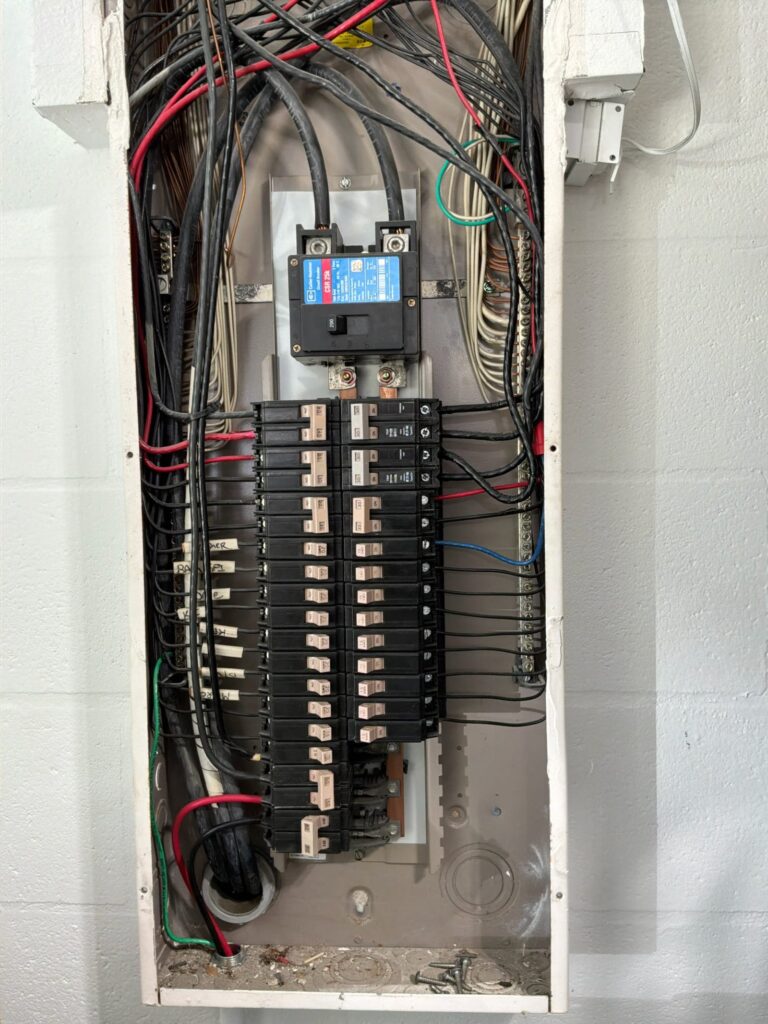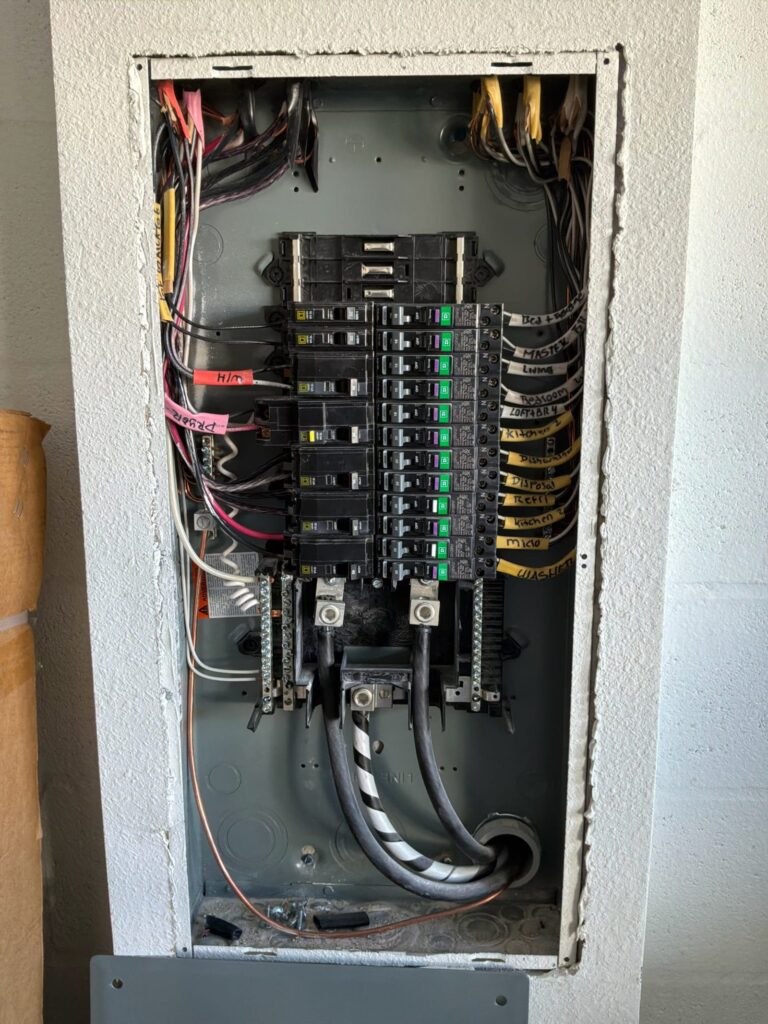
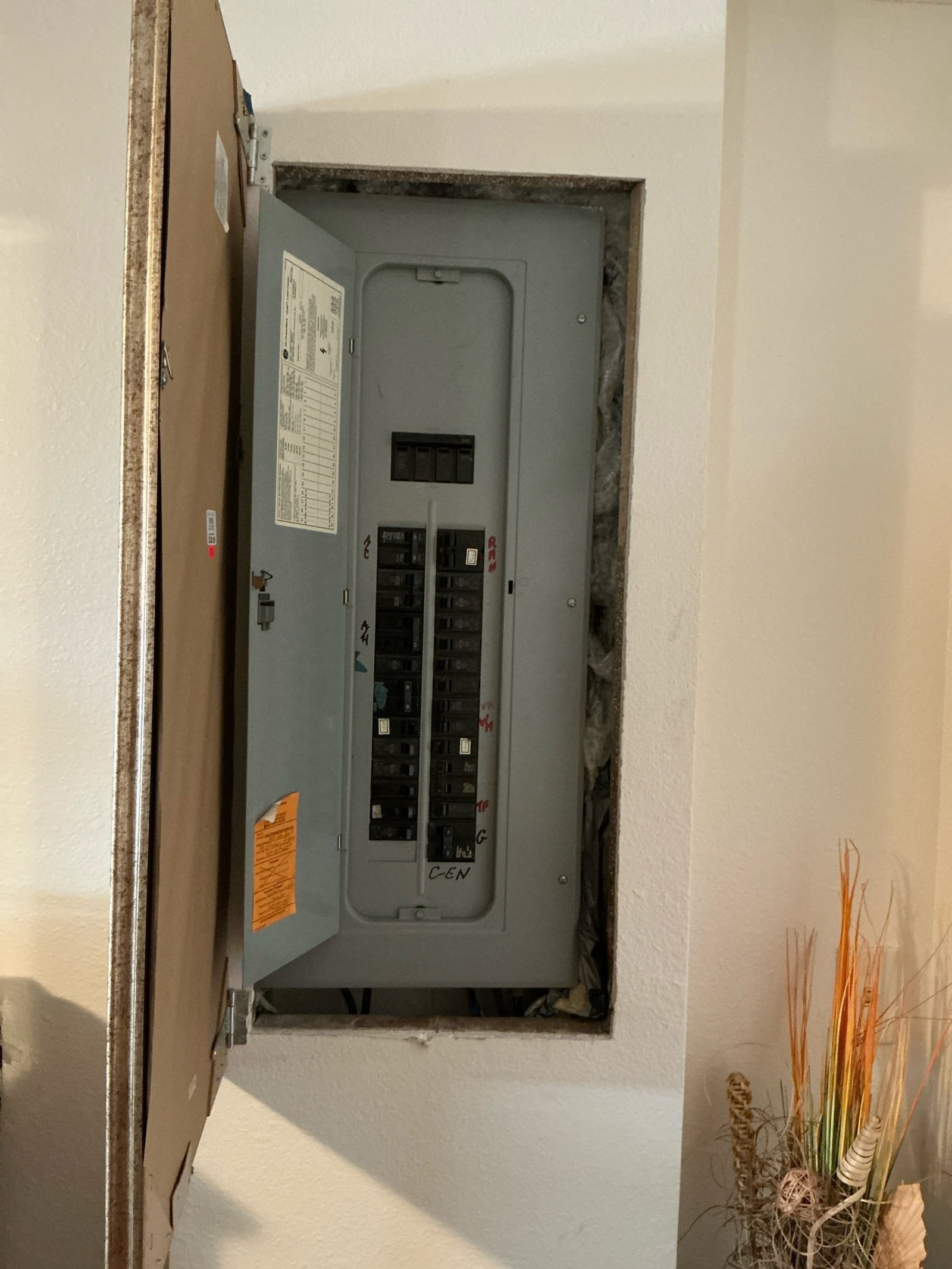
This Pinellas Park panel upgrade case study walks through the real diagnosis, the fix, and the code details from a recent service call. A homeowner in Pinellas Park, FL contacted Thomas Edison Electric to prepare their home’s electrical system for an upcoming EV charger installation. While the customer hadn’t yet purchased their charging station, they wanted to ensure their electrical infrastructure could safely support the added load. In fact, our technician our field team discovered the existing panel needed several upgrades to meet current NEC standards and handle the increased electrical demand.
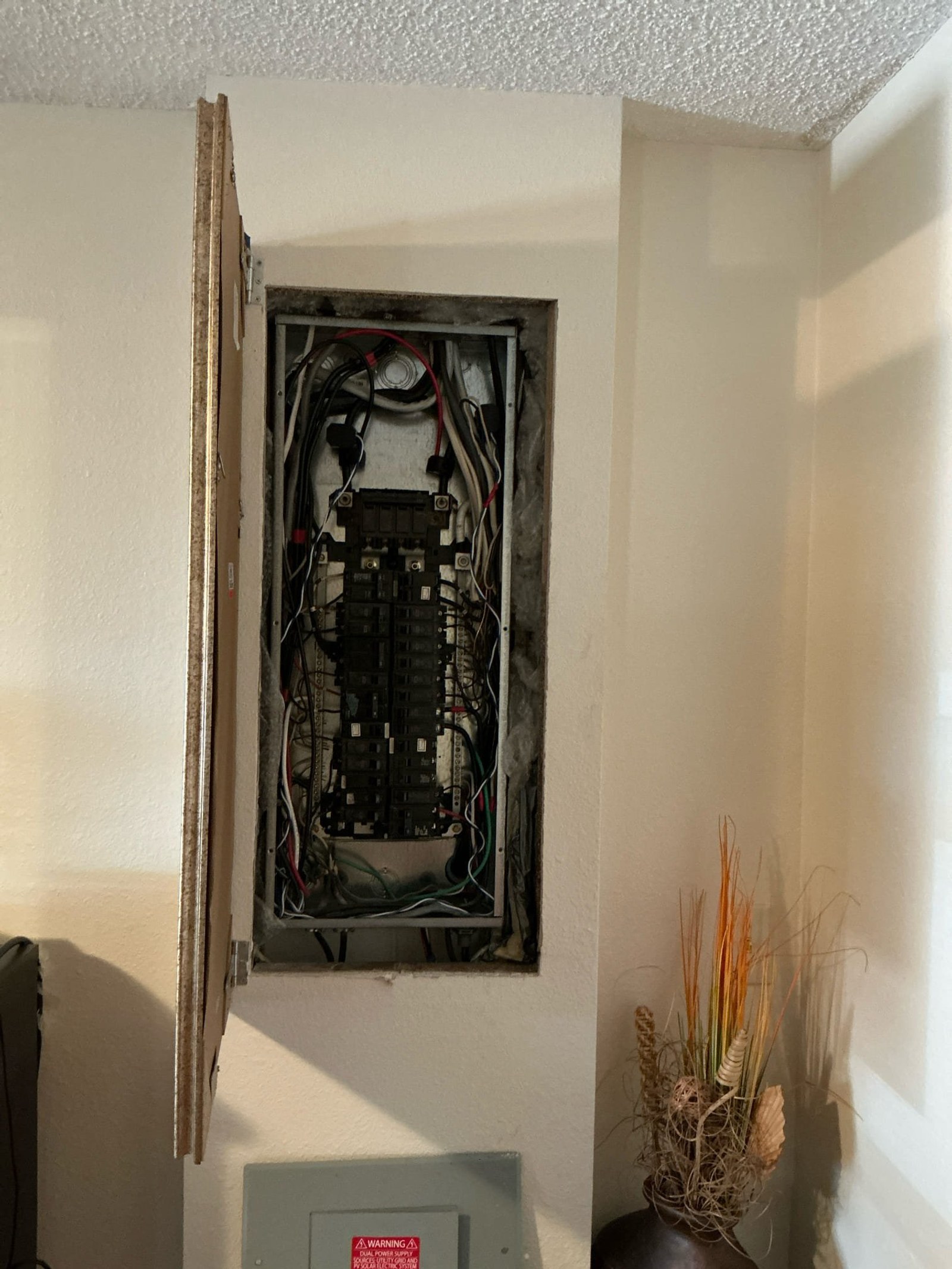
The Problem
The homeowner was planning ahead for electric vehicle ownership and wanted to avoid any electrical surprises down the road. They requested a comprehensive evaluation to determine what upgrades would be needed before installing an EV charging station.
“I’m getting an electric car soon and want to make sure my house is ready. I’d rather do this right the first time.”
Investigation
Our field team found that while the existing electrical panel was functional, several areas needed attention to safely accommodate EV charging. To start, the panel lacked adequate surge protection for high-amperage loads, and some of the existing breakers were approaching their service life. Additionally, the home’s smoke detection system didn’t meet current interconnected requirements, and a few outlets and switches showed signs of normal wear.
The investigation revealed typical conditions for homes of this era. Everything was working, but modern electrical demands call for more robust protection than was standard when the home was originally wired.
What We Fixed
Whole-House Surge Protection Installation
We installed a PSP Vortex 120 kA whole-house surge protector to shield the home’s electrical system from power surges that could affect sensitive EV charging equipment. This commercial-grade protection handles the kind of electrical stress that comes with regular high-amperage charging cycles.
Circuit Breaker Upgrades for Future EV
Next, we upgraded several circuit breakers including a new Square D HOM240 40-amp double-pole breaker for the future EV circuit and a GE THQP230 30-amp breaker for another high-load circuit. We also replaced a Square D HOM115 15-amp single-pole breaker that was showing contact wear.
Interconnected Smoke and CO Detector System
For enhanced safety, we installed five interconnected smart smoke and carbon monoxide detectors with 10-year sealed lithium batteries throughout the home. These units communicate wirelessly, so when one detects smoke or CO, all units sound simultaneously. As a result, the system provides better early warning coverage.
Finally, we addressed some routine maintenance items: installing a tamper-resistant 15-amp receptacle in a remodeling box, replacing a decorator-style switch, and adding a cord cap to an existing appliance cord.
Why This Pinellas Park Panel Upgrade Matters for Homeowners
EV charging represents one of the largest electrical loads most homes will ever see. It’s comparable to running a clothes dryer continuously for hours. However, proper preparation ensures safe, reliable charging without straining your electrical system.
Surge protection becomes critical with EV charging because the equipment contains sensitive electronics that can be costly to replace. Moreover, modern interconnected smoke detection provides significantly better protection than older standalone units, especially in larger homes where a fire in one area might not immediately trigger detectors in sleeping areas.
Planning electrical upgrades before purchasing an EV charger also gives you more options for charger placement and charging speed, rather than being limited by your existing electrical capacity.
Common Questions
Questions homeowners ask after seeing this kind of work.
What size circuit do I need for an EV charger?
Most Level 2 EV chargers need a 240V circuit with 40-50 amp capacity. Some higher-output chargers (like Tesla Wall Connector) can use up to 60 amps. We typically install a 40-amp double-pole breaker like the Square D HOM240 we used in this Pinellas Park job, which works for most residential charging stations.
Should I prep my panel before buying an EV?
Yes – understanding your panel’s capacity before purchasing helps you choose the right charger and avoid unexpected electrical upgrade costs. Our Pinellas Park customer wanted exactly this kind of pre-purchase clarity. EV charger prep evaluations typically take 30-45 minutes.
Why install surge protection before an EV charger?
EV chargers contain sensitive electronics worth thousands of dollars, and they’re connected to your home’s electrical system 24/7. Whole-house surge protection like the PSP Vortex 120 kA we installed shields the charger (and everything else in your home) from utility surges and lightning-induced spikes.
Will an EV charger overload my electrical panel?
It depends on your existing panel capacity and current loads. EV charging draws power similar to running a clothes dryer continuously, so older 100-amp panels may need an upgrade. A load calculation during the pre-install assessment determines whether you need a panel upgrade first.
How long does EV charger prep work take?
The pre-installation work in this Pinellas Park home (panel changes, surge protection, breaker upgrades, smoke detector modernization) took about a full day. Actual EV charger installation after prep is typically a half-day job once the homeowner selects their charging equipment.