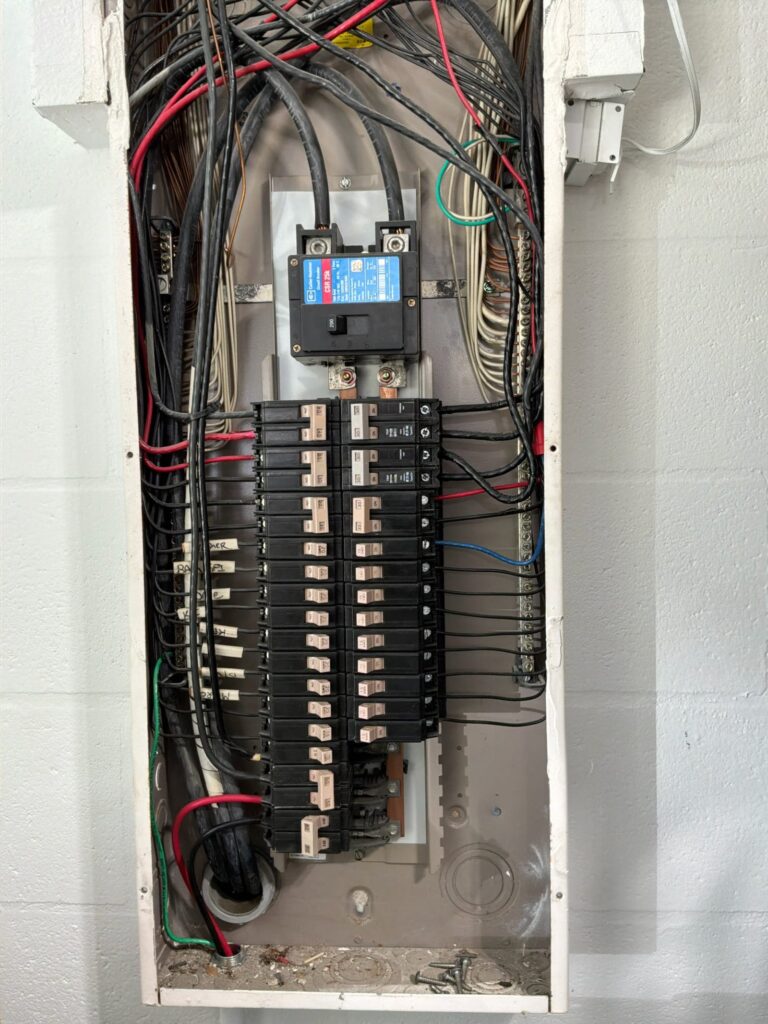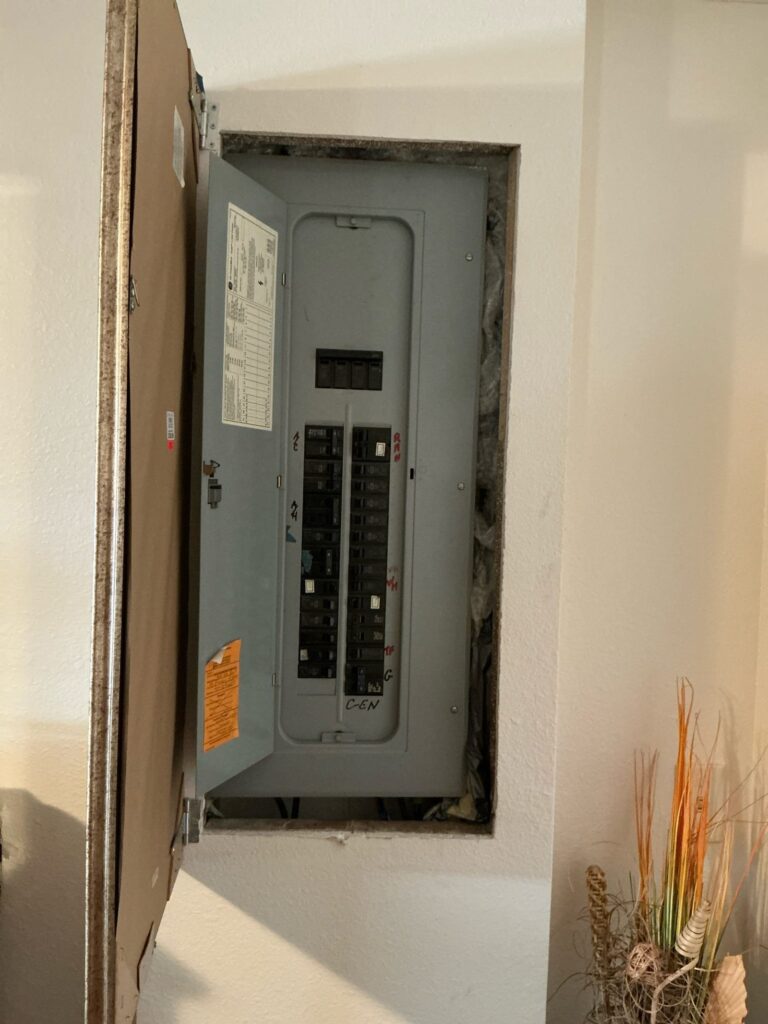
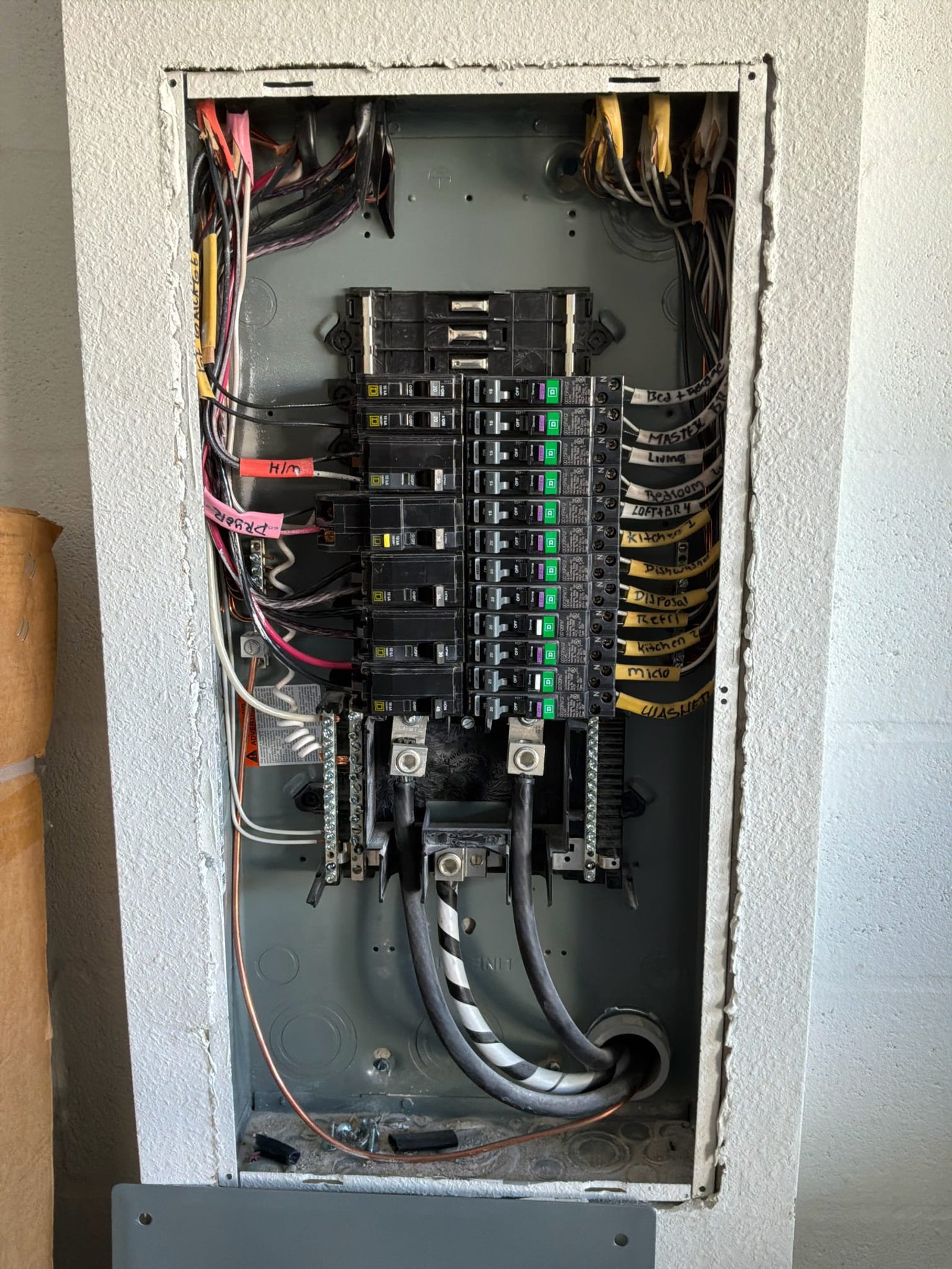
This Spring Hill EV charging case study walks through the real diagnosis, the fix, and the code details from a recent service call. A homeowner in Spring Hill, FL called us to install a universal EV charger in the garage—a straightforward request that turned into a comprehensive electrical modernization. When our licensed electrician arrived to plan the installation, the investigation revealed the home’s 125-amp Sylvania panel and overall electrical infrastructure needed attention before safely supporting the additional load of daily EV charging.
The Problem
The homeowner wanted to charge their electric vehicle at home. They had picked out a universal Level 2 charger and were ready to go. The garage had space, the breaker panel was accessible, and the project felt simple.
What they didn’t know: their panel was already near capacity, and several areas of the home predated current safety code.
Investigation
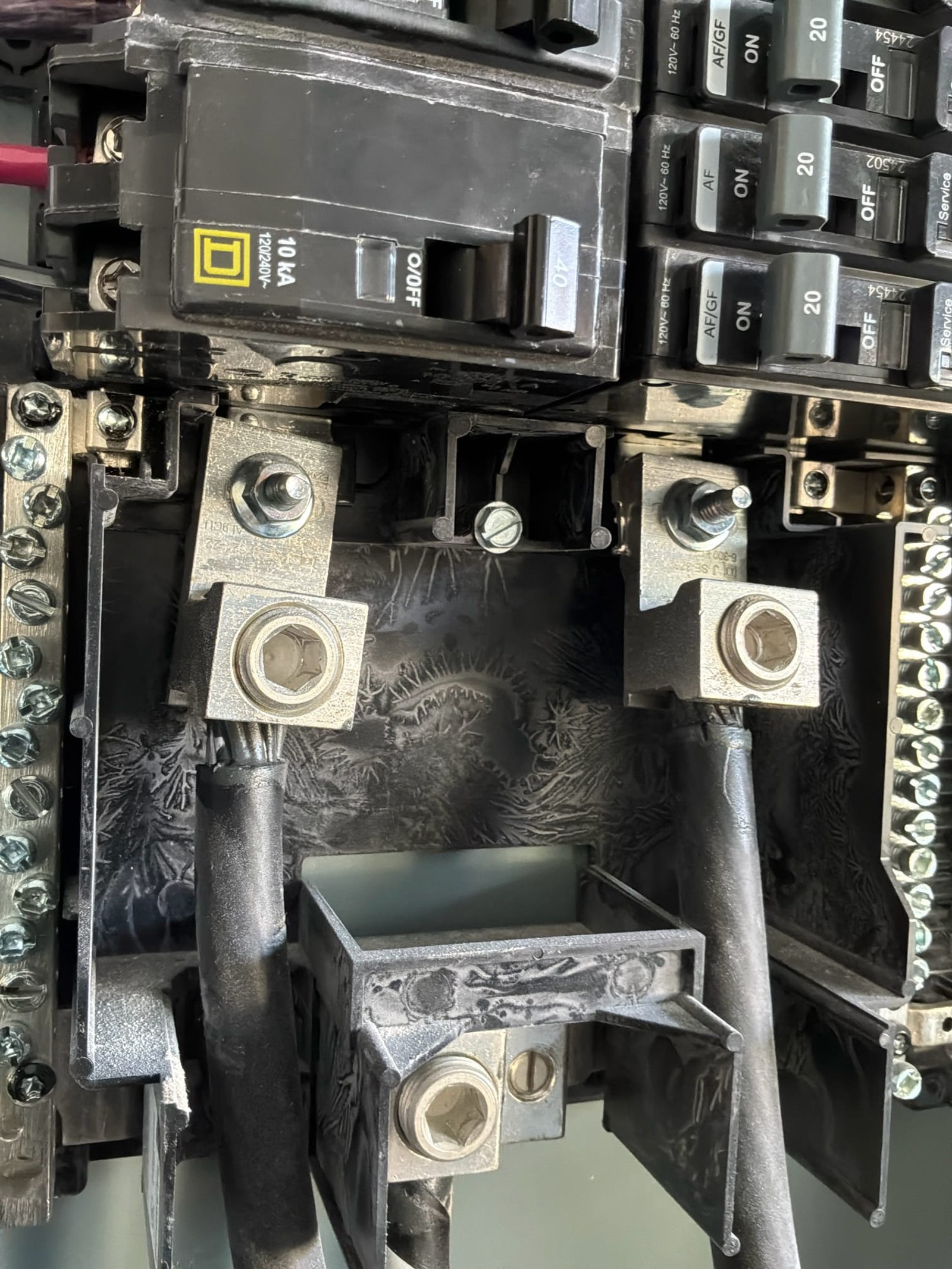
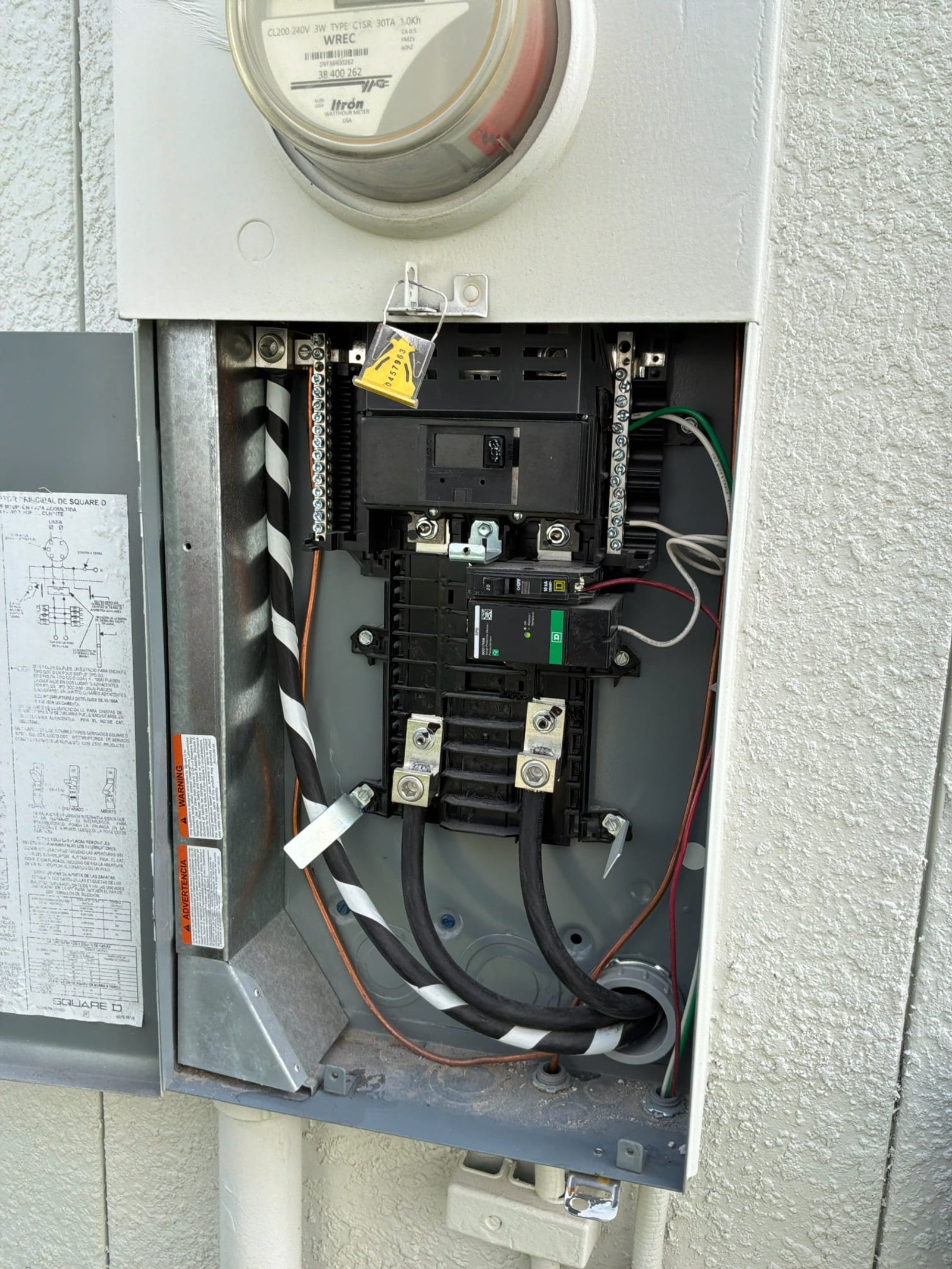
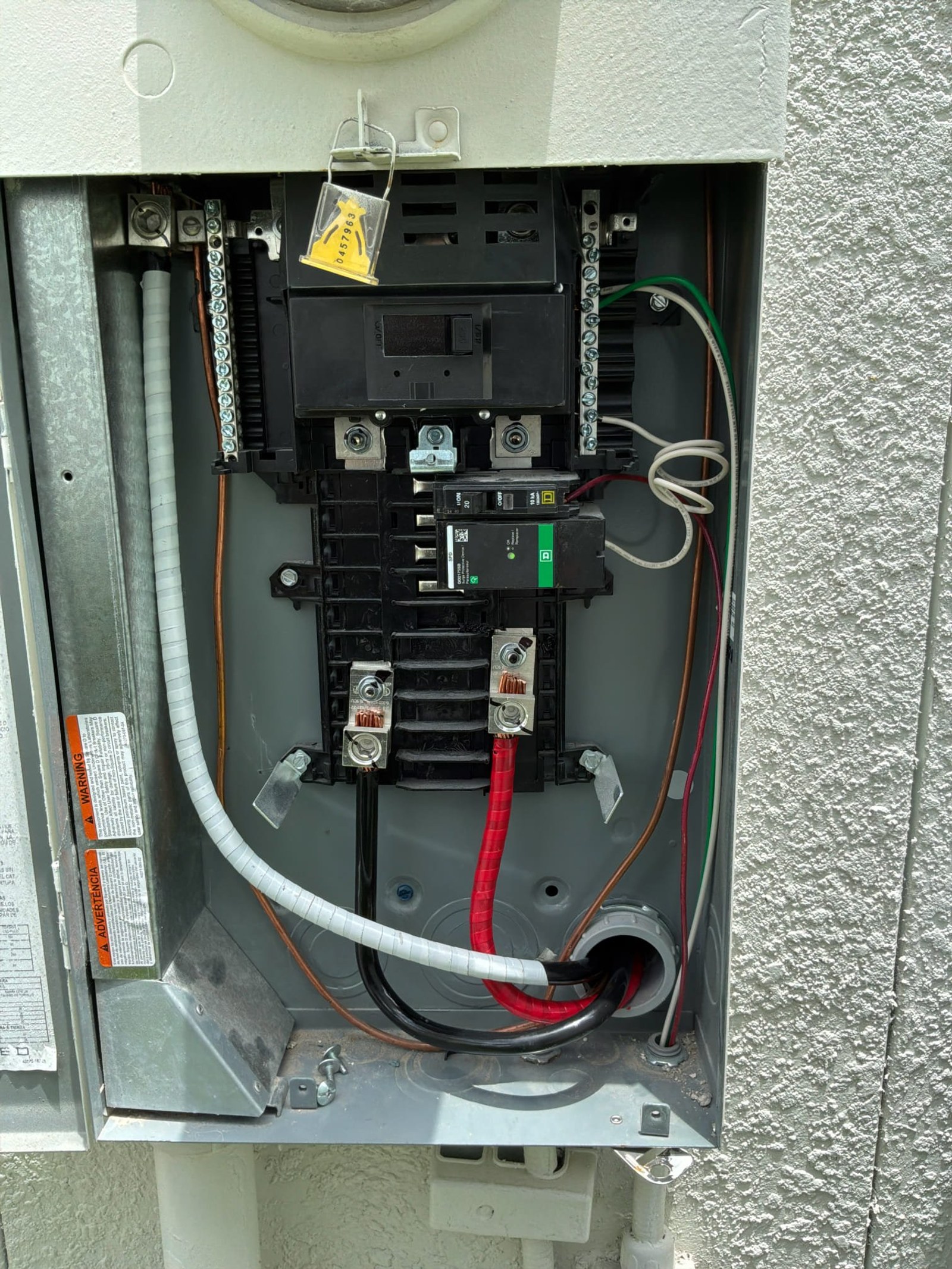
Our technician on-site began with a load calculation—the required first step for any EV charger installation. The math showed the existing 125-amp Sylvania panel couldn’t safely carry the additional 40-50 amps an EV charger draws during a charge cycle, especially when the air conditioner, water heater, and other major appliances were running simultaneously.
Meanwhile, the visual safety inspection turned up several findings common in homes of this vintage:
- The outdoor AC disconnect showed significant rust—years of Florida weather had taken their toll on the enclosure
- The laundry room washing machine outlet lacked GFCI protection, a requirement under current code for all 120-volt receptacles in areas subject to moisture
- The home had no whole-home surge protection
- Smoke detectors were more than a decade old, past their rated service life
- Many receptacles and switches throughout the home used backstabbed connections—a time-saving method common before roughly 2005 that relies on spring tension rather than screw terminals
- The panel itself had rust on the busbar, indicating moisture intrusion over time
- Some breakers were not properly listed for the Sylvania panel—a compatibility concern that can affect long-term reliability
Additionally, the homeowner mentioned they had a portable generator they’d used during past outages. However, the home had no transfer switch or load-shed device, meaning the generator couldn’t safely back-feed the panel.
What We Fixed
After walking through the findings and the available options, the homeowner chose a comprehensive upgrade path that would not only support the EV charger but also bring the home’s electrical system in line with NEC 2023 standards.
First, we replaced the 125-amp Sylvania panel with a new 200-amp Square D QOM main breaker panel. The increased capacity gave the home plenty of headroom for the EV charger, future appliance upgrades, and typical load growth. We ran 10 feet of aluminum SEU 4/0-4/0-2/0 service entrance cable from the meter to the new panel, properly strapped and secured. Inside the new panel, we installed a Square D QO250 50-amp two-pole breaker dedicated to the EV charger circuit, then ran 15 feet of 6/3 Romex from the breaker to the garage location where the charger would mount.
Next, we upgraded the laundry room washing machine outlet to GFCI protection, bringing that circuit into compliance with NEC 210.8 requirements for receptacles in areas where water is present. We replaced the rusted outdoor AC disconnect with a new weather-rated enclosure. Throughout the home, we re-terminated backstabbed connections at receptacles and switches, converting them to screw-terminal connections that maintain consistent contact pressure over time.
Finally, we coordinated the permit with the local authority and scheduled the inspection. The entire project was completed over two days, with minimal disruption to the household routine.
Why This Spring Hill EV Charging Upgrade Matters for Homeowners
EV charger installations often reveal the hidden story of a home’s electrical system. Panels installed in the 1980s and 1990s were typically sized for the loads common at the time—central AC, electric water heater, range, dryer. Today’s homes add induction cooktops, multiple HVAC zones, whole-home humidifiers, pool pumps, and now EV chargers. A load calculation tells you whether your panel has the capacity to handle it all safely, or whether it’s time to modernize.
Backstabbed connections were a shortcut that saved installers time decades ago. Over the years, the spring tension in the backstab clip eases, contact resistance climbs, and you get the kind of intermittent behavior—a switch that feels loose, an outlet that works only when you wiggle the plug—that frustrates families during everyday routines. Replacing them with screw-terminated connections is a durable fix that lasts.
GFCI protection in laundry rooms, bathrooms, kitchens, and outdoor areas is required under current code because these spaces involve both electricity and moisture. Homes built before these requirements were phased in over multiple code cycles are grandfathered—perfectly legal as installed, but an opportunity to add an extra layer of protection when you’re already doing electrical work. With GFCI outlets in place, the home now meets NEC 2023 recommendations, and the family has one less thing to think about during laundry day or storm cleanup.
Whole-home surge protection and smoke detector replacement weren’t strictly required for the EV charger project, but both are worthwhile updates that keep the home running smoothly season after season. If you’re opening the panel anyway, it’s the right time to consider them. Schedule a safety check to see what makes sense for your home, or call us at (727) 447-5845.
Code Compliance Cited in This Job
Every fix above maps to a specific section of NEC 2023. Each card links to NFPA’s public NEC index.
GFCI Protection
NEC 210.8 requires GFCI protection for 120-volt receptacles in areas subject to moisture, including laundry rooms, bathrooms, kitchens, garages, and outdoor locations. The washing machine outlet in this Spring Hill home predated this requirement. Upgrading it to GFCI brings the circuit into compliance with current code and adds a layer of protection that wasn’t standard when the home was originally wired. NFPA reference ›
Electric Vehicle Charging System Equipment Connection
NEC 625.41 outlines the requirements for overcurrent protection and conductor sizing for EV charging equipment. The 50-amp two-pole breaker and 6 AWG circuit we installed are sized to handle the continuous load of a Level 2 charger per this section, with proper ampacity for safe, reliable charging night after night. NFPA reference ›
Load Calculation
NEC 220.12 governs the calculation of general lighting and receptacle loads, and by extension the overall load analysis required before adding major appliances like EV chargers. In this case, the load calculation revealed the existing 125-amp panel was near capacity. Upgrading to 200 amps gave the home the headroom it needed for the charger plus future growth. NFPA reference ›
Electrical Connections
NEC 110.14 requires that all electrical connections be made in a manner that ensures a good, permanent contact. Backstabbed connections—common in older homes—rely on spring tension that degrades over time. Re-terminating these connections with screw terminals ensures reliable contact pressure and long-term performance, consistent with this section’s intent. NFPA reference ›
Circuit Directory or Identification
NEC 408.4 requires every circuit in a panel to be clearly labeled with its purpose. The new Square D panel we installed includes a complete circuit directory, making it easy for homeowners and future electricians to identify each circuit—from the new EV charger to the kitchen, bedrooms, and HVAC equipment. NFPA reference ›
Common Questions
Questions homeowners ask after seeing this kind of work.
Can I install an EV charger without upgrading my electrical panel?
It depends on your home’s current load and panel capacity. A load calculation—required by code for EV charger installations—tells you whether your existing panel can handle the additional 40-50 amps an EV charger draws. Many homes built before 2000 have 100- or 125-amp panels that are already near capacity once you account for AC, water heater, range, and dryer. If the math shows you’re close to the limit, a panel upgrade gives you the headroom you need for safe, reliable charging every night. Our team can run a load calculation and walk you through the options, usually the same day.
What does a load calculation involve?
A load calculation adds up all the electrical loads in your home—lighting, receptacles, major appliances, HVAC equipment, and any new loads you want to add—then compares that total to your panel’s rated capacity. NEC 220 provides the formulas and demand factors. The calculation tells you whether your panel can safely handle the additional load, or whether it’s time to upgrade. For EV charger installations, it’s a required first step. If you’re planning any major electrical addition, it’s worth having a licensed electrician take a look before you start.
How often should I have my electrical system inspected?
We recommend a visual safety inspection once a year for most homes, and more often if your home was built before 1990 or if you’ve weathered recent storms. An annual check catches small issues—a loose connection, a breaker that’s warmed from years of cycling, an outlet that’s stopped gripping plugs firmly—before they become bigger problems. Homes with older panels, aluminum wiring, or backstabbed connections benefit especially from regular inspection. If it’s been more than a year since your last check, schedule an inspection online or call us at (727) 447-5845.
What are backstabbed connections, and why do they matter?
Backstabbed connections are a wiring method where the conductor is pushed into a spring-loaded hole on the back of a receptacle or switch, rather than wrapped around a screw terminal. It was a common shortcut in homes wired before about 2005 because it saved time. Over the years, the spring tension eases, contact resistance climbs, and you get intermittent behavior—a switch that feels loose, an outlet that works only when you wiggle the plug. Re-terminating with screw terminals fixes the problem permanently. If you’re noticing flickering lights or outlets that don’t grip plugs well, it’s worth having our team take a look.
Do I need a permit to install an EV charger in Florida?
Yes. In Florida, any work that involves adding a new circuit or modifying a panel requires a permit and inspection by the local authority having jurisdiction. The permit process ensures the work meets NEC requirements and local amendments. We handle the permit coordination as part of the installation—pulling the permit, scheduling the inspection, and addressing any notes from the inspector. It’s one less thing for you to manage, and it keeps the project on track. Ready to get started? Book your EV charger consultation online or call (727) 447-5845.
Want to see more real jobs like this one? Browse our completed case studies or explore our services.