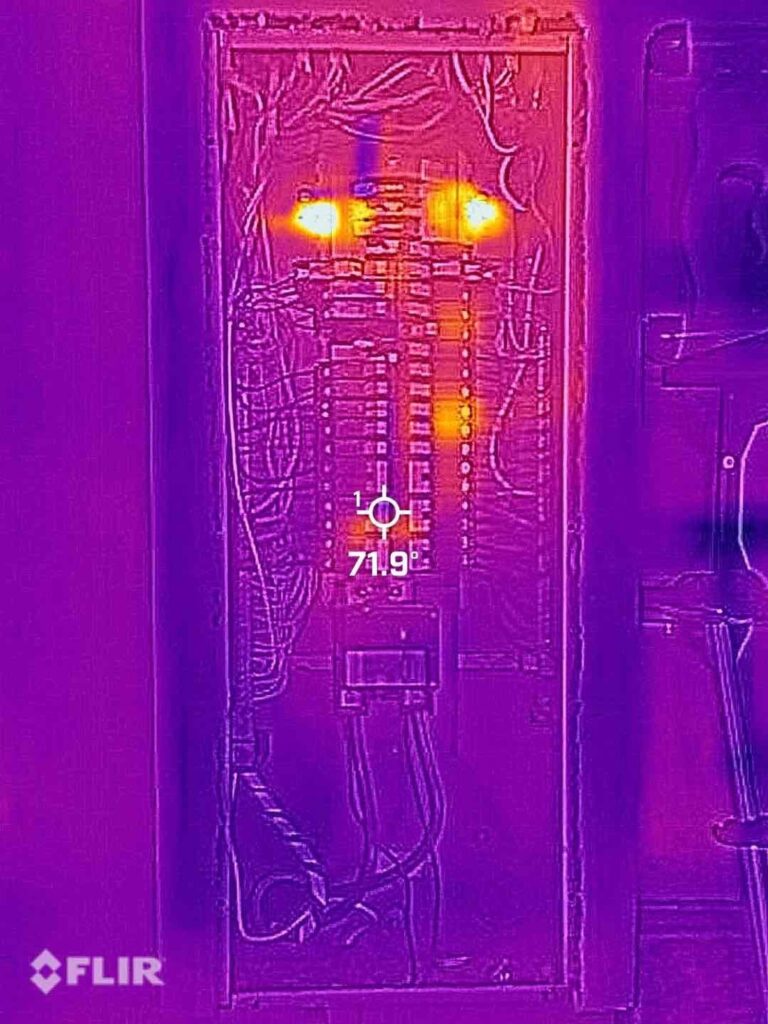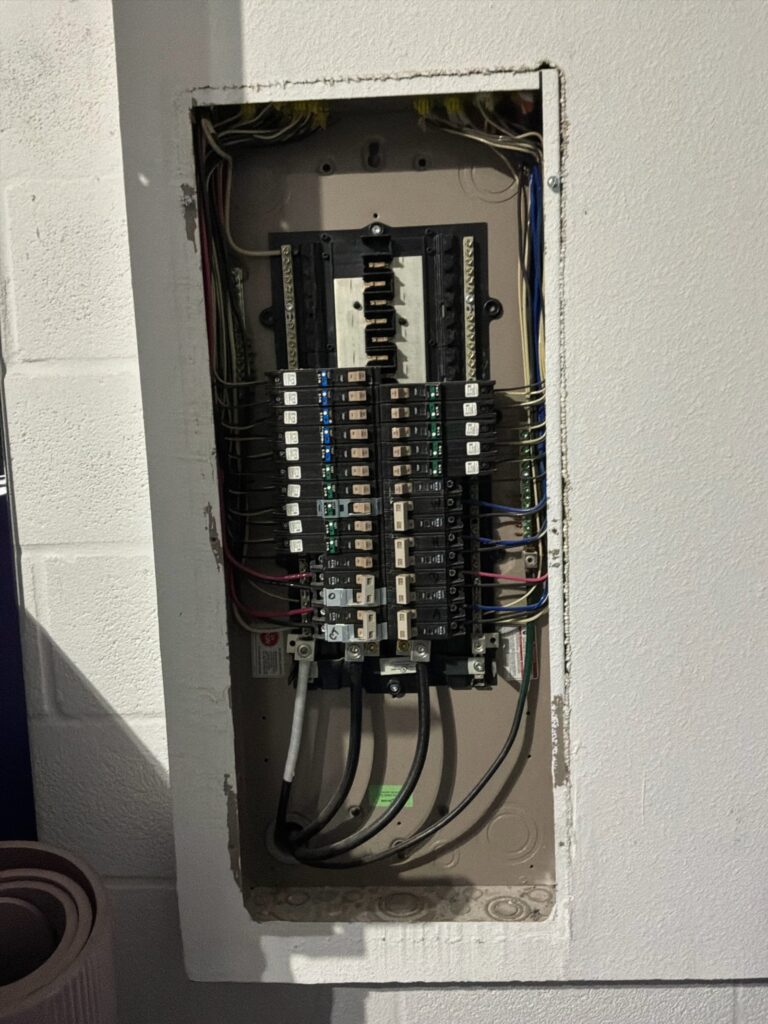
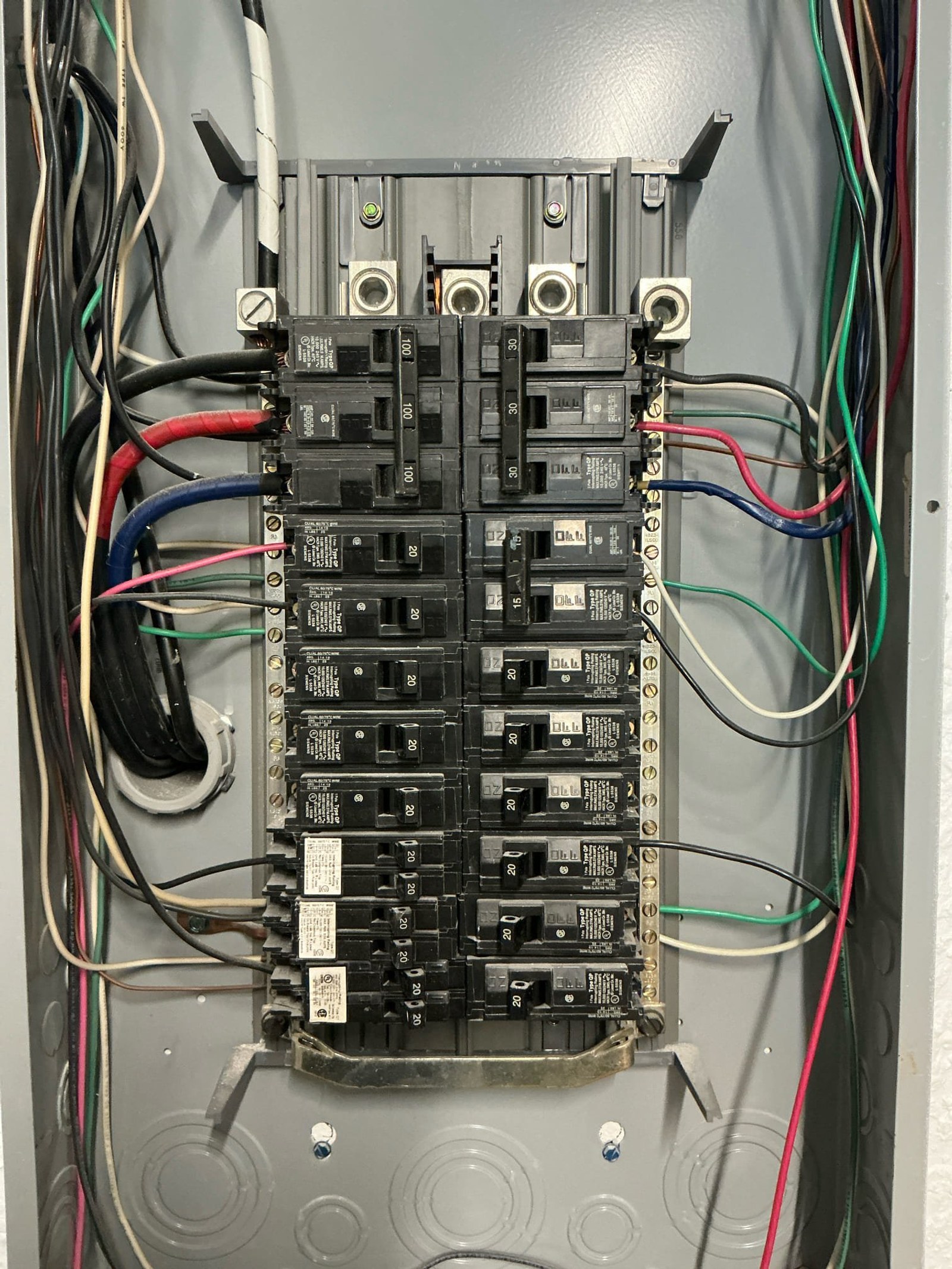
A homeowner in Largo, FL contacted Thomas Edison Electric for installation of fire exit signs, an outlet, and LED lighting. However, during our comprehensive safety inspection, we discovered several opportunities to modernize the home’s electrical system and bring it up to current NEC 2023 standards. Our team installed a PSP Vortex whole-house surge protector, five smart smoke/CO detectors, updated breakers, and addressed backstabbed connections throughout the home.
The Problem
“Client would like to install fire exit signs, outlet, and LED light”
What started as a straightforward installation request became an opportunity for a comprehensive safety upgrade when our inspection revealed multiple areas where the home’s electrical system predated current code requirements.
Investigation
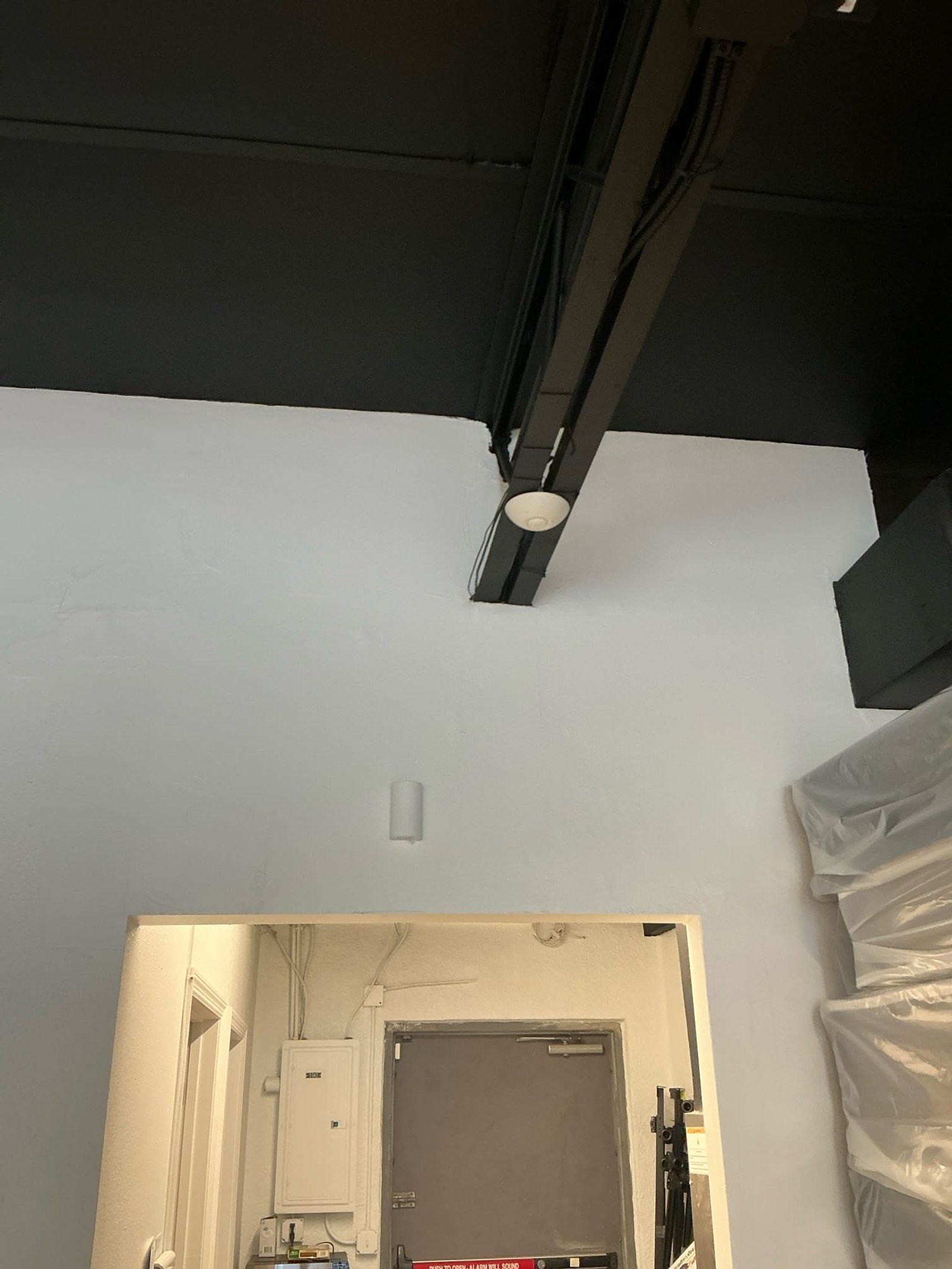
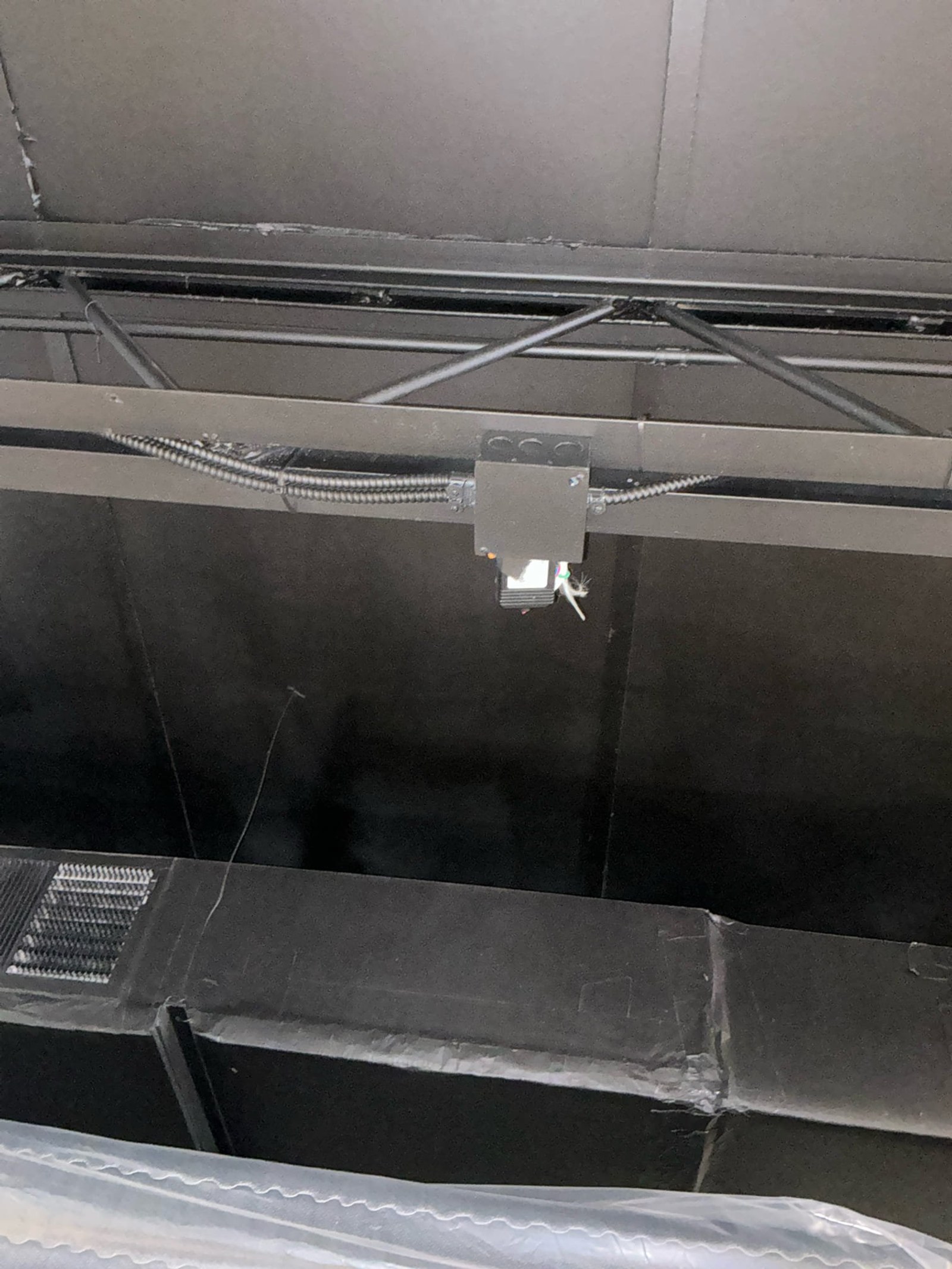
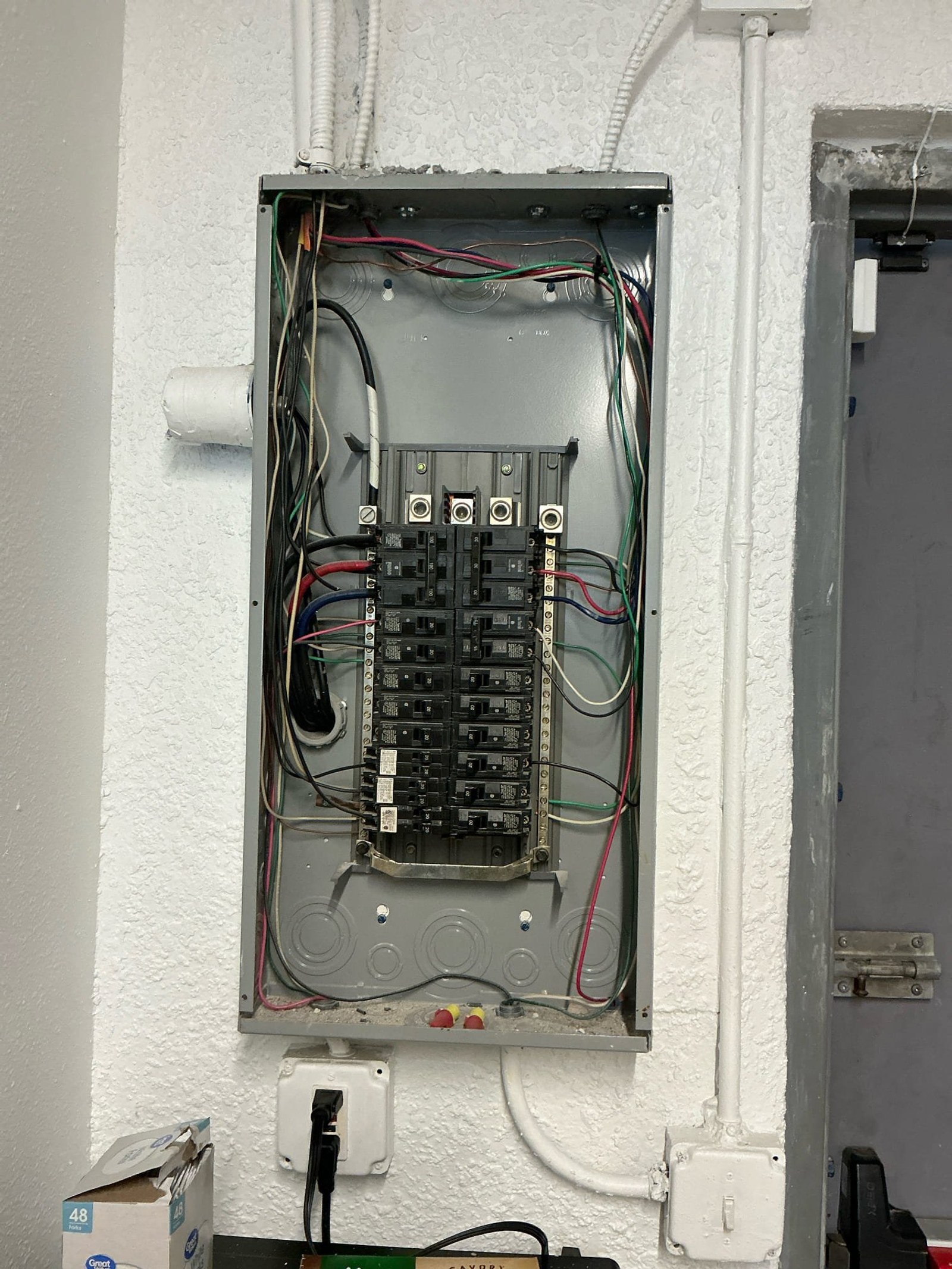
Ian conducted a thorough safety inspection of the 150-amp GE panel and electrical system. The inspection revealed several conditions common in older homes that could benefit from modernization. Many outlets and switches used backstabbed connections, a wiring method that was acceptable when installed but has since fallen out of favor due to reliability concerns over time. Additionally, the home lacked surge protection entirely and was missing AFCI breakers that are now required under current code.
The grounding system, while functional, used older methods that don’t meet today’s enhanced safety standards. Furthermore, several areas required smoke detectors to comply with current fire safety codes, and some wire connections needed proper securing with appropriate connectors. The pool equipment area also presented an opportunity to add GFCI protection for enhanced safety around water.
What We Fixed
Our team installed a PSP Vortex 120kA whole-house surge protector directly into the main panel, providing comprehensive protection for all connected devices and appliances. We replaced several backstabbed connections with properly terminated screw connections for improved long-term reliability.
To bring the home up to current fire safety standards, we installed five smart smoke/CO detectors with 10-year sealed lithium batteries and interconnected features. These modern detectors provide both smoke and carbon monoxide detection in a single unit with smart home connectivity.
We upgraded the panel with new Square D HomeLine breakers, including a HOM115 15-amp single pole breaker and a HOM240 40-amp double pole breaker. Additionally, we installed a GE THQP230 30-amp double pole breaker to properly protect specific circuits. A new tamper-resistant 15-amp receptacle was installed at an existing location using a remodel box, and we replaced a single-pole decorator switch to ensure proper operation.
Finally, we installed a 15-amp cord cap on existing wiring to provide a safe, code-compliant connection point.
Why This Matters for Homeowners
Modern electrical safety standards exist for good reason. Surge protection has become essential as homes contain more sensitive electronics than ever before. Meanwhile, AFCI and GFCI protection requirements have expanded significantly since many homes were originally wired.
Backstabbed connections were a common time-saving technique used by electricians in past decades. However, these connections can loosen over time due to thermal cycling, potentially leading to flickering lights, intermittent power loss, or overheating. Replacing them with screw-terminal connections provides a more durable, long-term solution.
Smart smoke and CO detectors offer significant advantages over traditional units. The interconnected feature means that when one detector activates, all units throughout the home sound simultaneously. Additionally, the 10-year sealed batteries eliminate the need for regular battery changes while providing reliable protection.
Code Compliance Cited in This Job
Every fix above maps to a specific section of NEC 2023. Each card links to NFPA’s public NEC index.
Surge Protective Device Installation
The PSP Vortex whole-house surge protector was installed according to NEC requirements for Type 2 SPDs, providing protection at the service entrance level. This installation helps protect all downstream electrical equipment from voltage surges. NFPA reference ›
Arc-Fault Circuit Interrupter Protection
Current code requires AFCI protection for most branch circuits in dwelling units. While this home predated these requirements, adding AFCI breakers brings the electrical system in line with modern safety standards for arc-fault protection. NFPA reference ›
Electrical Connections
Proper termination methods ensure reliable electrical connections over time. Replacing backstabbed connections with screw-terminal connections addresses potential long-term reliability issues and meets current best practices for electrical terminations. NFPA reference ›
Conductors Entering Boxes
All conductors entering electrical boxes must be properly protected and secured. Installing appropriate connectors ensures wires are protected from damage and maintains the integrity of the electrical installation. NFPA reference ›
Tamper-Resistant Receptacles
Current code requires tamper-resistant receptacles in dwelling units for enhanced safety. The new receptacle installation includes this protection feature to prevent accidental contact with energized parts. NFPA reference ›
Common Questions
Questions homeowners ask after seeing this kind of work.
How often should I have my home’s electrical system inspected for safety?
We recommend yearly electrical safety inspections for most homes, with older homes built before 1990 potentially benefiting from more frequent checks. Regular inspections help identify opportunities for safety improvements and ensure your system continues operating reliably. If you’d like peace of mind about your home’s electrical safety, schedule an inspection online or call us today.
What is backstabbed wiring and why should I be concerned about it?
Backstabbed connections were a common wiring method where wires are pushed into spring-loaded terminals instead of being secured with screws. Over time, these connections can loosen due to thermal cycling, leading to flickering lights or intermittent power issues. Replacing them with screw terminals provides a more reliable, long-term connection. If you’re experiencing electrical issues that sound similar, book a diagnostic visit to have our team take a look.
Do I really need a whole-house surge protector if I have power strips?
Whole-house surge protection provides comprehensive protection that individual power strips cannot match. It protects hardwired appliances like HVAC systems, built-in electronics, and provides a first line of defense for your entire electrical system. Power strips offer additional protection for sensitive devices but work best as part of a layered approach with whole-house protection. Interested in learning more about surge protection options for your home? Schedule a consultation with our team.
How do smart smoke detectors differ from traditional ones?
Smart smoke/CO detectors offer interconnected operation, meaning when one activates, all units sound throughout the home. They also feature 10-year sealed batteries, eliminating regular battery changes, and many include smartphone connectivity for remote monitoring. These features provide enhanced safety and convenience compared to traditional standalone units. Want to upgrade your home’s fire detection system? Contact us today to discuss your options.
Can electrical work like this be done in older homes without major renovations?
Most electrical safety upgrades can be accomplished without major structural work. Panel upgrades, surge protector installation, and device replacements typically use existing wiring paths and locations. Our team specializes in modernizing older homes while minimizing disruption to your daily routine. Curious about what upgrades would benefit your home? Schedule a consultation to explore your options.