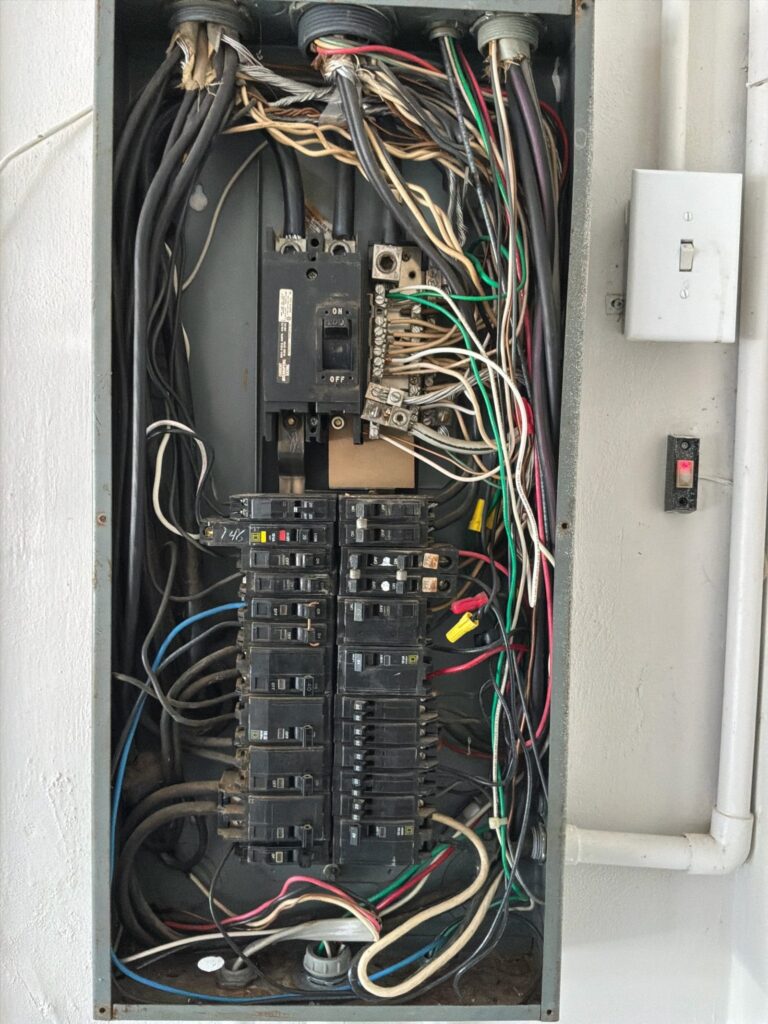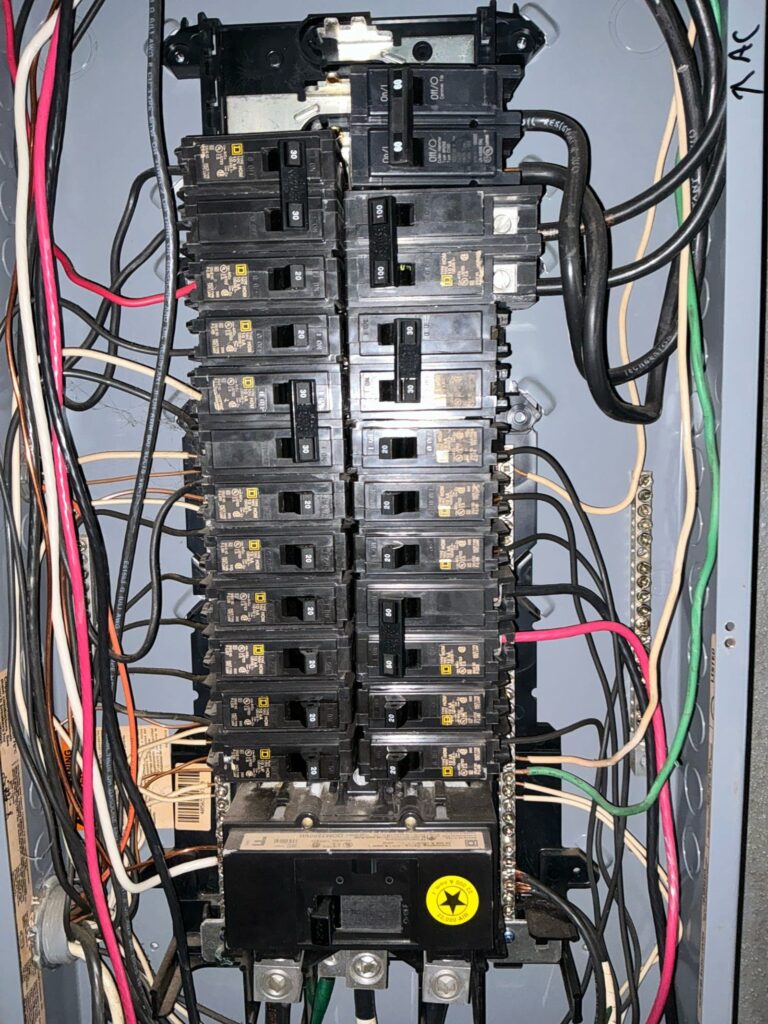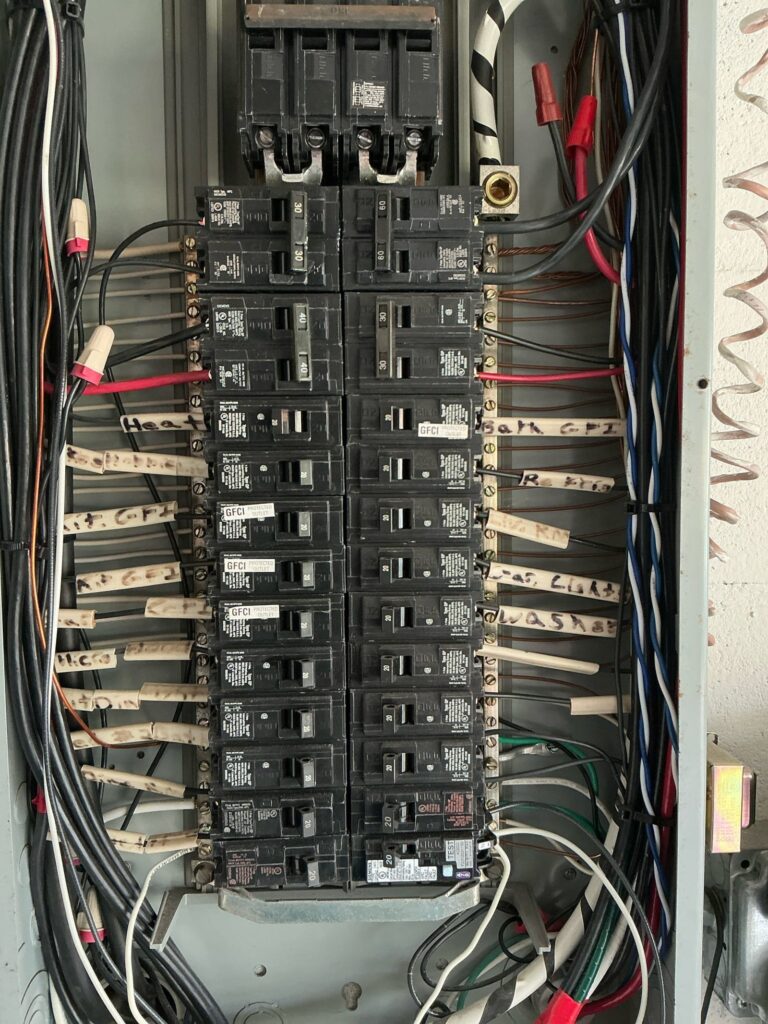
This St. Petersburg panel upgrade case study walks through the real diagnosis, the fix, and the code details from a recent service call. A homeowner in St. Petersburg, FL contacted Thomas Edison Electric after a buyer’s inspection revealed several electrical items that needed attention before closing. Our technician Ian discovered backstabbed connections, missing GFCI protection in required areas, and an outdated grounding system that predated current standards. We installed a PSP Vortex whole-home surge protector, upgraded five smoke/CO detectors to smart 10-year units, and replaced multiple breakers to bring the 150-amp GE panel up to modern safety standards.
The Problem
The homeowner was preparing for a real estate closing when the buyer’s inspection flagged several electrical concerns. As they explained:
“Selling home and need to make a few repairs based on buyers inspection. Need 2 outlets replaced, an existing kitchen hood vent is venting to attic and needs to be vented outside, and there is a section of soffit that needs to be replaced.”
Additionally, the homeowner had attempted a bathroom outlet replacement but wasn’t able to complete the work safely.
Investigation
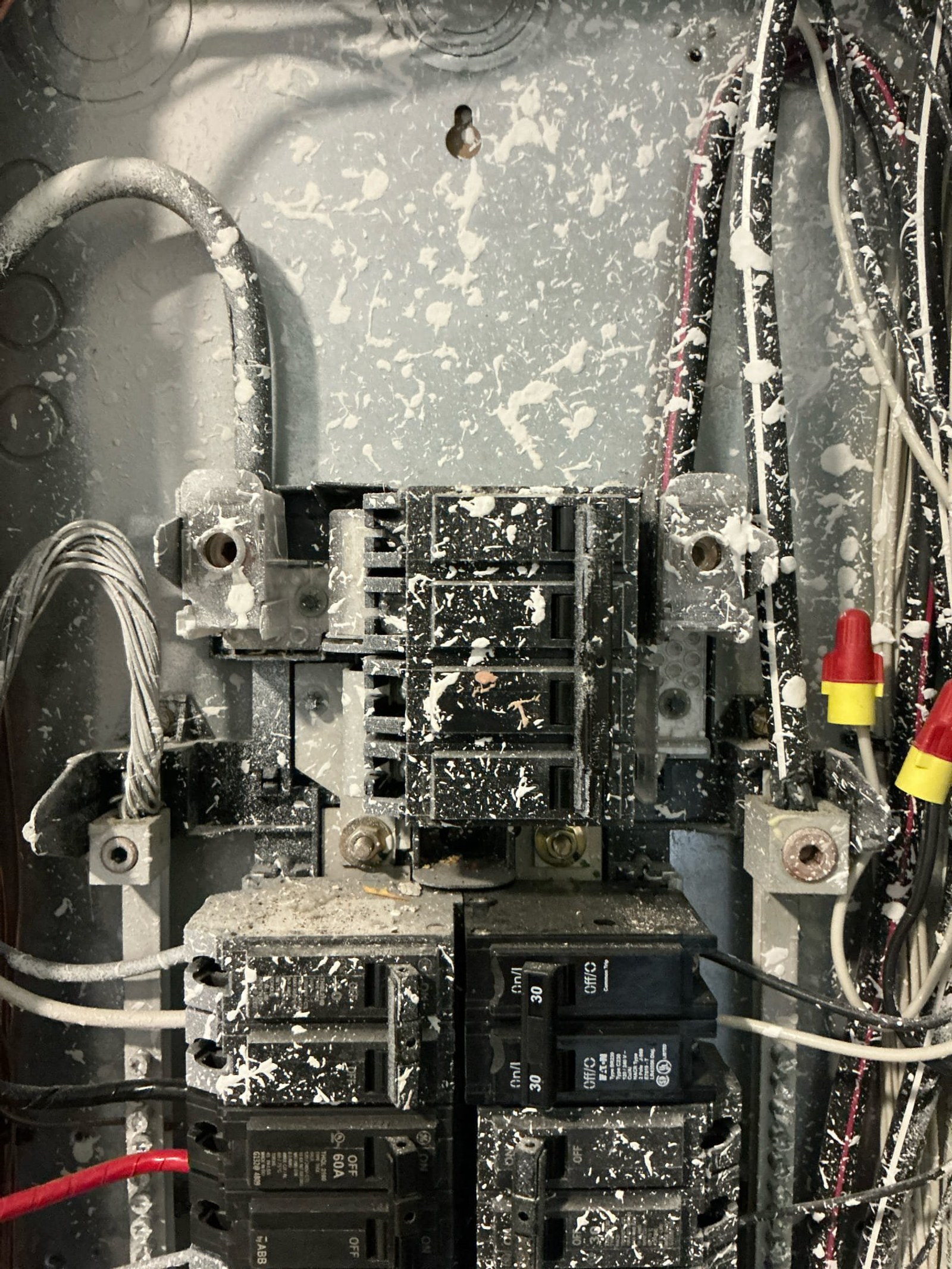
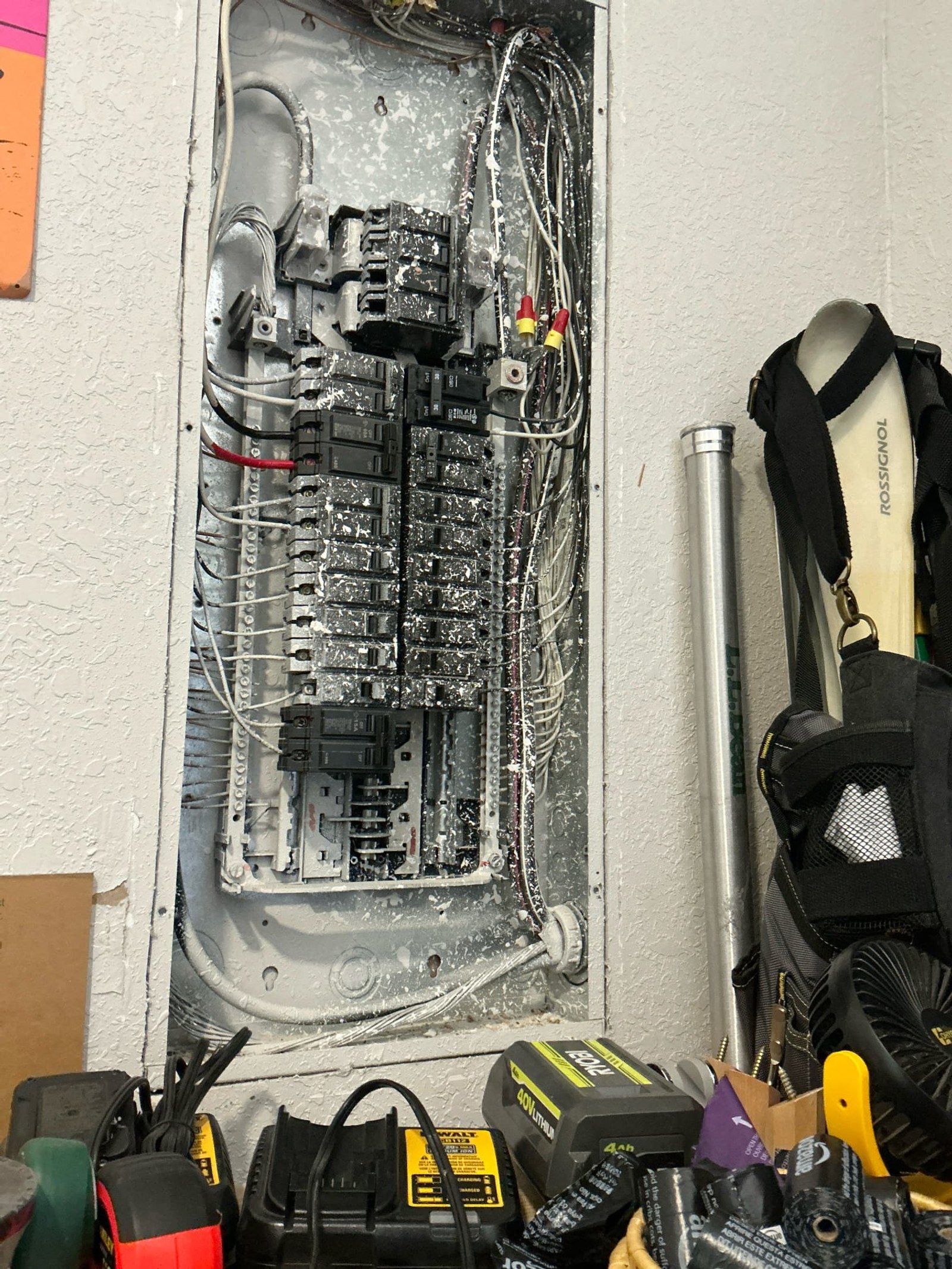
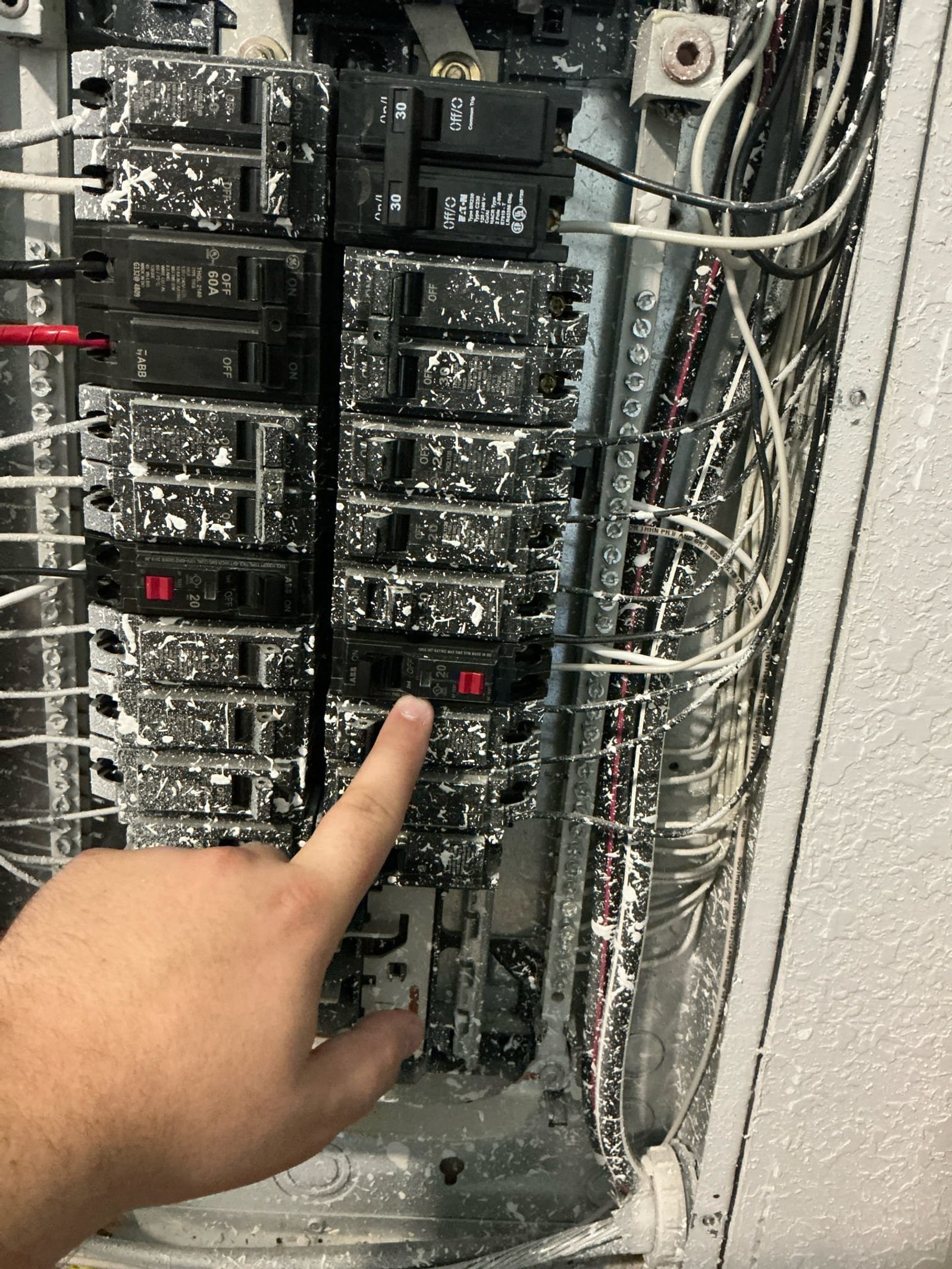
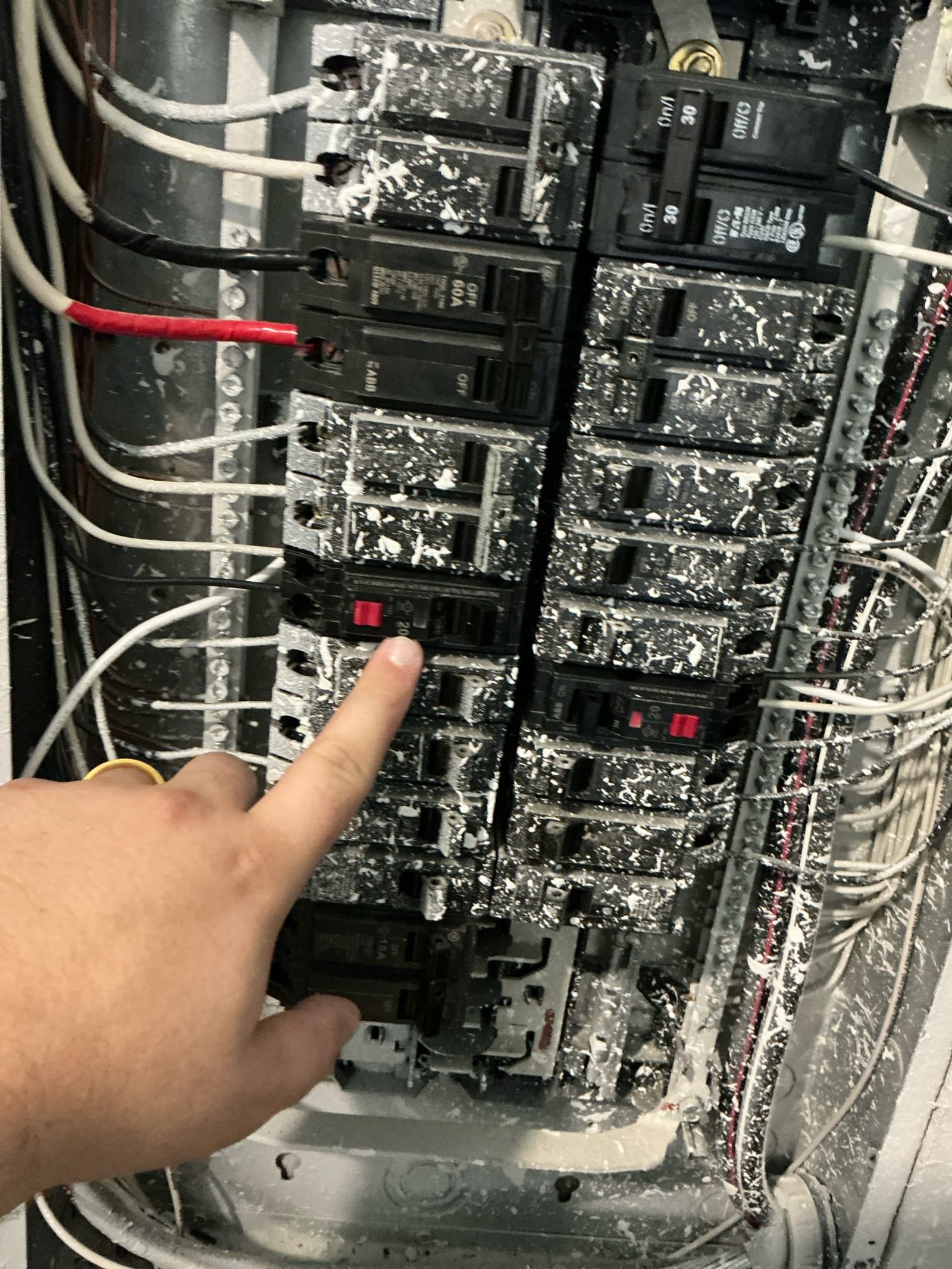
Ian’s comprehensive inspection revealed several areas where the home’s electrical system predated current NEC requirements. The existing wiring featured backstabbed connections throughout – a common installation method in homes wired before about 2005. However, these connections can loosen over time as the spring tension decreases.
Furthermore, the kitchen lacked GFCI protection in areas where it’s now required. The home also had no whole-house surge protection, which wasn’t standard when this system was originally installed. The grounding system, while functional, used methods that were acceptable under older code cycles but don’t meet today’s enhanced standards.
Notably, the panel was missing some modern safety features like AFCI breakers and proper bushing protection. Several areas required smoke detector updates to meet current interconnected requirements.
What We Fixed
We started with surge protection, installing a PSP Vortex 120 kA whole-house surge protector directly into the main panel. This device provides comprehensive protection for all circuits in the home against voltage spikes from lightning and utility switching.
Next, we addressed the breaker panel improvements. We installed new Square D HomeLine breakers including HOM115 single-pole 15-amp units and HOM240 two-pole 40-amp breakers. Additionally, we added a GE THQP 30-amp two-pole breaker to properly protect specific equipment circuits.
For enhanced safety throughout the home, we installed five smart smoke/CO combination detectors with 10-year sealed lithium batteries. These Kidde units feature wireless interconnection, meaning when one detector activates, all units sound simultaneously. The smart features allow remote monitoring through a smartphone app.
We also completed outlet work including installing a new single receptacle with proper grounding at an existing location, using tamper-resistant outlets that meet current NEC standards. A single-pole decorator switch was installed to replace an older unit.
Finally, we properly terminated an existing appliance cord with a 15-amp NEMA 5-15P plug cap, ensuring safe connection standards.
Why This St. Petersburg Panel Upgrade Matters for Homeowners
This upgrade brought a home from the early 2000s in line with NEC 2023 standards – a common scenario for homes changing ownership. The surge protector now shields sensitive electronics and appliances from voltage spikes that cost homeowners thousands in replacement costs annually.
The smart smoke detectors provide faster emergency response through smartphone alerts, even when you’re away from home. Meanwhile, the interconnected feature ensures occupants hear alarms regardless of where a fire starts.
Modernizing backstabbed connections eliminates the intermittent flickering and potential overheating that can develop as these connections age. The work ensures reliable power delivery for years to come.
“Ian is amazing! Showed up early, did an incredible job annnd finished early. Would highly recommend.”
Code Compliance Cited in This Job
Every fix above maps to a specific section of NEC 2023. Each card links to NFPA’s public NEC index.
Surge Protective Device Installation
Whole-house surge protective devices must be connected as close as practicable to the service disconnect. Our PSP Vortex installation directly in the main panel meets this requirement for maximum protection effectiveness. NFPA reference ›
GFCI Protection Requirements
Kitchen countertop receptacles within 6 feet of sinks require GFCI protection. This home’s kitchen upgrades brought these circuits into compliance with current safety standards. NFPA reference ›
Smoke Alarm Interconnection
When replacing smoke alarms in existing homes, new units should be interconnected where feasible. Our wireless smart detectors provide this interconnection capability throughout the home. NFPA reference ›
Electrical Connections
All splices and joints must be made mechanically secure before being soldered or welded. Replacing backstabbed connections with screw terminals provides the mechanical security required by this section. NFPA reference ›
Common Questions
Questions homeowners ask after seeing this kind of work.
How often should I have my electrical system inspected in an older home?
We recommend yearly electrical inspections for homes, especially those built before 1990 or that have experienced recent storm activity. These inspections catch developing issues before they become major problems. If your St. Petersburg home hasn’t been checked recently, our team can schedule a comprehensive safety inspection to give you peace of mind.
What’s the difference between backstabbed and screw-terminal connections?
Backstabbed connections rely on spring tension to hold wires in place, which can weaken over time causing loose connections and flickering. Screw terminals create a mechanical connection that stays tight for decades. If you’re experiencing intermittent electrical issues, this could be the cause. Our electricians can diagnose connection problems during a service call.
Do I really need a whole-house surge protector if I use power strips?
Power strips only protect devices plugged into them, while whole-house units protect everything including hardwired appliances, HVAC systems, and built-in electronics. In Florida’s lightning-prone climate, whole-house protection is especially valuable. Want to know what level of protection your home currently has? We can assess your surge protection needs during a quick evaluation.
Are smart smoke detectors worth the upgrade from basic units?
Smart detectors offer several advantages: smartphone alerts when you’re away, easier testing and maintenance tracking, and typically longer battery life. The interconnected feature means faster notification regardless of where a fire starts in your home. Considering an upgrade? Our team can evaluate your current detector setup and recommend the best solution for your home.
Will electrical upgrades help when selling my home?
Modern electrical systems give buyers confidence and can prevent delays during the inspection process. Updated surge protection, GFCI coverage, and current smoke detectors show the home is well-maintained. Planning a sale? We offer pre-listing electrical inspections to identify any items buyers might flag.
Want to see more real jobs like this one? Browse our completed case studies or explore our services.