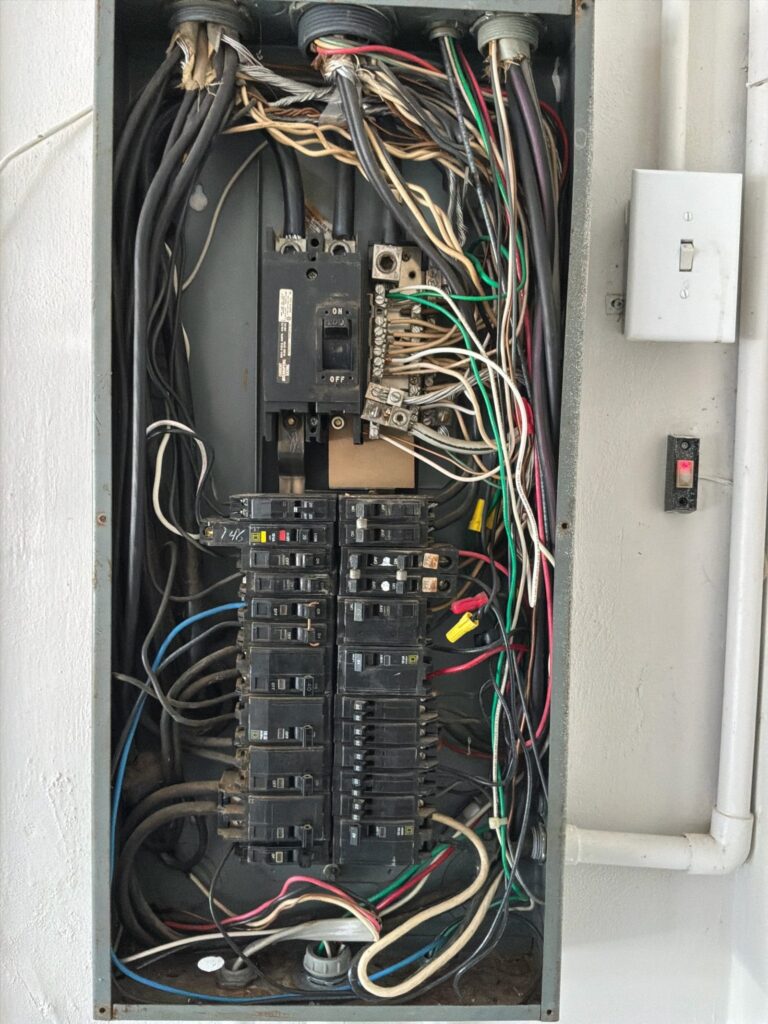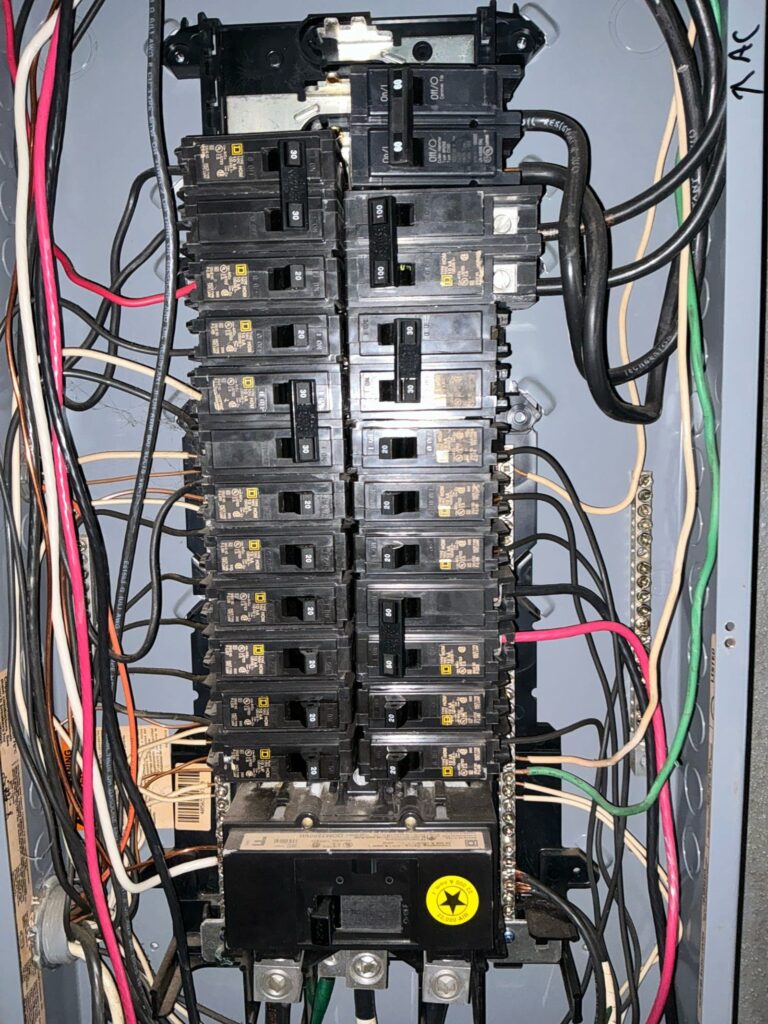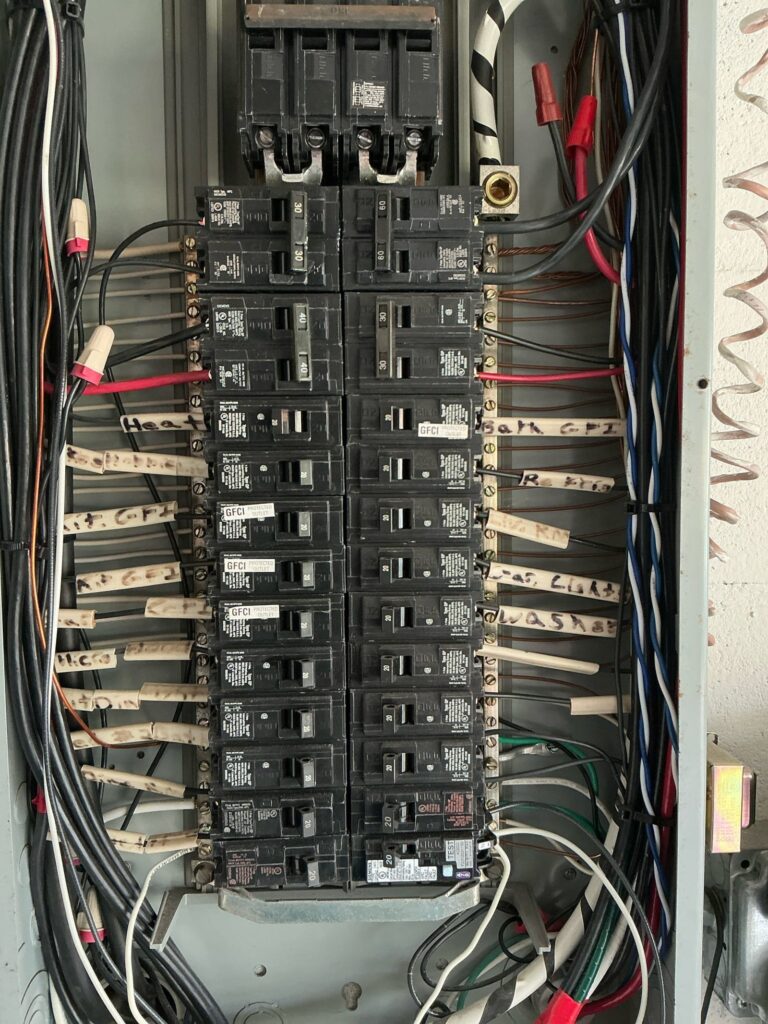
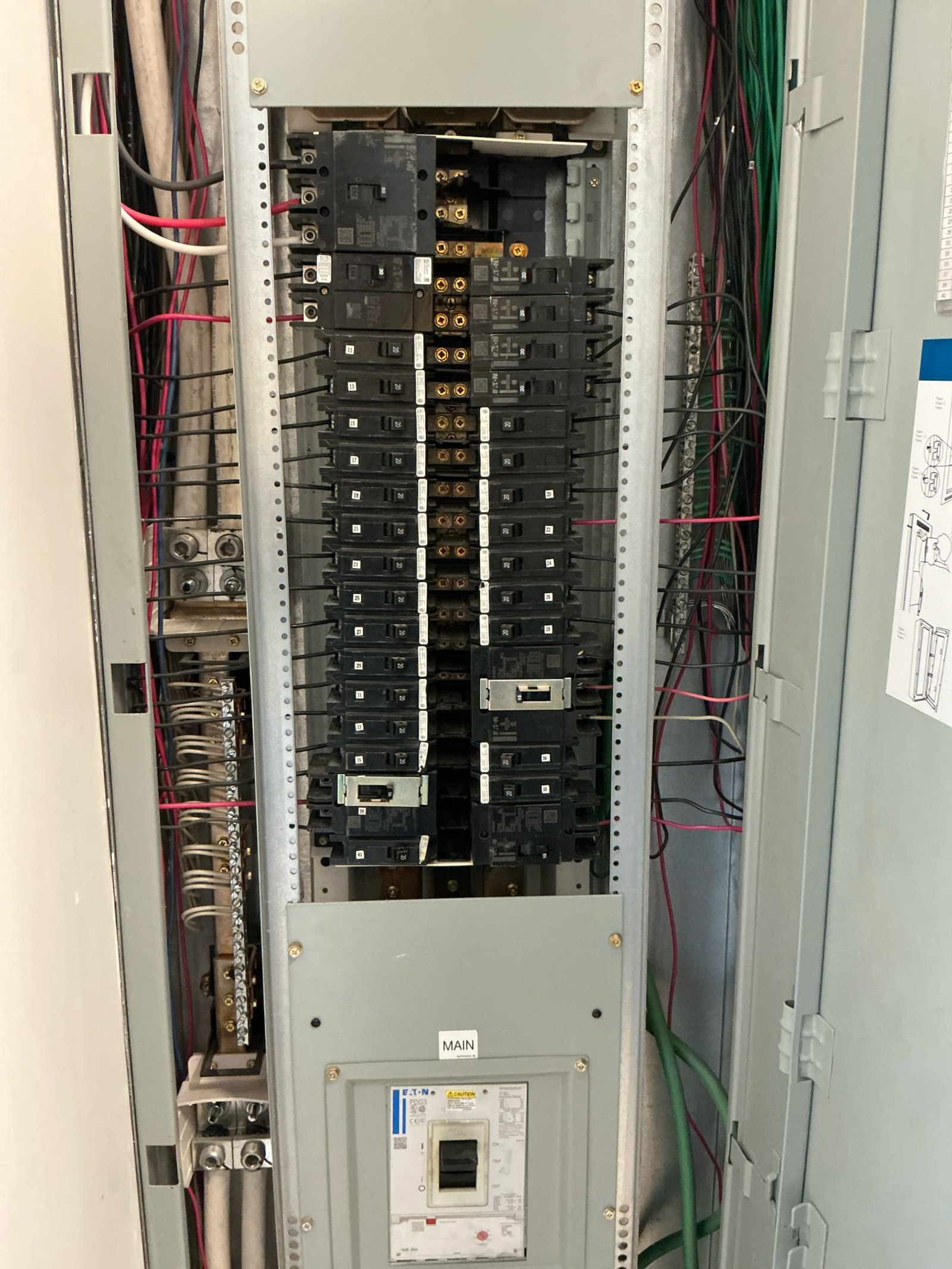
This Clearwater grounding fix case study walks through the real diagnosis, the fix, and the code details from a recent service call. A senior living home in Clearwater, FL (33755) called us after a breaker tied to an ice machine kept tripping and wouldn’t reset. What started as a straightforward breaker call revealed a broader picture: an outdated grounding system, backstabbed outlets throughout, missing GFCI protection in the bathrooms, and several items in the Square D QO 150-amp panel that needed attention. Our field team documented every finding and walked the household through clear, prioritized options.
The Problem
The staff at this senior living center noticed one breaker — the one feeding the ice machine — was tripping repeatedly and could not be reset. Additionally, residents had reported occasional tingling sensations from outlets. The team needed answers quickly, since this was an occupied facility serving seniors every day.
“One of the breakers in the electrical — it is tripped and cannot be reset. It connects to the ice machine.”
Investigation
Our licensed electrician on site started at the Square D QO 150-amp service panel and worked outward from there. Several items stood out immediately.
Panel and Breaker Findings
The inspection revealed double-tapped breakers — two circuits sharing a single breaker terminal that is sized and rated for only one. This condition is common in older panels when circuits were added over time without a corresponding panel upgrade. The panel directory was also unlabeled, making it difficult for staff to identify circuits quickly during an issue. Additionally, no AFCI protection was present on branch circuits — a feature that current code requires for living-area circuits in dwelling units.
Grounding System
No ground rod was located at the electrical meter enclosure. Furthermore, the existing grounding system predates current NEC standards — a situation consistent with homes and facilities wired a generation or more ago. The inspection confirmed the grounding system does not meet current code, even though it was acceptable under the standards in place when the building was originally wired.
Outlets and Devices
The outlets and switches throughout the home were found to be backstabbed — a wiring method where conductors are inserted into spring-clip holes on the back of the device rather than being wrapped around screw terminals. This approach was a common shortcut in residential and light-commercial wiring before roughly 2005. Over time, spring tension loosens, contact resistance climbs, and the result is intermittent behavior — including the kind of tingling sensations residents had noticed. Additionally, outlets were not tamper-resistant, and bathroom receptacles lacked GFCI protection.
Surge Protection
No whole-home surge protective device was present at the service panel, and no dedicated surge protection was installed on the air conditioning equipment. In a coastal Florida community like Clearwater, where afternoon storm activity is routine, this leaves sensitive electronics and HVAC equipment exposed to voltage spikes on the utility feed.
What We Fixed
During this visit, our field team conducted a thorough investigation and provided the household with a full set of documented options. Specific recommendations include:
- Grounding system modernization — installing a code-compliant ground rod and updating the electrode system to meet current NEC 250.52 and NEC 250.50 requirements
- Whole-home surge protection — a Type 2 SPD installed at the service panel per NEC 230.67 and NEC 285.25, plus dedicated surge protection for the air conditioning unit
- GFCI-protected receptacles in all bathroom locations, bringing those circuits in line with NEC 210.8
- Re-device work — replacing backstabbed outlets and switches with screw-terminated devices for durable, low-resistance connections
- Panel labeling — clearly identifying every circuit per NEC 408.4 so staff can act quickly if a breaker ever trips again
The double-tapped breakers and missing AFCI protection were also documented as priority items for the next phase of work.
Why This Clearwater Grounding Fix Matters for Homeowners
For a senior living center, reliable electricity isn’t a background detail — it’s part of daily care. The ice machine that keeps residents’ beverages cold, the lighting in the hallways at night, the outlets in the bathrooms that staff and residents use every morning — all of these depend on a system that works consistently and quietly in the background.
Backstabbed connections, in particular, are worth modernizing simply because the fix is straightforward and the payoff is lasting. Once outlets and switches are properly screw-terminated, the intermittent contact issues that cause flickering and unexpected behavior go away. The household keeps running the way the family and staff expect it to — without interruption.
Additionally, a whole-home surge protector at the panel means that every storm Clearwater sees this season — and every season after — passes through without threatening the facility’s HVAC system, refrigeration, or electronics. That’s the kind of reliability that lets staff focus on residents rather than equipment. With a licensed electrician having documented every finding and provided clear next steps, the facility management can move forward with full confidence and genuine peace of mind.
Code Compliance Cited in This Job
Every fix above maps to a specific section of NEC 2023. Each card links to NFPA’s public NEC index.
GFCI Protection for Personnel
NEC 210.8 requires GFCI protection at bathroom receptacles in dwelling units and similar occupancies. The bathroom outlets at this Clearwater facility lacked GFCI devices — consistent with wiring from an earlier code cycle. Upgrading to GFCI-protected receptacles brings those locations in line with current NEC requirements and adds the layer of protection that today’s standards call for. NFPA reference ›
AFCI Protection
NEC 210.12 requires arc-fault circuit-interrupter protection on branch circuits supplying living areas, bedrooms, kitchens, and similar spaces in dwelling units. The inspection found no AFCI protection present on any branch circuits. This predates the modern AFCI requirement and is common in facilities of this era; adding AFCI breakers to the Square D QO panel would bring those circuits up to current standards. NFPA reference ›
Surge Protective Devices at Services
NEC 230.67 requires a surge protective device (SPD) at the service of new or upgraded dwelling-unit services. No SPD was present at this 150-amp Square D QO service. Installing a listed Type 2 SPD at the panel addresses this requirement and protects the facility’s HVAC equipment and electronics from utility-side voltage transients — especially relevant in Clearwater’s active lightning season. NFPA reference ›
Grounding Electrode System
NEC 250.50 requires a grounding electrode system that uses all available electrodes, including ground rods where present. No ground rod was located at the meter enclosure at this facility. Establishing a compliant grounding electrode system modernizes the installation to current NEC 250.50 and NEC 250.52 standards. NFPA reference ›
Circuit Directory and Identification
NEC 408.4 requires that every circuit in a panelboard be legibly identified as to its clear, evident purpose. The panel at this Clearwater facility had no labeling on the circuit directory. For a senior living center where staff may need to isolate a circuit quickly, a properly labeled panel directory is both a code requirement and a practical operational necessity. NFPA reference ›
Replacement Receptacle Requirements
NEC 406.4(D) requires that receptacles replaced in older homes and facilities meet current code requirements, including GFCI protection where applicable and tamper-resistant construction. The backstabbed outlets and non-tamper-resistant receptacles found throughout this facility represent an opportunity to bring every replaced device up to the standard NEC 406.4(D) and NEC 406.12 now call for. NFPA reference ›
Common Questions
Questions homeowners ask after seeing this kind of work.
Why would a breaker keep tripping and refuse to reset?
A breaker that trips and won’t reset is usually telling you one of two things: either the circuit is still overloaded or shorted, or the breaker itself has weakened from repeated thermal cycling and needs replacement. In this case, the double-tapped breakers and aging wiring connections contributed to the problem. A licensed electrician can pinpoint the exact cause in a single visit. Schedule online and we’ll get it sorted the same day.
What does it mean when outlets are backstabbed, and should I be concerned?
Backstabbed outlets use a spring-clip connection on the back of the device rather than the more durable screw terminals on the sides. This method was common in wiring done before roughly 2005. Over time the spring tension relaxes, resistance at the connection climbs, and you get intermittent issues — flickering lights, outlets that feel warm, or the kind of tingling sensation residents at this facility noticed. Re-terminating devices with screw connections is a straightforward fix that gives you a reliable, long-lasting outlet. Book a walkthrough if you’d like us to check the outlets in your home or facility.
How often should a home or facility have its electrical system inspected?
Once a year is a good baseline for most occupied homes and facilities. Older buildings — especially those wired before 1990 — and any property that has weathered a recent storm or lightning strike may benefit from inspections more frequently. An annual check catches small issues before they affect daily operations or comfort. Schedule your yearly inspection and our team will document every finding with clear, prioritized options.
Does a senior living home really need a whole-home surge protector?
Absolutely — arguably more than a typical residence. A facility like this runs refrigeration, HVAC, medical equipment, and communications systems around the clock. A Type 2 whole-home SPD at the service panel absorbs voltage spikes from the utility line before they reach any of that equipment. In a coastal Florida market like Clearwater, where afternoon lightning is routine from May through October, a surge protector means the facility keeps running through every storm — quietly and without interruption. Get a surge-protection quote and we’ll size the right device for your service.
What is an outdated grounding system, and why does it matter for an older building?
Grounding standards have evolved through several NEC code cycles. A system that met the requirements of, say, the 1978 or 1993 NEC may not include all the electrodes, conductor sizes, or bonding connections that today’s NEC 250.50 and 250.52 call for. This was common practice when the building was wired — it wasn’t a mistake, just the standard of the era. Modernizing the grounding system now brings the facility in line with current code and gives the electrical system the solid reference point it needs for consistent, dependable performance. Talk to our team about a grounding system assessment.
Want to see more real jobs like this one? Browse our completed case studies or explore our services.