This Hudson electrical inspection case study walks through the real diagnosis, the fix, and the code details from a recent service call. A homeowner in Hudson, FL lost air conditioning on a Monday evening and called their HVAC technician first. The HVAC tech cleared his equipment and pointed toward the electrical panel — and that’s when our field team got the call. What started as an AC-power concern turned into a thorough electrical inspection that mapped several areas worth modernizing so the home can run comfortably and reliably for years ahead.
The Problem
The homeowner had noticed intermittent sensations when touching certain outlets and switches — a sign that something in the grounding path deserved a closer look. When the AC stopped working entirely, the HVAC technician confirmed the unit itself was fine and recommended an electrician evaluate the panel and the circuits feeding it.
“My AC stopped working and the HVAC guy told me I needed an electrician to check the panel and make sure power was pulling correctly.”
Investigation
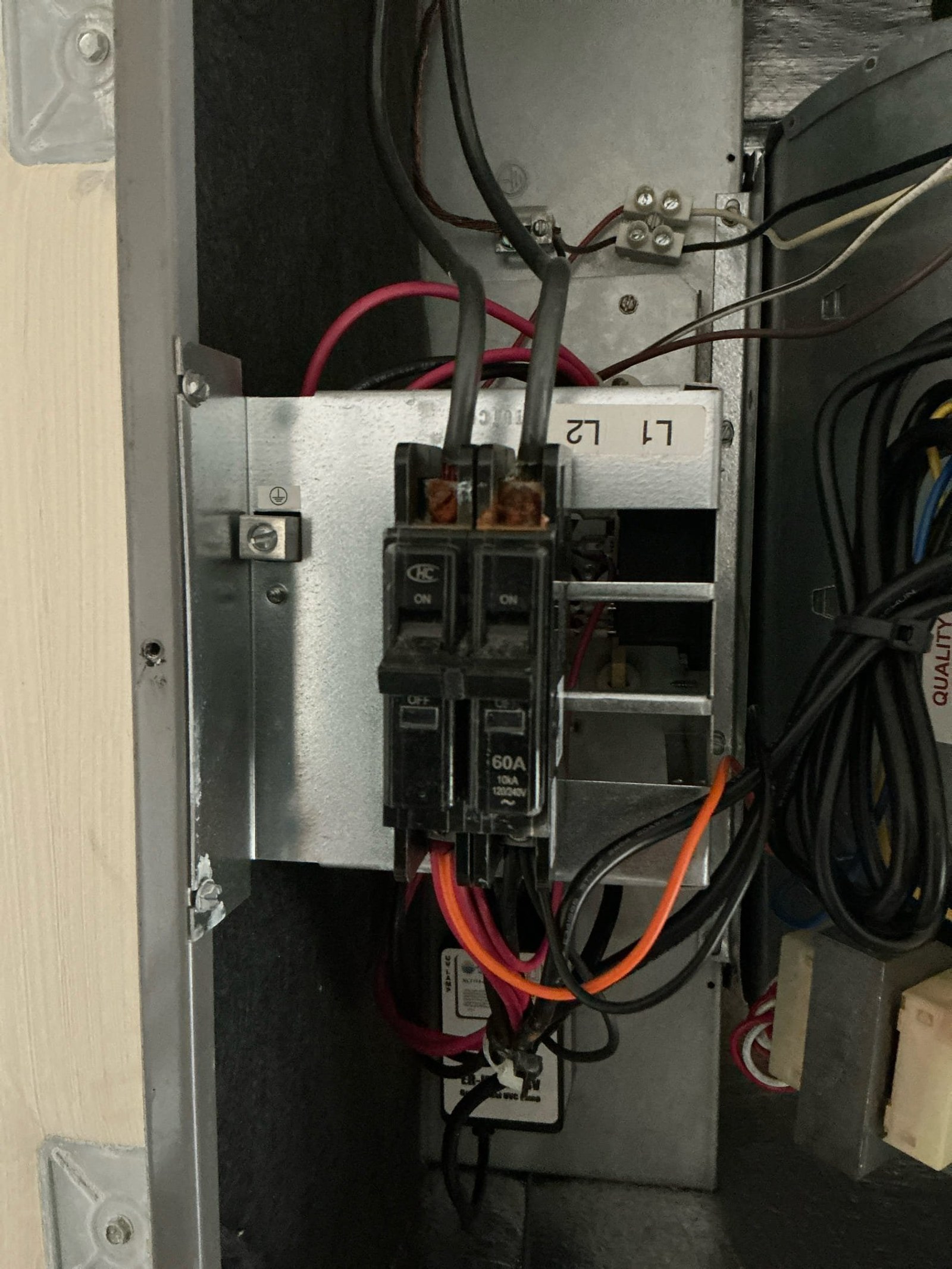
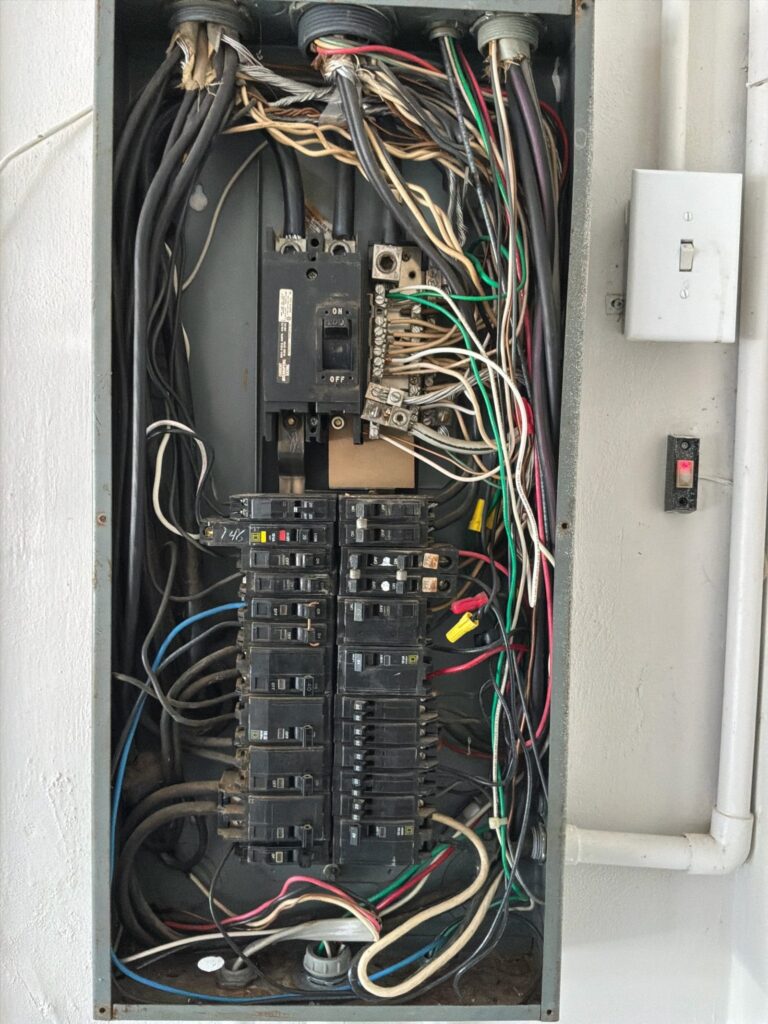
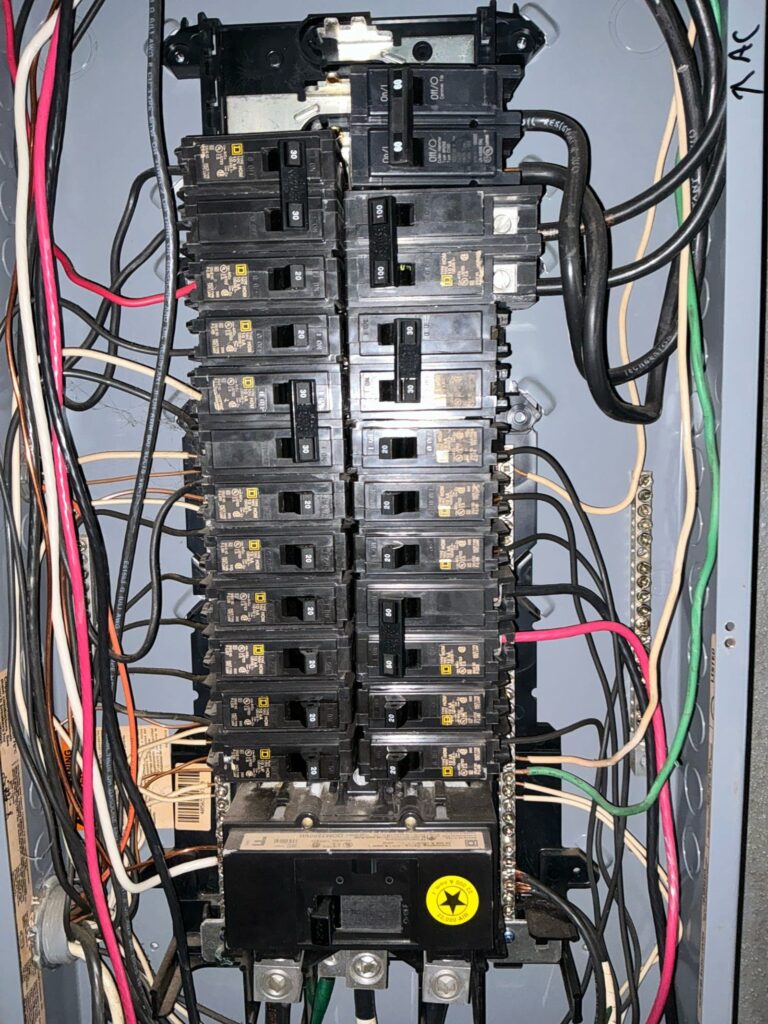
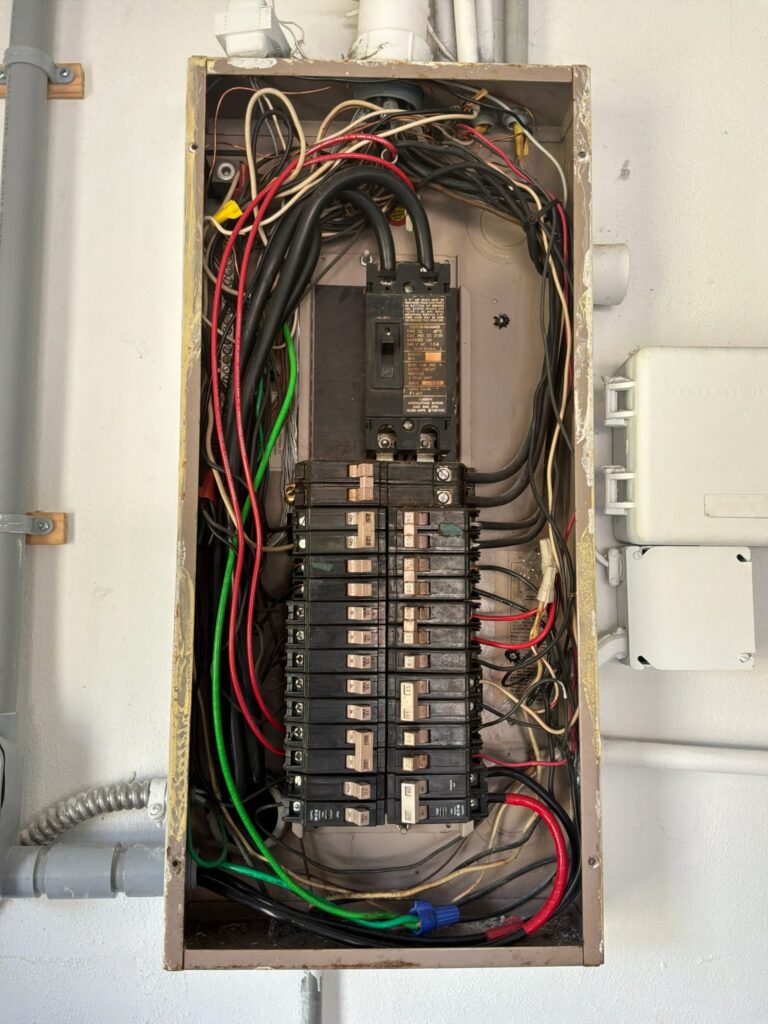
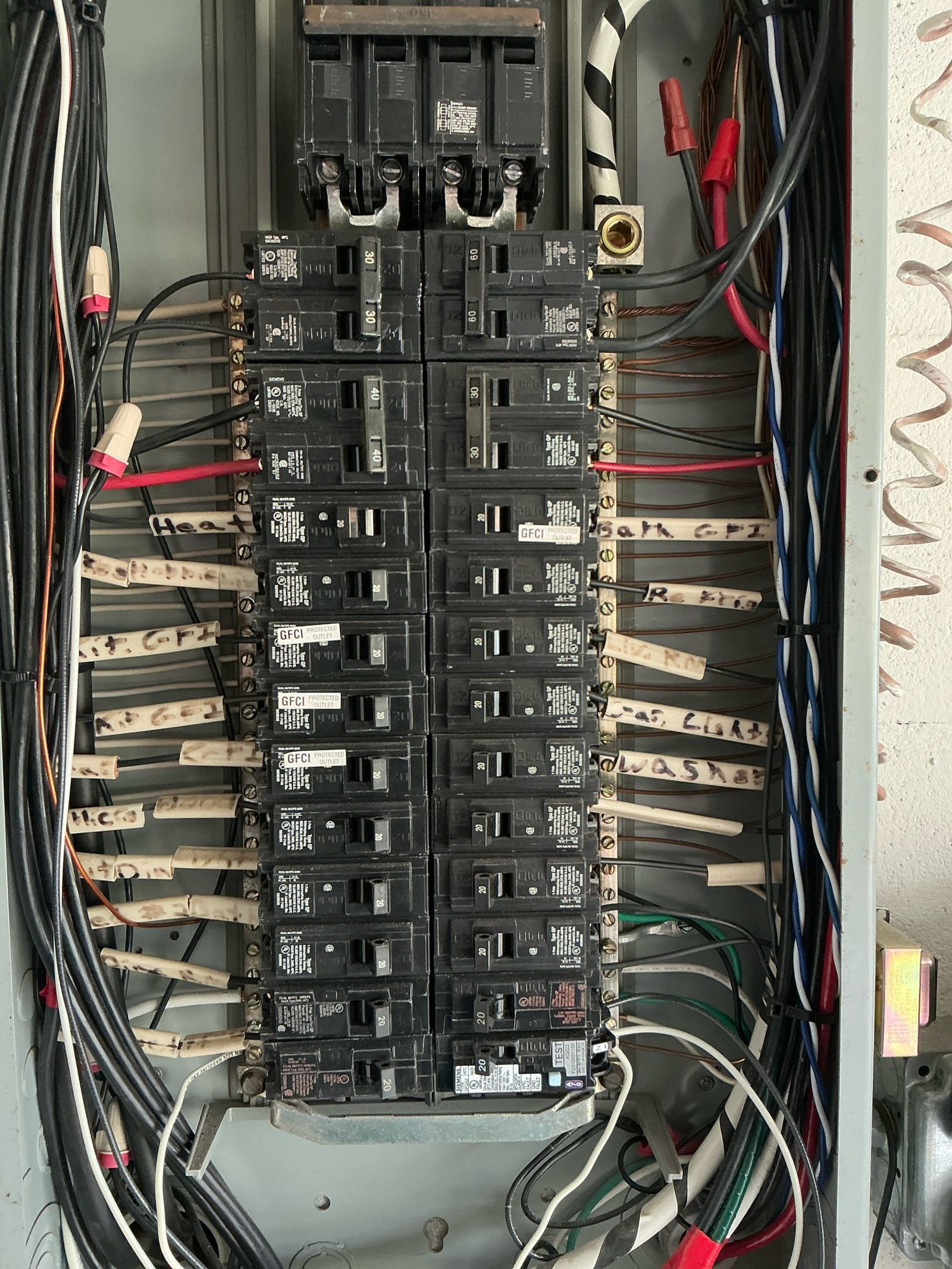
Our licensed electrician on site arrived during the evening hours and performed a full visual safety inspection of the 150-amp Square D QO panel and the branch circuits throughout the home.
Panel and Grounding Findings
The panel itself showed a clean busbar — no paint, rust, or corrosion — and breakers were correctly sized for the equipment they serve. However, the inspection uncovered several items that predate current code:
- Double-tapped breakers were present. Running two conductors into a single breaker terminal that isn’t rated for it is inconsistent with NEC 110.14(B) and can cause intermittent connection issues over time.
- No ground rod was found at the meter enclosure. The grounding electrode system did not meet current NEC 250.52 standards — common in homes wired before more recent code cycles tightened those requirements.
- The panel directory was unlabeled. NEC 408.4 requires every circuit to be clearly identified. Without labels, troubleshooting any future issue takes longer than it should.
- No AFCI protection was present on branch circuits — an upgrade now recommended for living areas under NEC 210.12.
- No surge protective device was found at the service. NEC 230.67 now requires a listed SPD at new and upgraded services for dwelling units.
- No generator pre-wire was in place — worth noting for future planning.
Branch Circuit and Device Findings
- Backstabbed outlets and switches throughout the home. This wiring method was a common shortcut in homes built before roughly 2005. Over time, the spring-clip tension eases, contact resistance climbs, and the kind of intermittent sensation the homeowner described is often the result. Re-devicing with proper screw-terminal connections is a straightforward, lasting fix.
- Bathroom outlets lacked GFCI protection, which predates the requirements now outlined in NEC 210.8.
- Outlets were not tamper-resistant, which doesn’t meet current NEC 406.12 replacement standards.
- Loose and worn outlets were noted, along with signs of arcing in older switches — all consistent with a home whose devices are ready for a refresh.
- Some voltage drop was measured at outlets, which can point back to poor device connections.
- Open splices were found, which need to be enclosed per standard wiring practice.
What We Fixed
This visit was an emergency inspection call — our field team investigated the system, documented every finding with a full stoplight-rated inspection report, and presented the homeowner with a clear set of options prioritized by impact.
The Square D QO 150-amp panel is a solid, serviceable platform. The recommendations center on bringing the surrounding system up to current standards:
1. Install a proper grounding electrode system — a new ground rod at the meter and updated conductors to meet NEC 250.52 and 250.66. 2. Install a whole-home surge protective device — a listed Type 2 SPD at the panel, plus dedicated surge protection for the AC unit, so the home’s electronics and appliances ride out Florida’s storm season without interruption. 3. Replace bathroom outlets with GFCI-protected receptacles — bringing those circuits in line with NEC 210.8. 4. Re-device outlets and switches — replacing backstabbed connections with screw-terminal devices throughout the home. 5. Address double-tapped breakers — moving circuits to dedicated breaker slots or a sub-panel as needed. 6. Label the panel directory — a quick step that pays off every time a breaker needs to be located quickly. 7. Upgrade to tamper-resistant receptacles where devices are replaced, per NEC 406.12.
The homeowner now has a written inspection report and a phased plan to work through each item at a pace that fits their schedule.
Why This Hudson Electrical Inspection Matters for Homeowners
When a home’s grounding system predates current code, the electrical path that’s supposed to carry stray current safely away from appliances and devices isn’t doing the job today’s standards expect. That’s what produces the intermittent sensations this family noticed — and it’s also why the AC circuit wasn’t behaving predictably. Modernizing the grounding system gives every appliance in the home a clean, reliable reference point.
Florida homeowners also live with some of the highest lightning-strike frequency in the country. A whole-home surge protective device — installed at the panel and paired with a dedicated unit on the AC — means the family’s refrigerator, televisions, computers, and HVAC equipment keep running smoothly through every summer storm, without the frustrating cycle of replacing appliances after a surge event.
Finally, re-devicing backstabbed outlets and switches addresses the root cause of the intermittent sensations the household noticed in day-to-day use. With screw-terminal connections throughout, outlets behave the way the family expects — consistently, every morning, every evening, without a second thought. That’s the kind of quiet reliability that makes a home genuinely comfortable to live in. For more general electrical safety education, ESFI is a great homeowner resource.
Thomas Edison Electric is a licensed Florida electrical contractor (license EC13015487) serving Hudson and the greater Clearwater district.
Code Compliance Cited in This Job
Every fix above maps to a specific section of NEC 2023. Each card links to NFPA’s public NEC index.
GFCI Protection
NEC 210.8 requires GFCI protection for personnel at receptacles in bathrooms, kitchens, garages, and other specified locations in dwelling units. The bathroom outlets in this Hudson home predated that requirement. Replacing them with GFCI-protected receptacles brings those circuits in line with current code and adds the layer of protection today’s standard expects. NFPA reference ›
Grounding Electrodes
NEC 250.52 defines the required grounding electrodes — including ground rods — that make up a dwelling’s grounding electrode system. No ground rod was found at the meter enclosure on this property, which is consistent with older installations that predate tighter grounding requirements. Installing a new ground rod and properly sized conductors brings the system up to current NEC standards. NFPA reference ›
Surge Protective Device at Service
NEC 230.67 now requires a listed surge protective device at the service of dwelling units. This home had no SPD present — common for installations completed before this requirement took effect. Adding a Type 2 SPD at the Square D QO panel directly protects the home’s appliances and electronics from transient voltage events, which is especially relevant in Florida’s high-lightning environment. NFPA reference ›
Circuit Directory and Identification
NEC 408.4 requires that every circuit in a panelboard be legibly identified as to its clear, evident purpose. The panel directory in this home was unlabeled — a red flag on inspection. Proper labeling ensures that any future troubleshooting, emergency shutoff, or permit inspection can be handled quickly and accurately. NFPA reference ›
Electrical Connections
NEC 110.14(B) requires that conductor terminals be suitable for the number and size of conductors connected. Double-tapped breakers — where two conductors share a single terminal not rated for the arrangement — were found in this panel. This condition is common in older panels where circuits were added over the years without adding breaker capacity, and it is worth correcting to maintain reliable, code-compliant connections. NFPA reference ›
Tamper-Resistant Receptacles
NEC 406.12 requires tamper-resistant receptacles in all dwelling unit areas when receptacles are replaced. Because this home’s re-devicing work will involve replacing outlets throughout, the replacement receptacles must meet the tamper-resistant standard — a straightforward upgrade that costs little at the point of re-devicing and aligns the home with current requirements. NFPA reference ›
Common Questions
Questions homeowners ask after seeing this kind of work.
Why would an HVAC technician recommend calling an electrician for an AC problem?
Air conditioners rely on a properly functioning electrical supply — correct voltage, solid grounding, and breakers that hold under load. When an HVAC technician clears the mechanical equipment and still sees abnormal behavior, the electrical panel and supply circuits are the next logical step. In this Hudson home, the grounding system and several branch-circuit conditions were contributing to unreliable power delivery. If your HVAC tech has flagged the electrical side, our team can schedule a same-day inspection to find out exactly what’s going on.
What does it mean when outlets feel like they’re giving off a mild shock sensation?
Intermittent sensations when touching outlets or switches often point to a grounding issue, worn device connections, or both. Backstabbed connections — where wires are pushed into a spring clip instead of secured under a screw terminal — lose their grip over time, raising contact resistance and producing exactly the kind of unpredictable behavior this family described. A grounding system that doesn’t meet current standards can compound the issue. Both conditions are straightforward to address once diagnosed. If your household has noticed anything similar, book an inspection so we can trace the source.
How often should a home’s electrical system be inspected?
A yearly inspection is a good baseline for most homes. Older homes built before 1990 — or homes that have been through recent storm seasons — often benefit from inspections more frequently, since both age and surge events can affect connections, devices, and grounding components in ways that aren’t always visible. Annual check-ins keep small findings small. Schedule your yearly inspection and we’ll give you a full stoplight-rated report.
Do I need surge protection on my air conditioner separately from a whole-home surge protector?
A whole-home Type 2 SPD at the panel catches large transient events before they reach any branch circuit — including the AC. However, adding a dedicated point-of-use surge device directly at the AC disconnect provides a second layer of protection for the compressor and control board, which are the most costly components to replace after a surge event. Florida’s lightning frequency makes both layers a worthwhile investment. Talk to our team about the right combination for your home’s setup.
Is a Square D QO panel worth keeping, or should it be replaced if the home needs updates?
Square D QO is one of the most respected panel platforms in residential electrical work — breakers are readily available, the bus design is robust, and the lineup supports modern AFCI and GFCI breakers. If the panel itself is in good condition with no corrosion or overheating, modernizing the surrounding system (grounding, SPD, devices, labeling) is often the most cost-effective path. Our field team will always tell you honestly whether a panel is worth upgrading around or whether replacement makes more sense for your home. Book a panel evaluation to get a clear answer.
Want to see more real jobs like this one? Browse our completed case studies or explore our services.