This Palm Harbor grounding fix case study walks through the real diagnosis, the fix, and the code details from a recent service call. A homeowner in Palm Harbor, FL called about a mild sensation of tingling from outlets — and what our field team uncovered during the inspection turned out to be a thorough look at an electrical system that had quietly fallen behind current standards in several areas. No work had gone wrong overnight; the home had simply aged past what today’s code recommends, and a systematic walk-through gave the family a clear picture of where to focus next.
The Problem
The original call came in as a request for a new sauna outlet — a dedicated circuit with a specialty receptacle. However, once our licensed electrician on-site arrived and the homeowner mentioned occasional tingling sensations from outlets throughout the home, the visit expanded into a full visual safety inspection of the electrical system.
“I wanted an outlet for my sauna, but I also mentioned I’d been feeling a little shock from a couple of outlets. They checked everything and gave me a full rundown of what was going on.”
Investigation
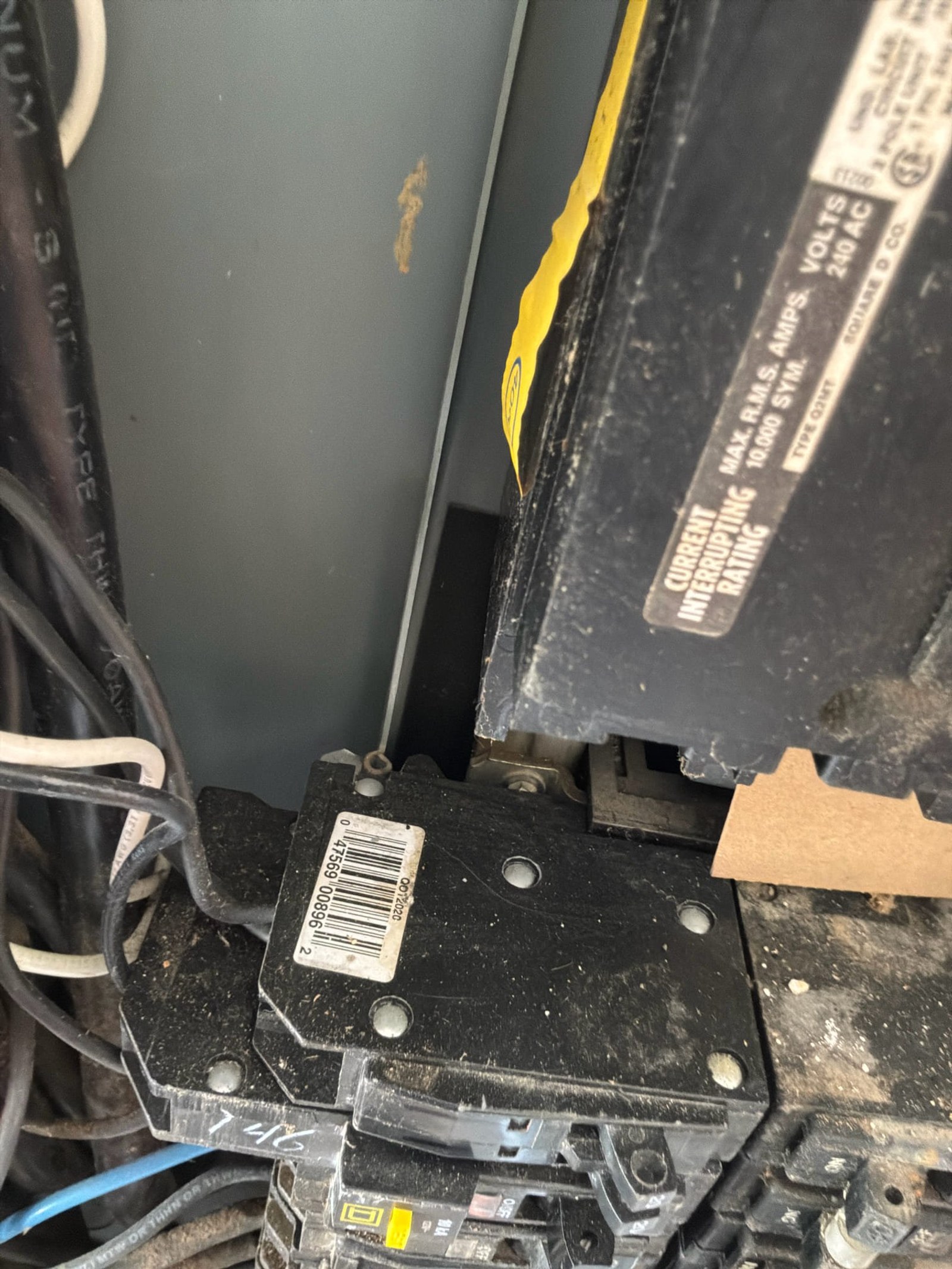
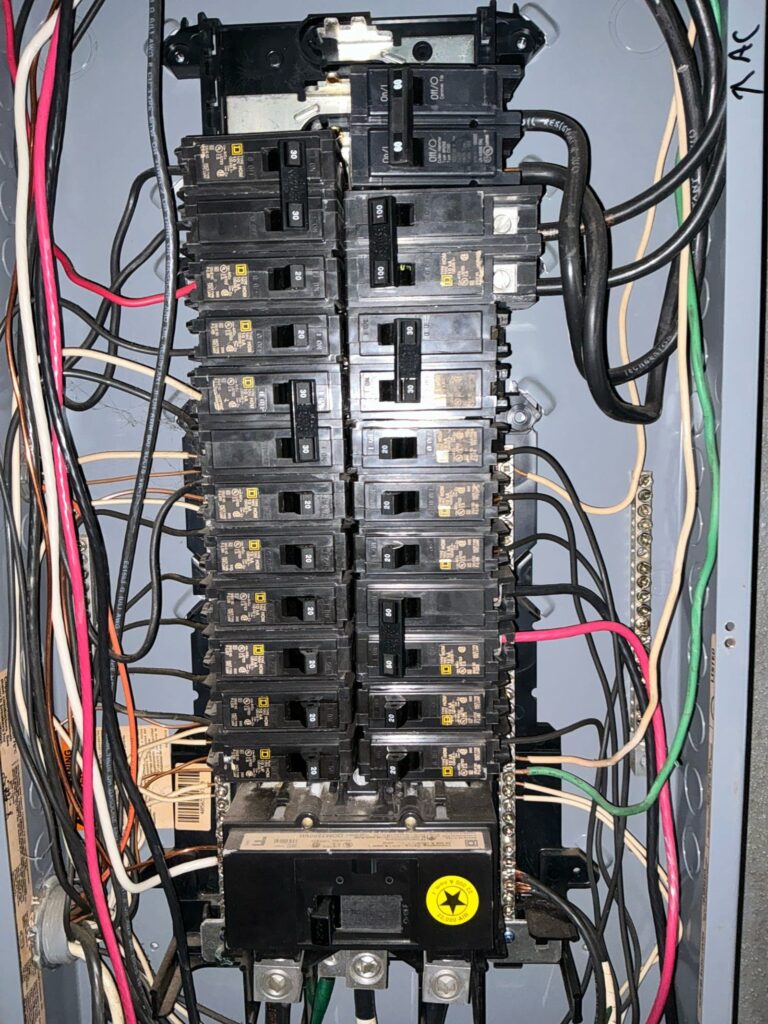
Our technician on-site worked through the home methodically, starting at the Square D QO 150-amp panel and moving outward to every accessible circuit.
Panel and Service Findings
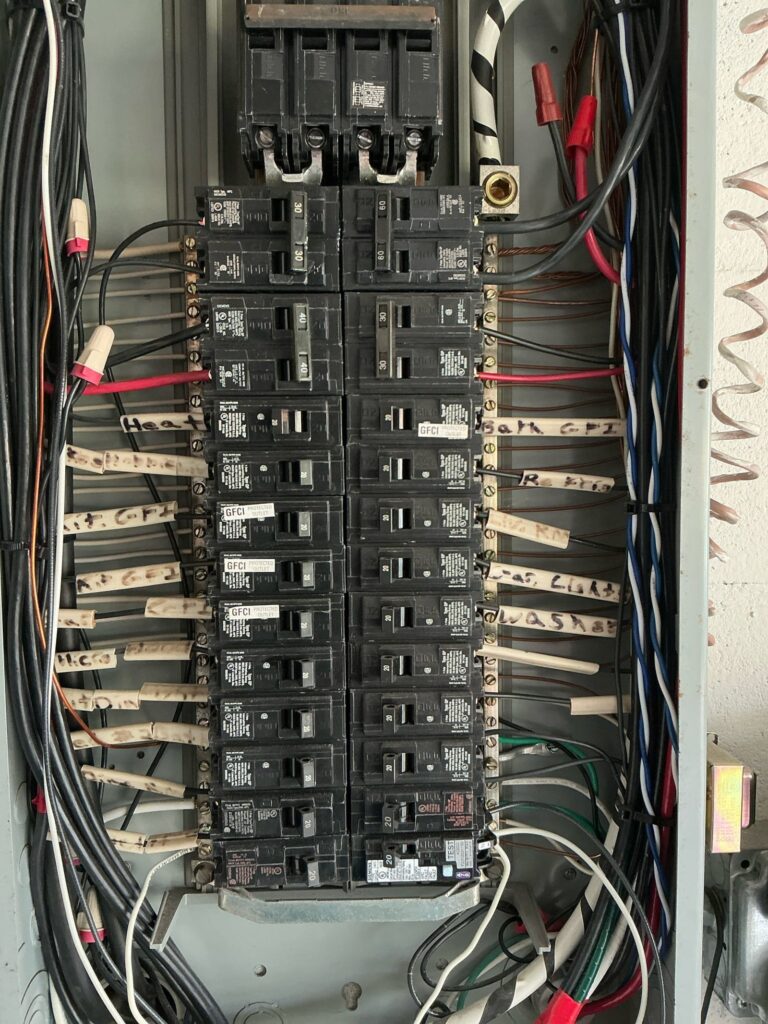
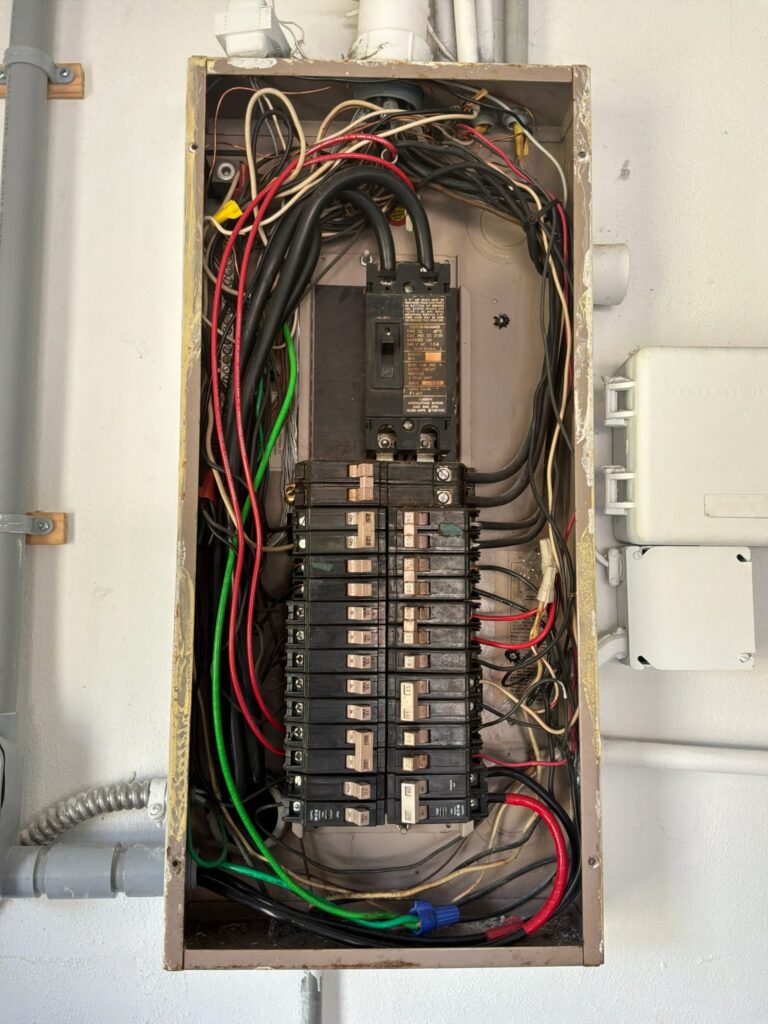
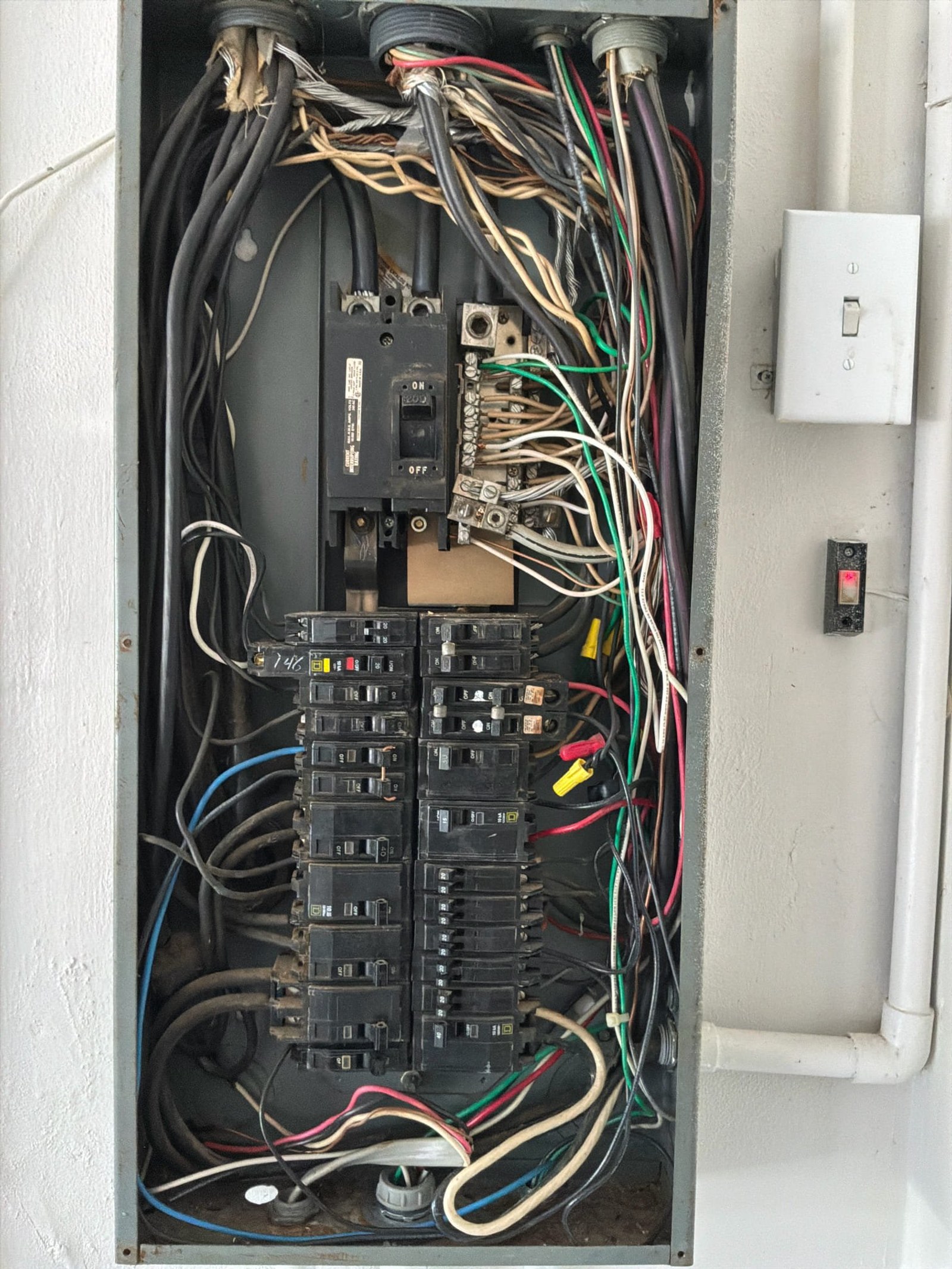
The Square D QO panel itself was in decent shape — neutrals and grounds were properly separated, breakers were correctly sized for their loads, and there was no visible corrosion or burning on the service. However, the inspection flagged double-tapped breakers, a panel directory that wasn’t labeled to current standards, and the absence of AFCI protection on branch circuits — all of which predate requirements introduced in more recent NEC cycles.
Grounding System
One of the more significant findings was the grounding system. No ground rod was located near the electrical meter, and the overall grounding system did not meet current code requirements. Grounding systems like this were common in homes of a certain era, but updated standards now call for a complete grounding electrode system — typically including ground rods, verified connections, and properly sized conductors. This is also the most likely contributor to the tingling sensation the homeowner had been noticing at some outlets.
Outlets and Switches
The inspection confirmed that outlets throughout the home were backstabbed — a wiring shortcut common in homes built or renovated before roughly 2005. With backstabbed connections, the wire is pushed into a spring-loaded opening on the back of the outlet rather than wrapped around a screw terminal. Over time, that spring tension can ease, contact resistance rises, and the result is exactly the kind of intermittent, low-level sensation the homeowner described. Additionally, outlets were not tamper-resistant, and the bathroom circuits lacked GFCI protection — both of which predate current NEC requirements.
Surge Protection
No whole-home surge protection was present, and no dedicated surge protection was installed at the air conditioning unit.
What We Fixed
During this visit, our crew performed a thorough investigation and documented all findings with options presented to the homeowner. The following recommendations were provided for scheduled follow-up work:
- Install a new grounding electrode system — including a ground rod at the meter and updated grounding conductors sized to NEC 250.66 requirements.
- Replace bathroom outlets with GFCI-protected receptacles — bringing those circuits into alignment with NEC 210.8.
- Re-device all backstabbed outlets and switches — replacing spring-contact connections with proper screw-terminal devices throughout the home.
- Install a whole-home surge protective device at the Square D QO panel, plus a dedicated SPD at the air conditioning equipment, per NEC 230.67 and NEC 285.25.
- Address double-tapped breakers and complete proper panel labeling per NEC 408.4.
- Add tamper-resistant receptacles where receptacles are being replaced, per NEC 406.12.
All findings were documented clearly so the homeowner could prioritize the work in an order that fit their schedule and budget.
Why This Palm Harbor Grounding Fix Matters for Homeowners
For any family living in a home that was wired a generation ago, findings like these are genuinely common — and entirely fixable. The grounding system, the backstabbed outlets, the missing GFCI protection: each of these was consistent with the standards of the era when the home was built. Today’s code simply asks for more, because the tools to provide it now exist.
A properly grounded system means the electrical environment throughout the home behaves the way it should — outlets feel neutral, appliances run cleanly, and the subtle sensations the homeowner had been brushing off simply go away. For a household that relies on an AC system, a home office, or anything with a circuit board inside it, a whole-home surge protector adds a layer of reliability that means those appliances keep working through Florida’s lightning season without skipping a beat.
Finally, GFCI-protected bathrooms and tamper-resistant outlets bring the home in line with what today’s families — especially those with kids — expect from a modern home. With these upgrades in place, the household runs quietly and dependably the way the family wants it to, every morning and every evening, without a second thought.
For more on electrical safety standards, the Electrical Safety Foundation International (ESFI) publishes clear, homeowner-friendly guidance. Thomas Edison Electric holds Florida electrical contractor license EC13015487, verifiable through the state licensing portal.
Code Compliance Cited in This Job
Every fix above maps to a specific section of NEC 2023. Each card links to NFPA’s public NEC index.
Grounding Electrodes
NEC 250.52 defines the electrodes that must make up a complete grounding electrode system, including ground rods driven at least 8 feet into the earth. This home lacked a ground rod at the meter, which is one reason the inspection flagged the grounding system as not meeting current standards. Installing a compliant ground rod and connecting it properly brings the home into alignment with this requirement. NFPA reference ›
Grounding Electrode Conductor Sizing
NEC 250.66 establishes the minimum size for the conductor that bonds the grounding electrode to the panel. On this job, the outdated grounding system called for a full review of conductor sizing as part of the recommended grounding upgrade, ensuring the new installation meets the table values for the 150-amp service present at this home. NFPA reference ›
GFCI Protection for Personnel
NEC 210.8 requires GFCI protection for receptacles in bathrooms, garages, and other defined locations in dwelling units. The bathroom outlets in this Palm Harbor home predated this requirement. Replacing them with GFCI-protected receptacles brings those circuits into full compliance and adds the added layer of protection that current standards call for. NFPA reference ›
Surge Protective Devices at Services
NEC 230.67 now requires a Type 1 or Type 2 surge protective device at the service equipment of new dwelling unit installations. This home had no whole-home SPD present. Installing one at the Square D QO panel — along with a dedicated SPD at the AC unit — addresses this requirement and protects the home’s appliances and electronics from voltage transients. NFPA reference ›
Type 2 SPD Installation Requirements
NEC 285.25 governs how a Type 2 SPD must be installed, including connection location and conductor length limits. The recommendation for this home calls for a panel-mounted SPD installed in accordance with these requirements, ensuring the device can respond effectively to surges that enter through the service. NFPA reference ›
Circuit Directory and Identification
NEC 408.4 requires that every circuit in a panel be legibly identified as to its purpose or the area it serves. The panel at this home was not labeled to current standards, which makes troubleshooting slower and can lead to incorrect breaker operation. Completing the directory labeling is a straightforward improvement that benefits anyone who ever works on the system. NFPA reference ›
Common Questions
Questions homeowners ask after seeing this kind of work.
What causes a tingling sensation from outlets in an older home?
A mild tingling at outlets is often related to a grounding system that no longer meets current standards, or to backstabbed outlet connections where the spring contact has lost tension over time. Both conditions are common in homes built before the 1990s and are fully addressable with an inspection and targeted upgrades. If you’re noticing something similar, our team can to trace the cause.
Why do backstabbed outlets need to be replaced?
Backstabbed connections push the wire into a spring-loaded slot rather than securing it under a screw terminal. Over years of use, that spring tension can ease, contact resistance increases, and the connection becomes unreliable — sometimes causing flickering, warm outlets, or the kind of intermittent sensation this homeowner described. Re-devicing with proper screw-terminal connections is a durable, straightforward fix. if your home was wired before 2005 and you’ve never had the outlets inspected.
How often should I have my home’s electrical system inspected?
A yearly inspection is a good baseline for most households. Homes built before 1990 — or homes that have come through a recent storm season — may benefit from having a licensed electrician take a look more frequently, since older systems can develop conditions that aren’t visible without a hands-on check. to stay ahead of anything that’s changed since the last visit.
Is a whole-home surge protector really necessary if I already use power strips?
Power strips offer limited protection at the device level, but they can’t stop a large voltage surge from reaching your appliances through the wiring before it ever gets to the strip. A panel-mounted Type 2 SPD catches surges at the service entry point, so your AC system, refrigerator, and any hardwired electronics are covered — not just what’s plugged into a strip. In Florida’s lightning-active climate, it’s one of the most reliable upgrades a household can make. or ask about adding one during your next service visit.
What does it mean when a bathroom outlet is not GFCI protected?
GFCI (ground fault circuit interrupter) protection has been required in bathroom circuits since 1975, and NEC 210.8 has expanded and clarified that requirement through each subsequent code cycle. An older home may still have standard outlets in the bathroom that predate that requirement — they were legal when installed, but today’s standards call for GFCI protection in all bathroom circuits. Replacing them is a quick upgrade that brings those circuits in line with current code. if you’re unsure what’s behind your bathroom plates.
Want to see more real jobs like this one? Browse our completed case studies or explore our services.