Before & After
This Clearwater GFCI protection case study walks through the real diagnosis, the fix, and the code details from a recent service call. A homeowner in Port Richey, FL lost power to two outlets after running a microwave and dishwasher at the same time. Our field team traced the trip, replaced three aging receptacles with modern self-testing GFCI units, and completed a full visual inspection — uncovering a few items worth the homeowner’s attention along the way. The result was a straightforward GFCI fix that left this Port Richey kitchen safer than we found it.
The Problem
The call came in straightforward enough:
“I ran my microwave and the dishwasher at the same time. Now two outlets are dead — and I don’t think they’re GFCI units. They look really old.”
That combination — high-draw appliances sharing a circuit, paired with receptacles that predate current tamper-resistant and GFCI requirements — is exactly the kind of situation where a quick inspection pays off. Our team scheduled a same-morning visit and got to work.
Investigation
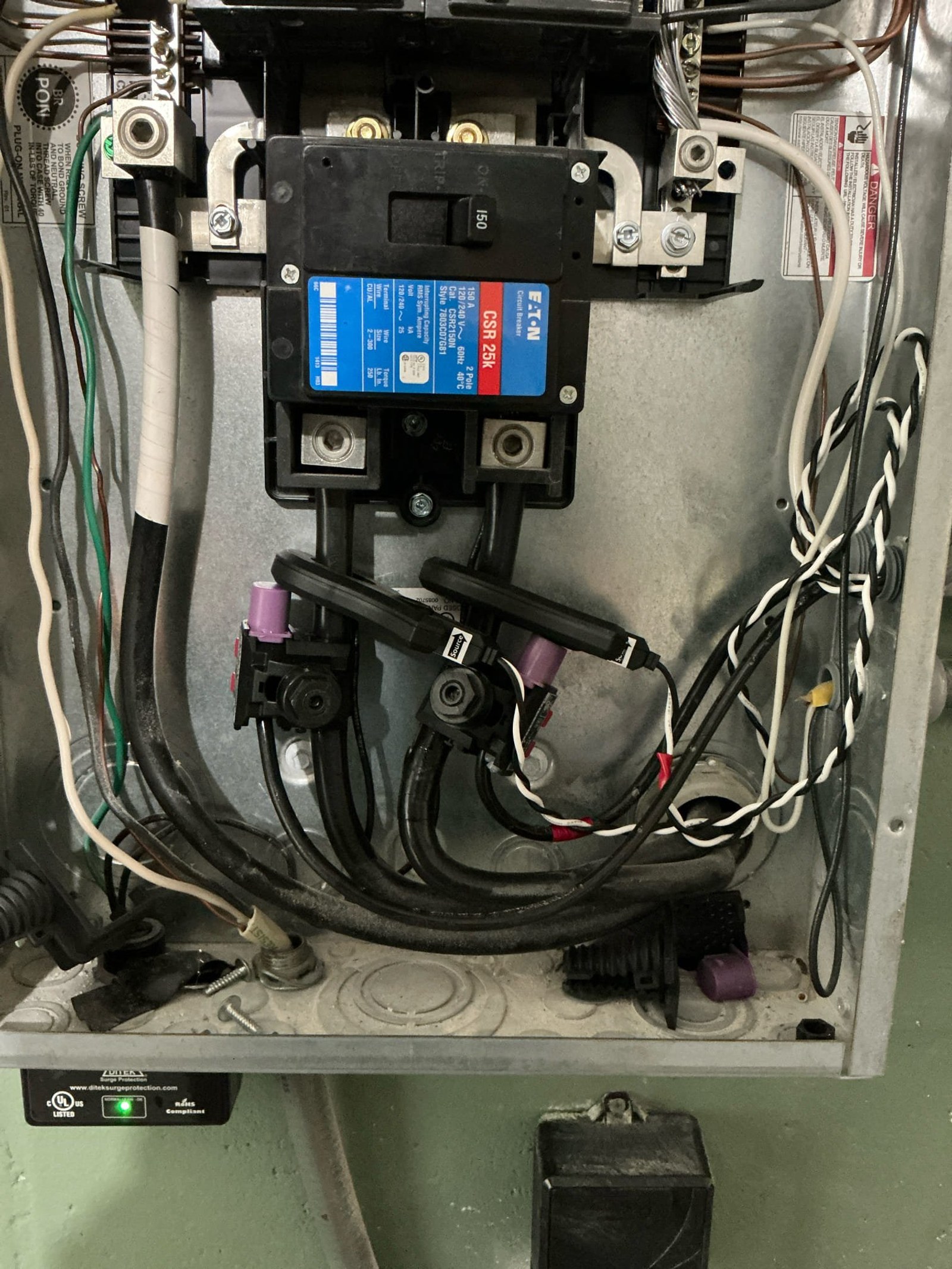
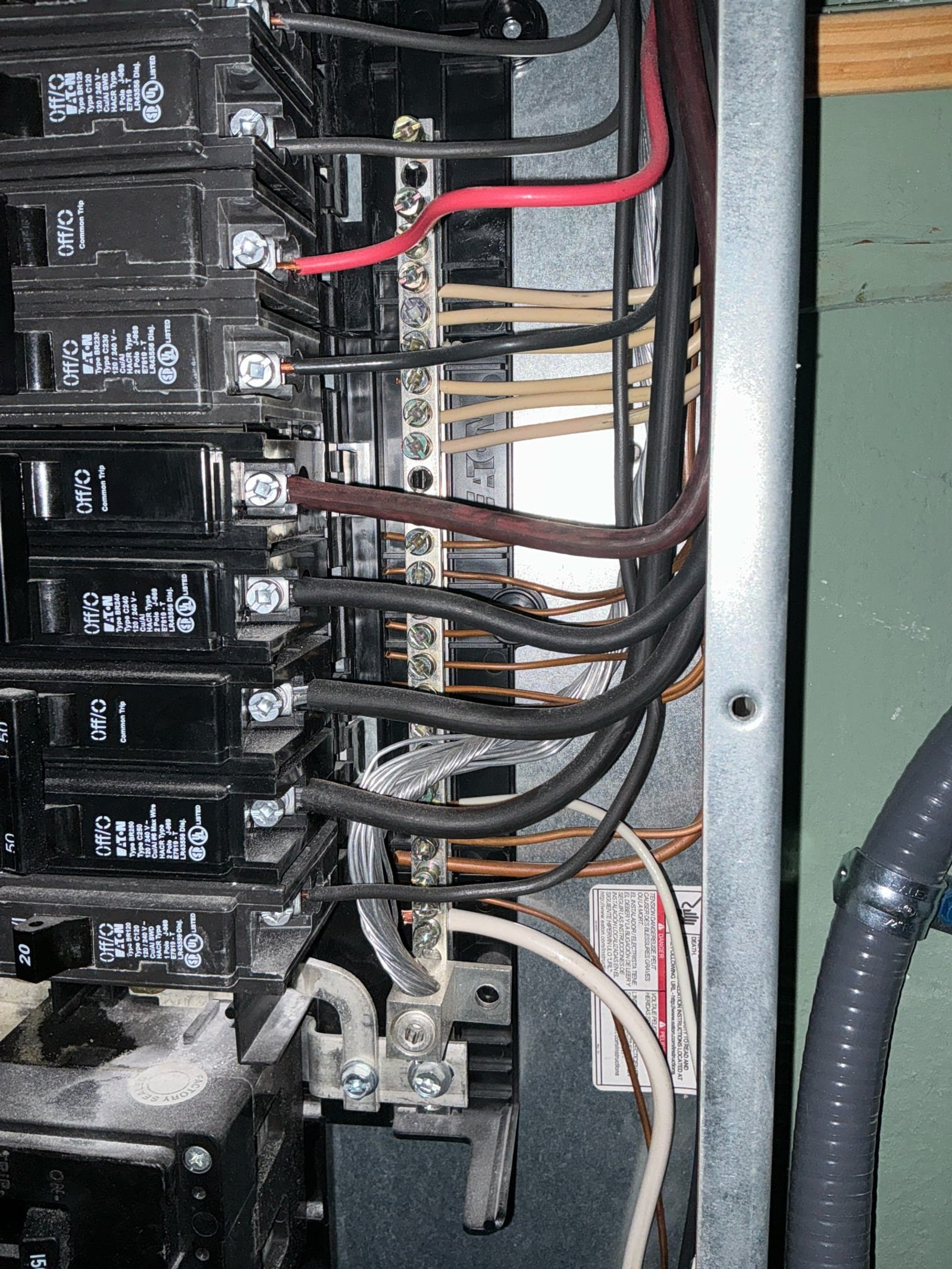
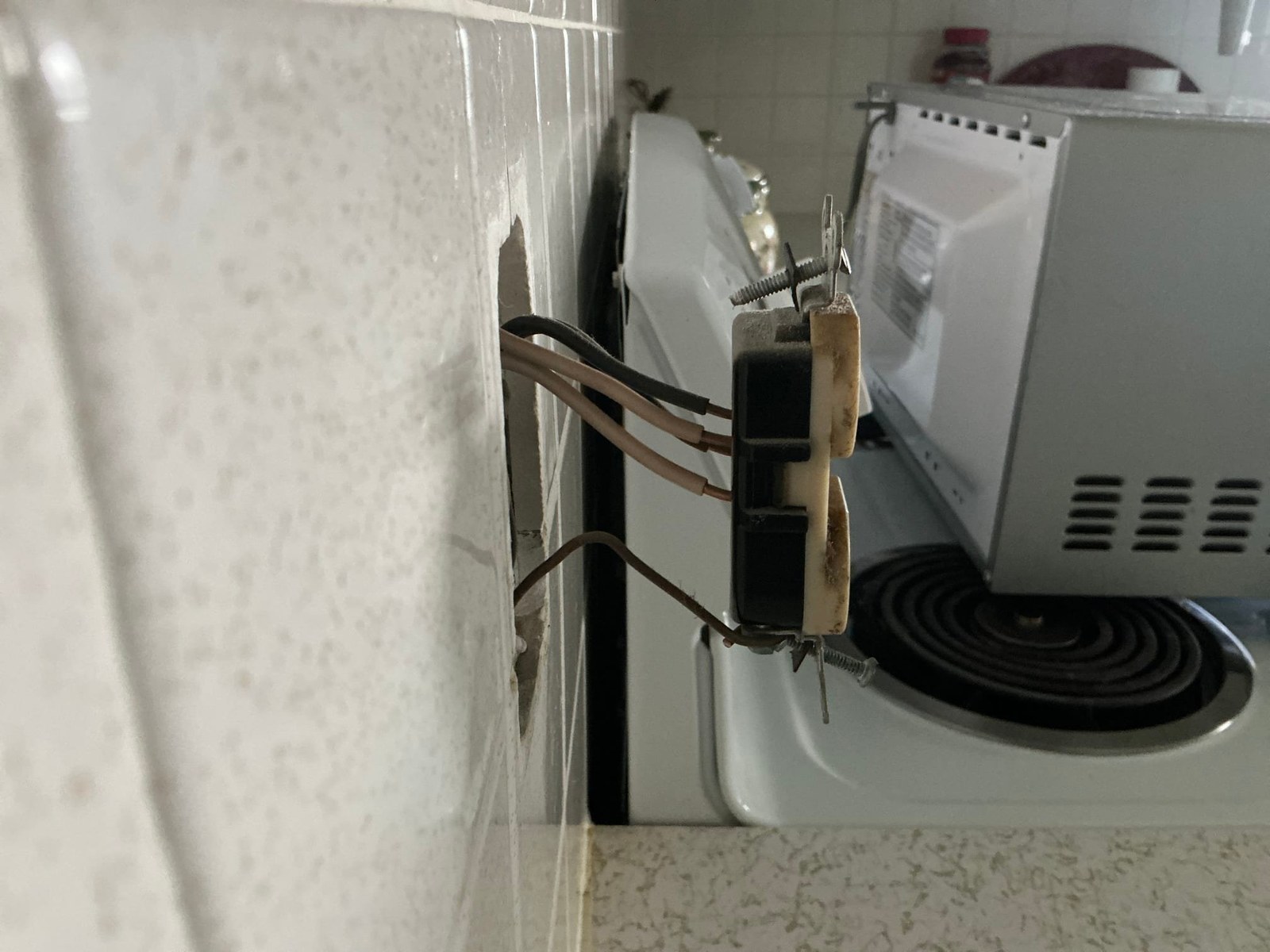
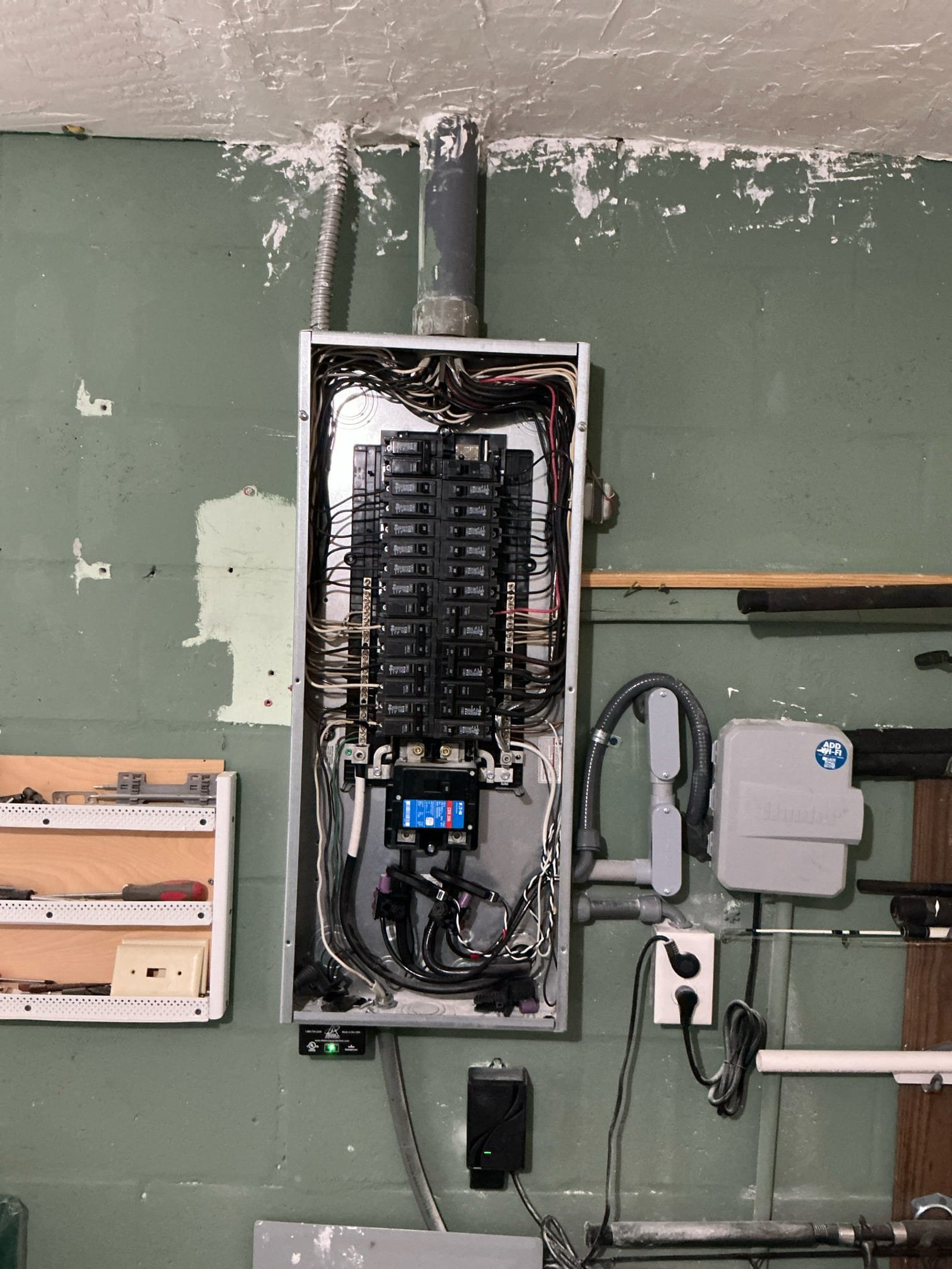
Our technician on-site started at the outlets themselves. Both were non-GFCI receptacles, consistent with the era in which they were originally installed. Neither offered the self-resetting ground-fault protection that today’s code requires in kitchen and wet-area locations under NEC 210.8. A load from the microwave and dishwasher running simultaneously had overwhelmed the upstream GFCI protection point, dropping both outlets.
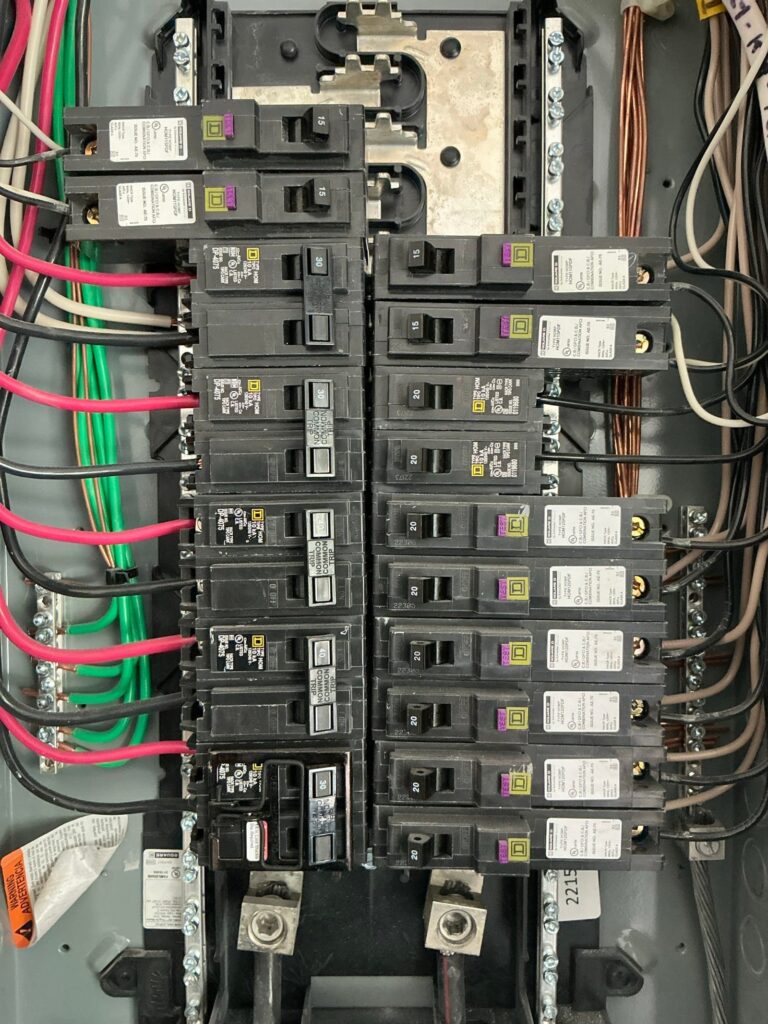
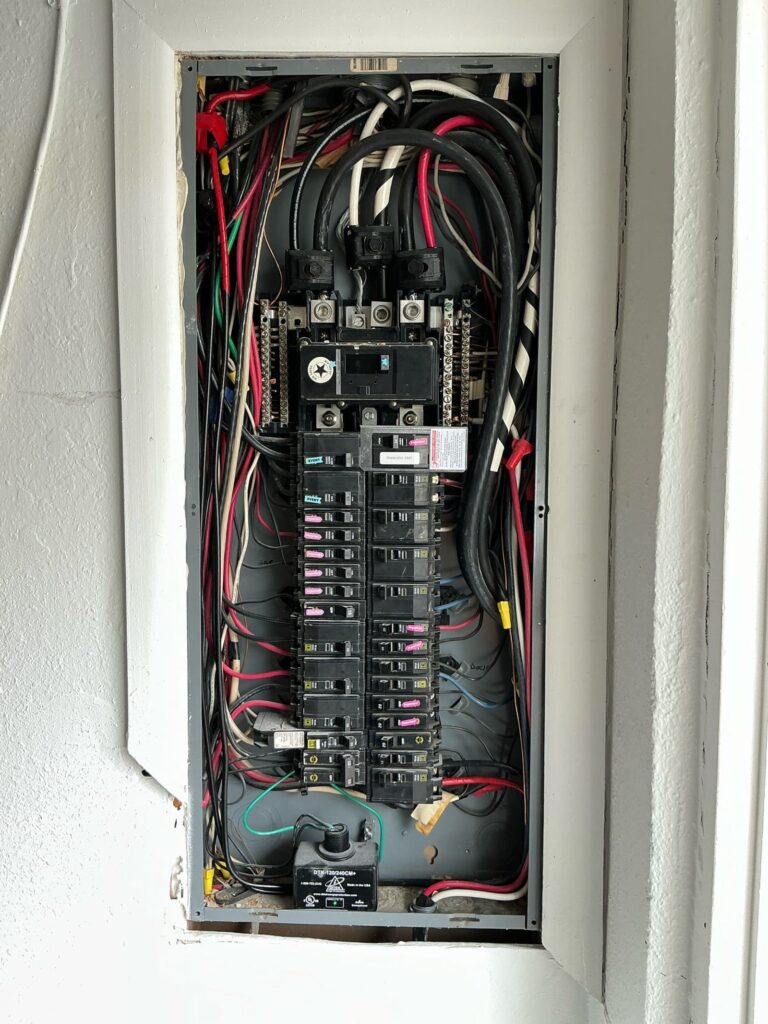
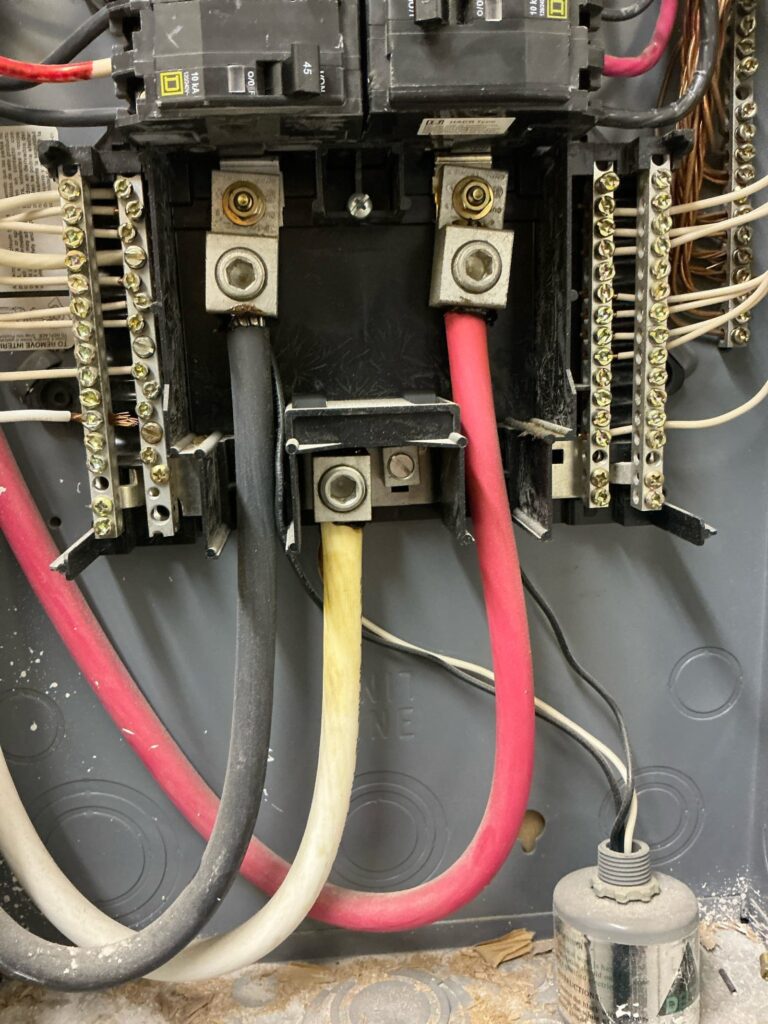
The broader visual inspection of the home revealed a more complex picture. A studio apartment had been added to the original single-family property, along with a 27kW tankless water heater, a mini-split air conditioner, an EV charger, and a sub-panel to carry those additional loads. The original panel appears to have been replaced at some point. Several areas of the electrical system did not meet current code — work that appears to have been completed without permits or a licensed contractor. Additionally, FPL had removed the utility meter, likely in response to conditions at the meter can.
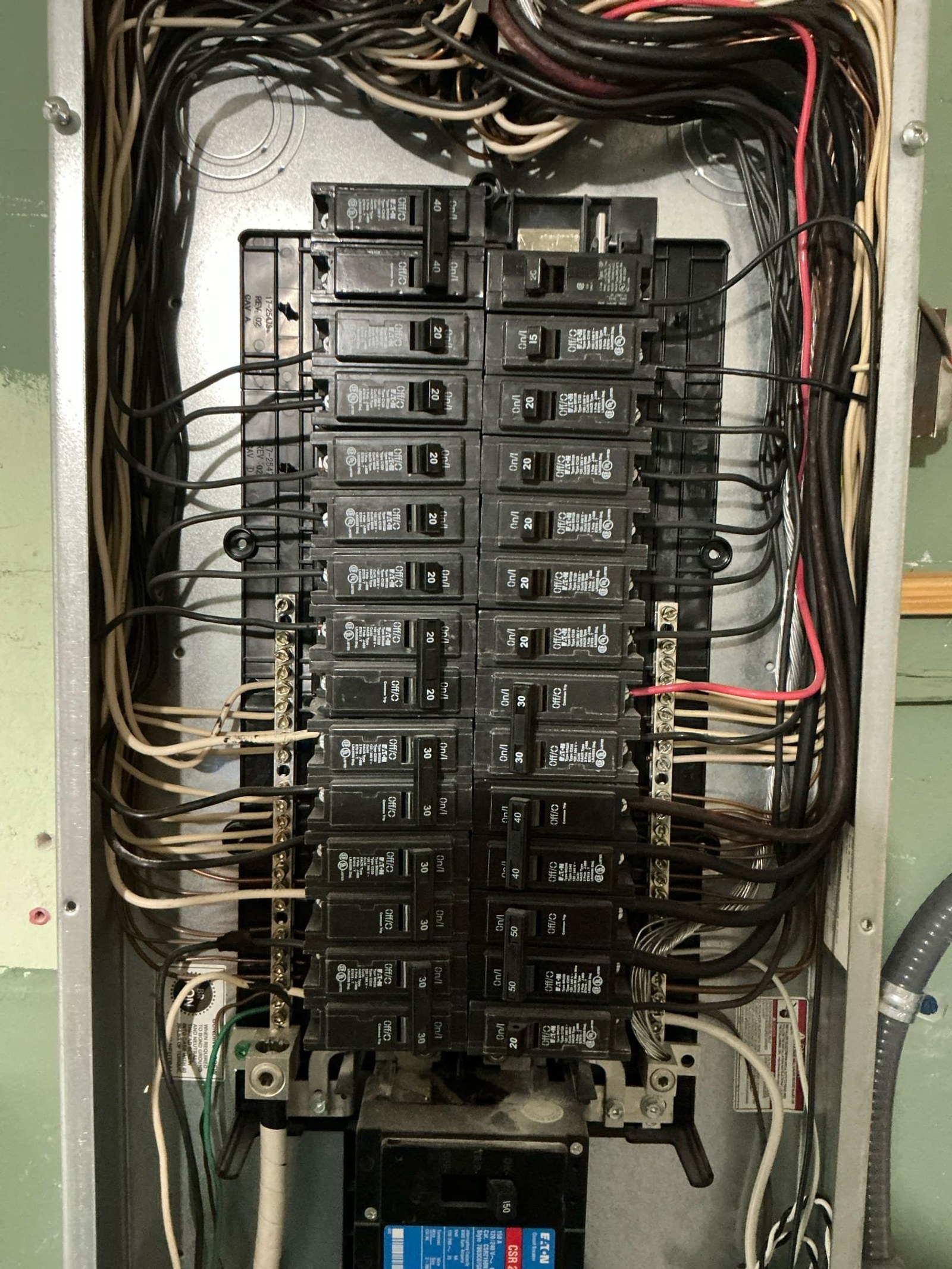
The inspection scorecard showed the Square D Homeline 200-amp panel in generally sound shape — neutrals and grounds separated, no double-tapped breakers, breakers sized correctly, and no open knockouts. Two items did stand out as worth addressing down the road: the receptacles had been backstabbed rather than screw-terminated, and no whole-home surge protection was present.
What the Backstabbing Means
Backstabbed connections were a common shortcut in homes wired before roughly 2005. The spring-tension contact inside the receptacle body gradually loses its grip, contact resistance climbs, and the result is the kind of intermittent drop-out the homeowner described. It is a wiring method that predates the reliability standards most homeowners expect today — and replacing the outlets addressed it directly.
The Surge Protection Gap
The inspection also flagged the absence of a whole-home surge protective device. With a 27kW tankless water heater, a mini-split, and an EV charger all on the system, surge protection is a meaningful reliability upgrade. NEC 230.67 now requires a Type 1 or Type 2 SPD at the service entrance for dwelling units — and NEC 285.25 governs how a Type 2 device is installed. This is a straightforward addition when the homeowner is ready.
What We Fixed
Our crew replaced three receptacles with Pass & Seymour 1597-TRW 15A 125V self-testing GFCI tamper-resistant outlets and finished each with a Mulberry 76401 single-gang Decora semi-gloss white metal plate. These outlets include a built-in self-test feature that periodically verifies the ground-fault protection is active — so the homeowner does not have to remember to test manually. Under NEC 406.4(D), replacement receptacles in locations requiring GFCI protection must meet current requirements, which these exceed. Tamper-resistant slots also satisfy NEC 406.12 for dwelling-unit receptacles.
All three outlets are screw-terminated — no backstabbing — for a durable, code-compliant connection. Power was restored, and the homeowner received a clear written summary of the broader inspection findings.
Why This Clearwater Gfci Protection Matters for Homeowners
For a household running a modern kitchen, losing two outlets mid-meal prep is more than an inconvenience — it disrupts the whole morning or evening routine. Restoring reliable power to those locations, and upgrading them to self-testing GFCI receptacles in the process, means the family can run the microwave and dishwasher together without worrying about a repeat trip.
The broader inspection findings are worth the homeowner’s careful attention. Work performed without permits on a single-family-zoned property creates complications that extend beyond electrical code — especially when zoning, permitting, and utility-metering issues are layered together. Our team provided a full written account of what was observed. A licensed Florida electrical contractor can help the homeowner understand the path forward for each item.
Finally, adding a whole-home surge protector to the Square D Homeline panel would give all the high-value equipment on this property — the EV charger, the mini-split, the tankless water heater, and everyday electronics — a quiet layer of protection through every Florida storm season. That is the kind of upgrade that works in the background so the household never has to think about it.
Code Compliance Cited in This Job
Every fix above maps to a specific section of NEC 2023. Each card links to NFPA’s public NEC index.
GFCI Protection for Personnel
NEC 210.8 requires GFCI protection for receptacles in kitchens, bathrooms, and other specified locations in dwelling units. The two dead outlets in this Port Richey home were non-GFCI receptacles in areas that now require ground-fault protection. Replacing them with self-testing GFCI receptacles brings the installation into full compliance. NFPA reference ›
Replacement Receptacle Requirements
When a receptacle is replaced in a location that requires GFCI protection under current code, the replacement must meet that requirement — even if the original installation predates it. All three outlets installed on this job are GFCI-protected and tamper-resistant, satisfying this section. NFPA reference ›
Tamper-Resistant Receptacles in Dwellings
NEC 406.12 requires tamper-resistant receptacles throughout dwelling units. The Pass & Seymour 1597-TRW units installed at this Port Richey home include tamper-resistant shutters, bringing these locations into full compliance with current dwelling requirements. NFPA reference ›
Surge Protective Device at Service Entrance
NEC 230.67 requires a listed surge protective device at the service entrance of dwelling units. The inspection found no SPD present on this home’s Square D Homeline 200-amp panel. Adding one is recommended, particularly given the high-load equipment — EV charger, tankless water heater, and mini-split — connected to this service. NFPA reference ›
Type 2 SPD Installation Requirements
NEC 285.25 governs the installation of Type 2 surge protective devices at distribution panels. When this homeowner is ready to add whole-home surge protection to the Square D Homeline panel, a listed Type 2 SPD installed per this section will protect all downstream circuits and connected equipment. NFPA reference ›
Common Questions
Questions homeowners ask after seeing this kind of work.
Why did running a microwave and dishwasher together knock out two outlets?
Both appliances draw significant current, and if they share a circuit — or if an upstream GFCI protection point isn’t rated for the combined load — the ground-fault device trips to protect the circuit. Older non-GFCI receptacles also lack the self-resetting protection that modern outlets provide. If you’ve had a similar drop-out in your kitchen, a quick inspection can confirm exactly which circuit is involved and whether an upgrade makes sense. to get on the calendar.
What is a self-testing GFCI outlet and why does it matter?
A self-testing GFCI receptacle runs an automatic internal check to confirm the ground-fault protection is working — without you having to press the test button manually. If it ever detects a problem, it locks out and signals that a replacement is needed. This keeps the protection reliable over time, which matters in kitchens and bathrooms where GFCI outlets see the most daily use. Unsure whether your current outlets are self-testing? Our team can so you know exactly what you have.
What does it mean if my home has unlicensed electrical work?
Work performed without a licensed electrician and proper permits may not meet current code, can complicate homeowner’s insurance claims, and creates challenges at resale or during refinancing. In Florida, a licensed electrical contractor can perform a thorough inspection, document what was found, and outline the steps needed to bring the system into compliance. If you’re in that situation, — it’s the clearest way to understand your options.
How often should I have my home’s electrical system inspected?
Once a year is a solid baseline for most homes. Older homes built before 1990, homes that have added significant new loads like an EV charger or large appliances, and homes that have weathered recent storms may benefit from inspections more frequently. A yearly check catches small issues — a worn outlet, a loose connection — before they grow into larger ones, keeping everyday life running smoothly. to set up your annual inspection.
Do I need a whole-home surge protector if I already have power strips with surge protection?
Point-of-use surge strips protect individual devices, but they don’t shield hardwired equipment like a tankless water heater, mini-split AC, EV charger, or the panel itself. A whole-home Type 2 SPD installed at the service panel catches large voltage spikes before they reach any circuit in the house, giving every appliance a first line of defense. For homes with modern high-load equipment, the two layers work well together. to ask our team about the right SPD for your panel.
Want to see more real jobs like this one? Browse our completed case studies or explore our services.