This Homosassa Fixture Fix surge protection case study walks through the real diagnosis, the fix, and the code details from a recent service call. A homeowner in Homosassa, FL called us about a front-porch switch that had stopped working. Once our field team arrived and opened things up, the story got bigger: Hurricane Milton had left a quiet trail of thermal stress across the home’s fixtures, smoke alarm, and bath fan — and the home had no surge protection to prevent a repeat. We replaced a damaged 4-inch recessed LED wafer fixture, removed the compromised smoke alarm, and documented every item the next visit should address so the family can plan confidently.
The Problem
The call started simply enough.
“The switch for my front porch light just stopped working. It wasn’t doing anything.”
That’s a common symptom after a power surge cycles through a home. The switch itself was fine — the fixture behind it had taken the hit. Once our technician on-site began the visual safety inspection, it became clear the porch light was only one piece of a larger picture.
Investigation
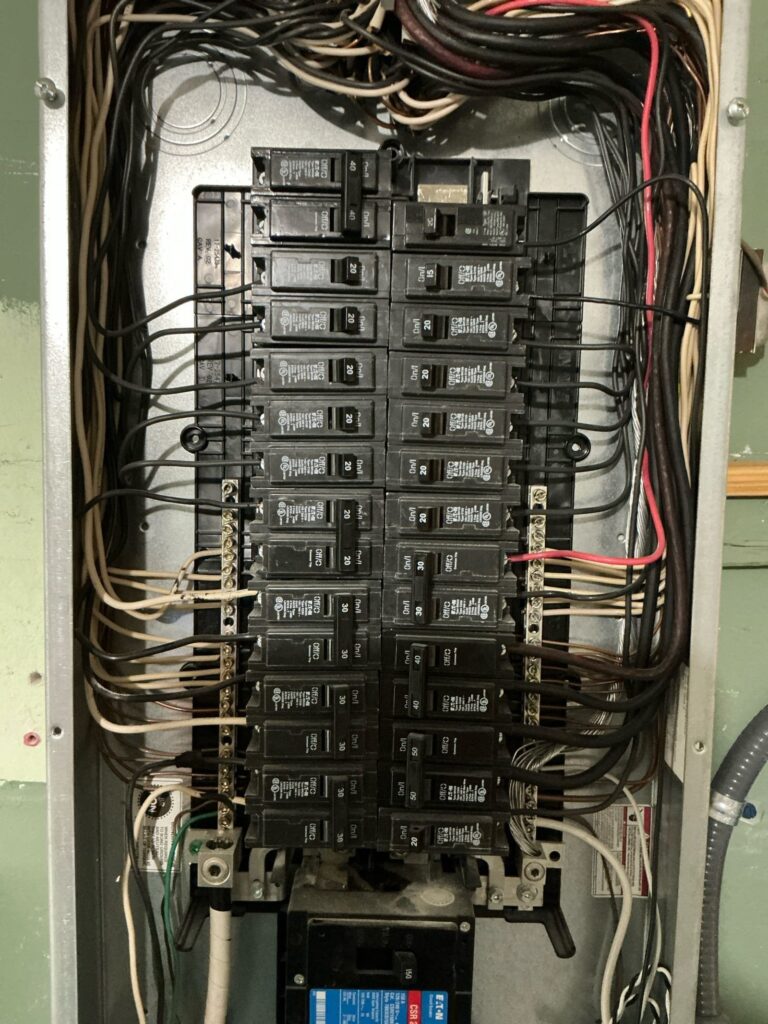
Our crew walked the full electrical system as part of the visit. The 200-amp Eaton BR panel itself checked out well: neutrals and grounds properly separated, no double-tapped breakers, no open knockouts, circuits correctly labeled, and breakers properly sized throughout. The grounding system passed, outlets showed no backstabbing or voltage drop, and GFCI protection was present in required areas. AFCI protection was in place, and the meter can was in good condition.
However, two findings stood out immediately.
Surge Protection — Not Present
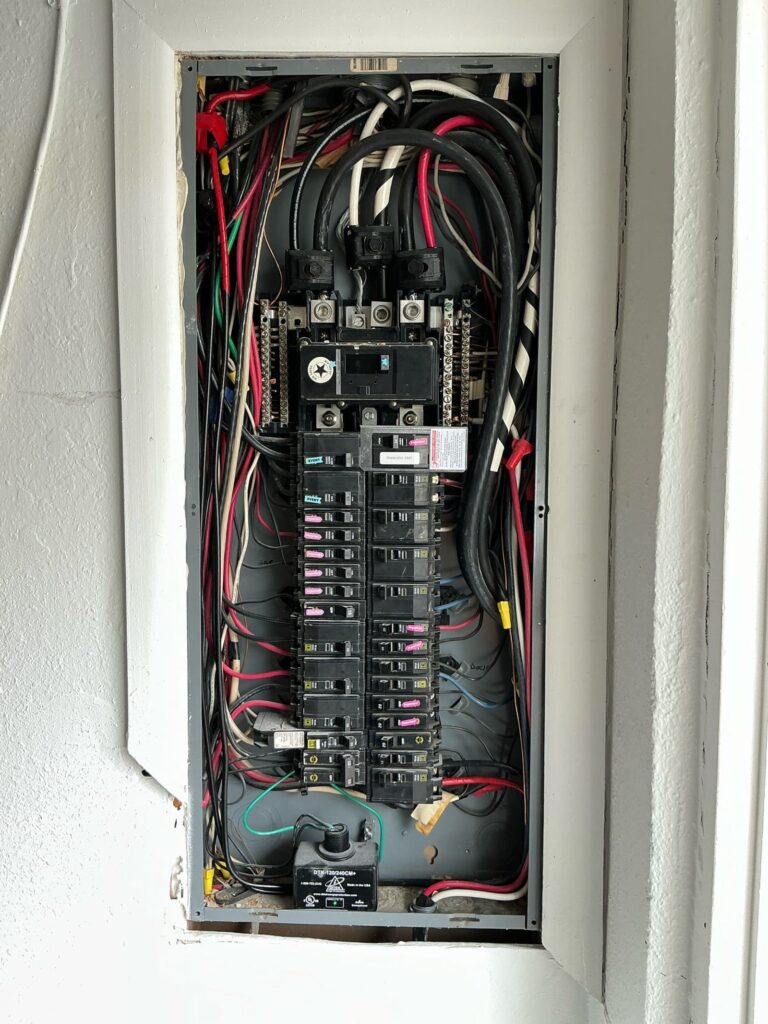
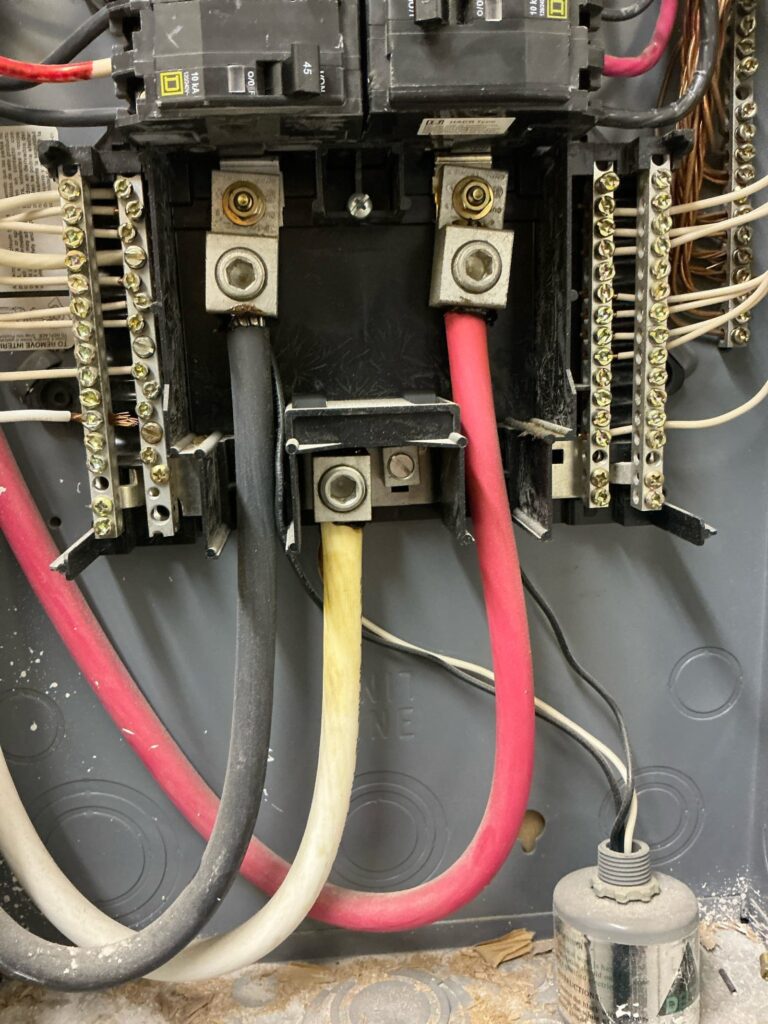
The inspection confirmed zero whole-home surge protection. Hurricane Milton delivered the kind of voltage transients that travel through the utility line and into every connected circuit. Without a device at the service entrance to absorb that energy, it distributed itself across fixtures, the smoke alarm, and the bath fan. The same thing will happen in the next significant storm if protection isn’t added.
Storm-Damaged Equipment
The smoke alarm had absorbed enough surge energy that our technician removed it from service on the spot — it was no longer functioning as intended. Multiple LED fixtures showed signs of wear consistent with surge exposure, and the bath fan was flagged for replacement. The smoke detector inspection item scored a hard fail on the safety checklist; that’s the item that needed the most immediate attention.
The inspection also noted the home has no generator prewire and no standby generator — useful context for a Homosassa household that sees regular storm seasons.
What We Fixed
On this visit, our field team focused on the immediate repair that brought the homeowner out of the dark on the front porch.
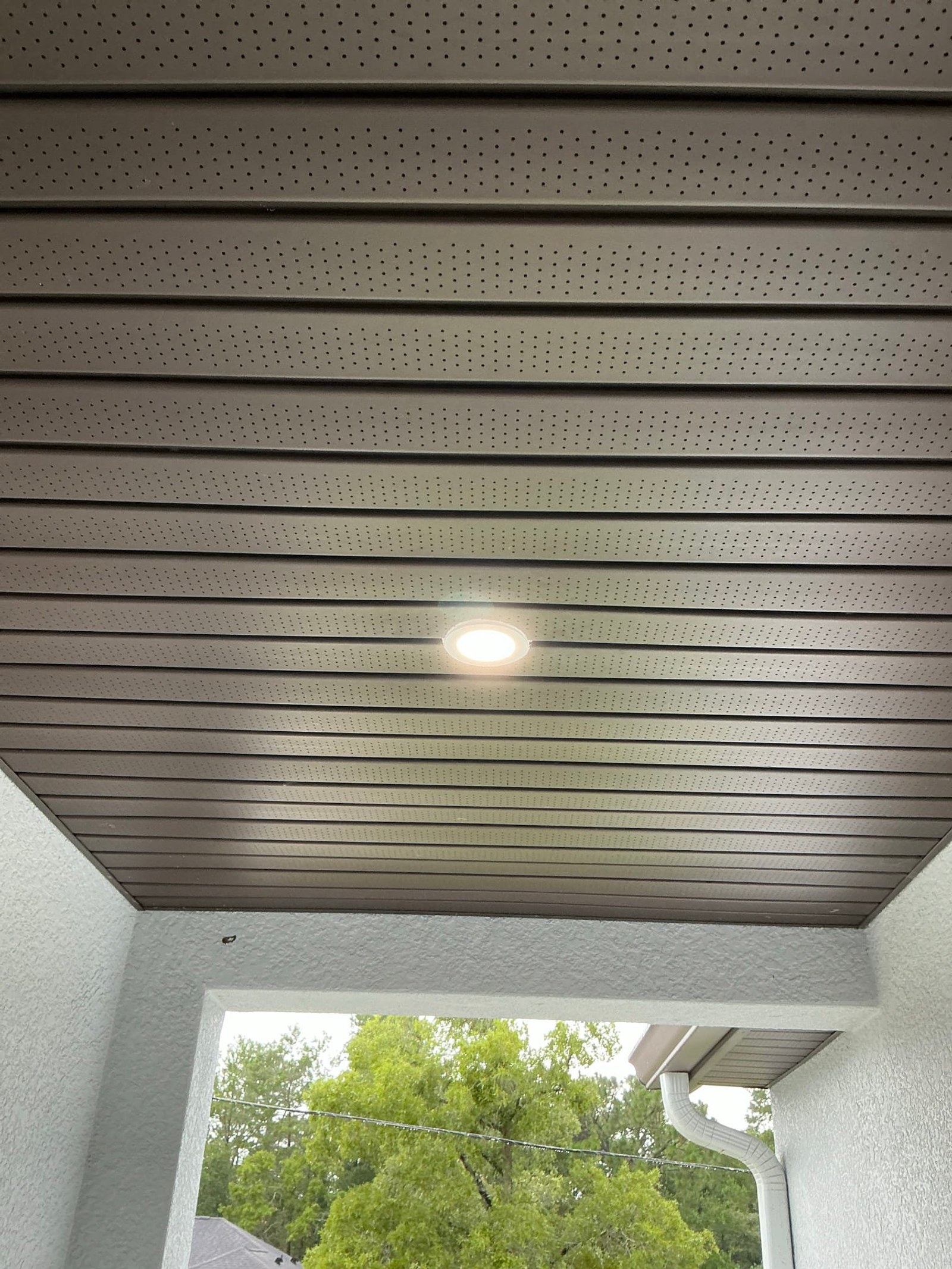
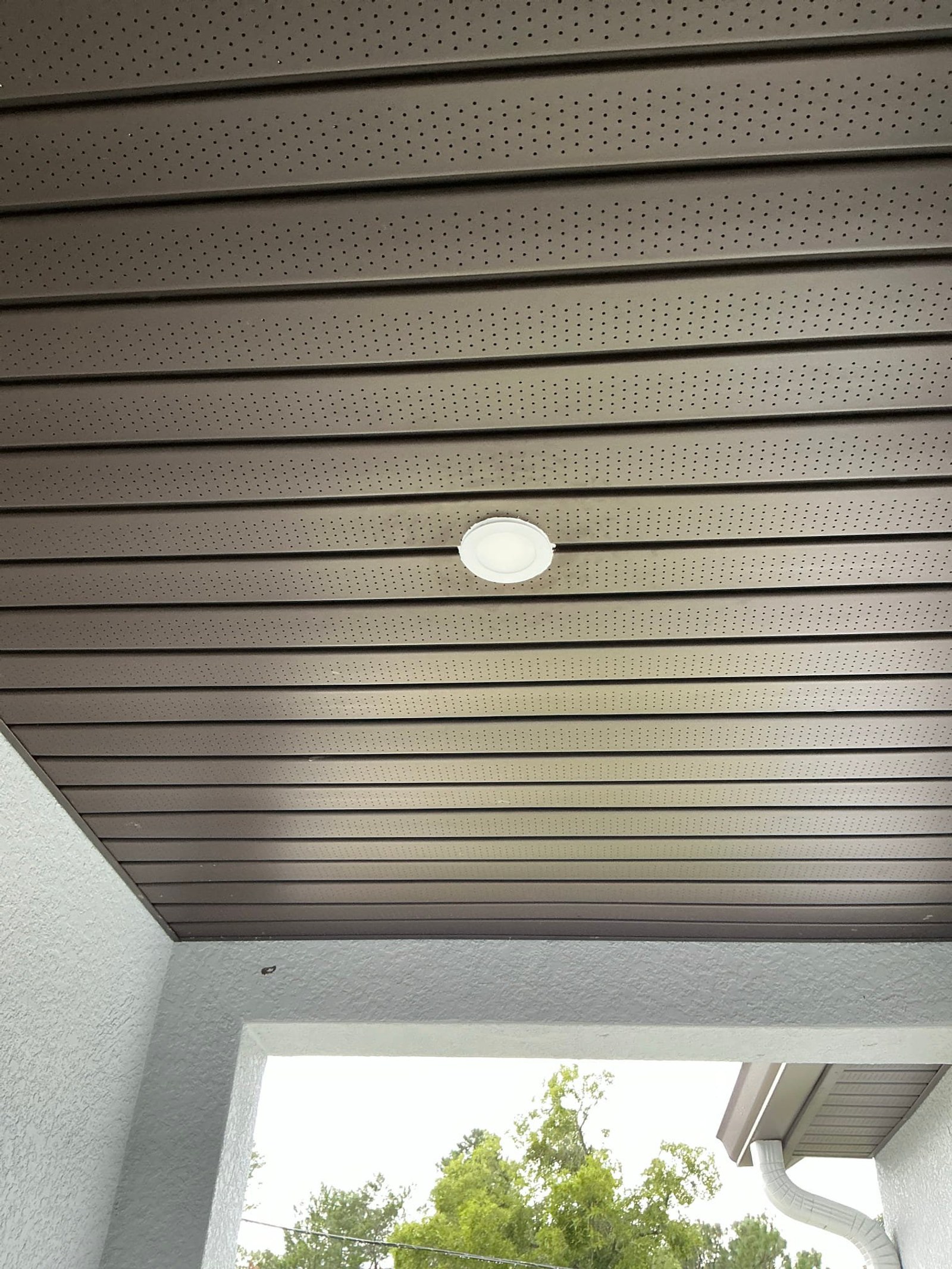
We installed one 4-inch recessed LED wafer fixture, pulling power from the existing switch location. The slim-profile wafer design fits flush with no housing can required, making it a clean, efficient replacement for the damaged fixture. The porch switch now operates exactly as it should.
We also removed the non-functional smoke alarm that had been compromised during Hurricane Milton, clearing it from service and documenting it for replacement on a follow-up visit.
All remaining findings — whole-home surge protection per NEC 230.67, the additional LED fixtures showing surge wear, the bath fan, and the smoke alarm replacement — were captured in the inspection report for the homeowner to schedule.
Why This Homosassa Fixture Fix Surge Protection Matters for Homeowners
Hurricane Milton is a good reminder that surge damage doesn’t always announce itself loudly. Sometimes a fixture just stops working. Sometimes a smoke alarm goes quiet. The voltage transient came and went in milliseconds, but the effects show up over the following days and weeks as equipment that should work simply doesn’t.
For a family in Homosassa, whole-home surge protection at the service entrance means that the next storm — and there will be a next storm — doesn’t restart this cycle. Your LED fixtures, your bath fan, your refrigerator, your AC controls, and your smart devices all ride through the event without skipping a beat. That’s the kind of quiet reliability a household shouldn’t have to think about.
Additionally, a working smoke alarm isn’t a checkbox — it’s the part of the home that speaks up for the family when they’re asleep or in another room. Replacing the compromised unit is the single highest-priority follow-up from this inspection. A 10-year sealed smoke/CO combination detector with interconnect means every room in the home stays aware, all the time, without battery replacements for a decade.
Finally, the overall panel condition in this home is genuinely solid. The Eaton BR 200-amp service is properly wired, correctly labeled, and sized for modern loads. The path forward here is adding the protective layers — surge protection, updated detectors — that let that good foundation do its job every storm season, every year.
Thomas Edison Electric holds Florida electrical contractor license EC13015487, and every inspection follows the same thorough checklist so nothing gets missed. Learn more about electrical safety education at ESFI.org.
“”
Code Compliance Cited in This Job
Every fix above maps to a specific section of NEC 2023. Each card links to NFPA’s public NEC index.
Surge Protective Device at Service
NEC 230.67 requires a listed surge protective device (SPD) at the service entrance of all new dwelling-unit services. This home had no SPD installed, leaving every circuit exposed to the voltage transients that traveled through the utility connection during Hurricane Milton. Installing a Type 1 or Type 2 SPD at the Eaton BR panel is the code-aligned next step. NFPA reference ›
Type 2 SPD Installation Requirements
NEC 285.25 governs the installation of Type 2 SPDs — the most common whole-home surge device installed at the load-side lugs of a residential panel. For this Homosassa home, a Type 2 device installed at the Eaton BR panel would provide the first line of defense against future surge events on the utility side. NFPA reference ›
AFCI Protection
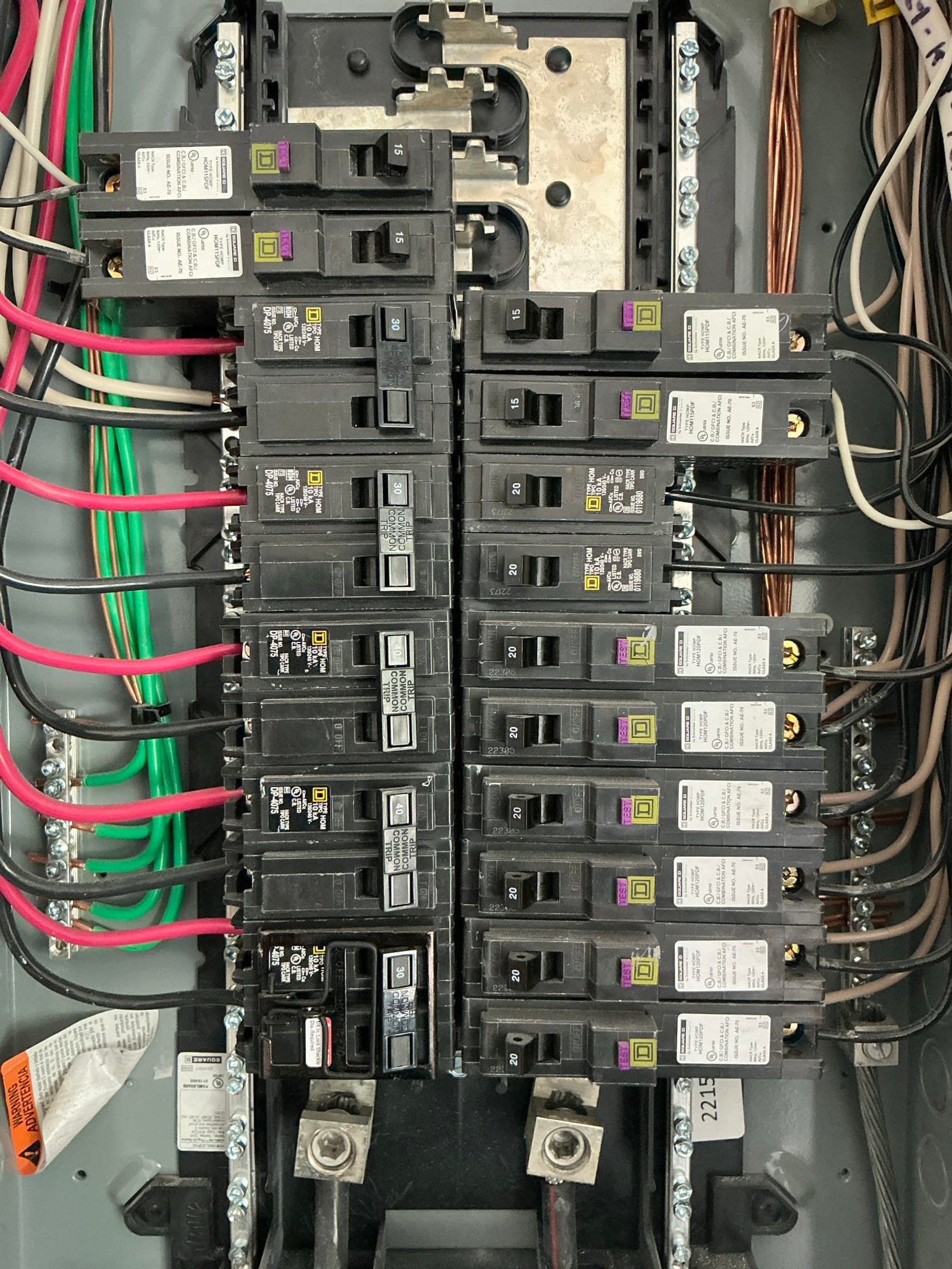
NEC 210.12 requires AFCI protection on branch circuits supplying dwelling-unit outlets in bedrooms, kitchens, and living areas. The inspection confirmed AFCI protection is present in this home — a green-pass finding that means the branch circuits serving the replaced LED fixture already carry the arc-fault detection layer required by current code. NFPA reference ›
GFCI Protection for Personnel
NEC 210.8 specifies where GFCI protection is required in dwellings, including bathrooms, kitchens, garages, and outdoor receptacles. The inspection confirmed GFCI protection is installed in all required areas of this Homosassa home — a passing result that reflects a well-maintained system. NFPA reference ›
Replacement Receptacle Requirements
NEC 406.4(D) states that replacement receptacles must comply with current code requirements, including tamper resistance where required. The inspection confirmed outlets throughout this home are tamper-resistant and properly grounded — consistent with current NEC standards. NFPA reference ›
Common Questions
Questions homeowners ask after seeing this kind of work.
Can a power surge from a hurricane really damage LED fixtures and smoke alarms?
Yes — modern LED drivers and the electronics inside smoke alarms are sensitive to the voltage spikes that travel through utility lines during and after a major storm. The damage isn’t always immediate; sometimes a fixture dims, flickers, or simply stops responding days later. If your home went through Hurricane Milton without whole-home surge protection, a post-storm inspection is the best way to know what’s still performing correctly. Schedule online and our team can walk through every circuit.
How often should I have my home’s electrical system inspected?
A yearly inspection is a good baseline for most homes. Homes built before 1990 or homes that have weathered a recent major storm — like Hurricane Milton — can benefit from inspections more frequently, since older wiring and surge-exposed equipment can change status quickly. Annual check-ins let a licensed electrician catch small concerns before they become bigger ones. Book a safety inspection to get on the calendar.
What is whole-home surge protection and how is it different from a power strip?
A whole-home surge protective device installs at the service panel and intercepts voltage transients before they reach any circuit in the house — including hardwired equipment like your AC, water heater controls, and LED fixtures that a power strip can never protect. Power strips only guard whatever is plugged into them, and they have limited capacity. Under NEC 230.67, new dwelling-unit services are now required to include an SPD. If your home doesn’t have one, it’s worth adding. Schedule online to discuss the right device for your panel.
My smoke alarm was damaged by a surge — is it safe to leave the space without one while I wait to replace it?
It’s best not to wait. A non-functional smoke alarm leaves the household without early warning in that area of the home. NFPA 72 governs detector placement and performance requirements, and a 10-year sealed lithium smoke/CO combination detector with interconnect is a straightforward same-visit replacement in most cases. If our team flagged your detector during an inspection, replacing it quickly is the highest-priority follow-up. Book a return visit and we can take care of it right away.
The rest of my panel passed inspection — do I still need to add surge protection?
Absolutely — a healthy panel and surge protection serve two different functions. A well-labeled, properly sized panel like an Eaton BR 200-amp distributes power correctly under normal conditions. But it offers no defense against the voltage spikes that come from lightning strikes or utility switching events outside the home. Adding a Type 2 SPD at the panel gives every circuit in the house a protective layer without touching anything that already passes inspection. Schedule online to add it to your next visit.
Want to see more real jobs like this one? Browse our completed case studies or explore our services.