This Trinity patio fan case study walks through the real diagnosis, the fix, and the code details from a recent service call. When a homeowner in Trinity, FL asked us to swap out a patio light for a ceiling fan, the job sounded straightforward. Our field team installed the client-supplied fan and got the patio working the way the homeowner wanted — and along the way, a routine visual inspection uncovered a handful of panel and wiring conditions worth documenting for the future.
The Problem
The homeowner’s patio ceiling fixture had stopped working reliably. They wanted the old light removed and a new ceiling fan installed in its place — a common upgrade that makes an outdoor living space noticeably more comfortable in Florida’s heat.
“I just want the ceiling fan up and working on the patio.”
Simple enough. But our crew always performs a visual safety inspection while on-site, and what they found in the GE 200-amp panel and throughout the home gave us a useful conversation to have with the homeowner.
Investigation
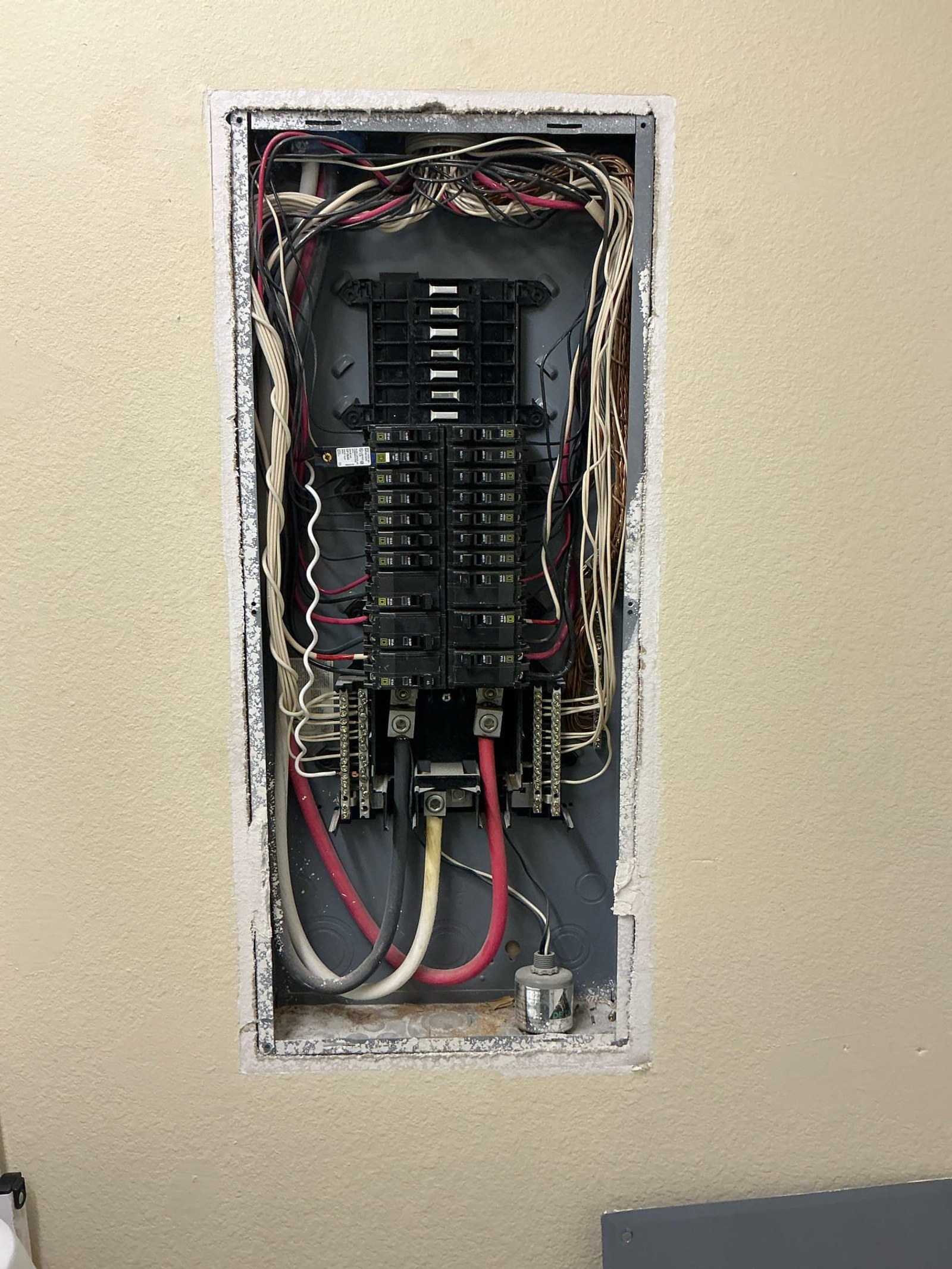
With the patio circuit traced and the fan location confirmed, our technician on-site turned attention to the panel and a quick walk-through of the home.
Panel Observations
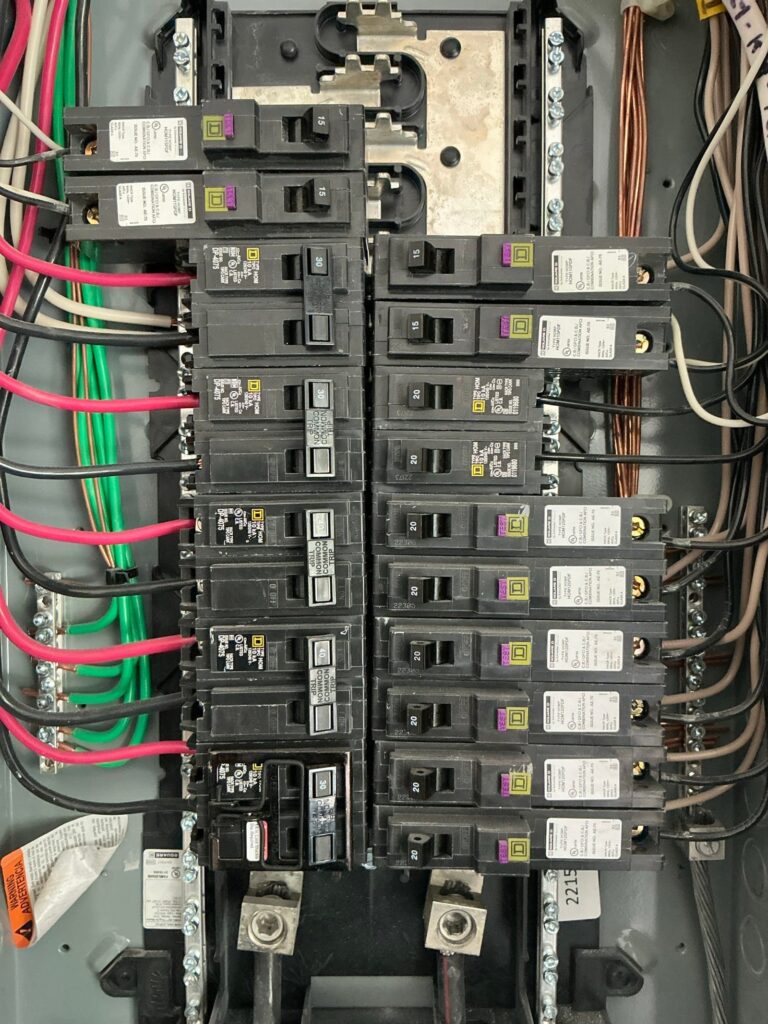
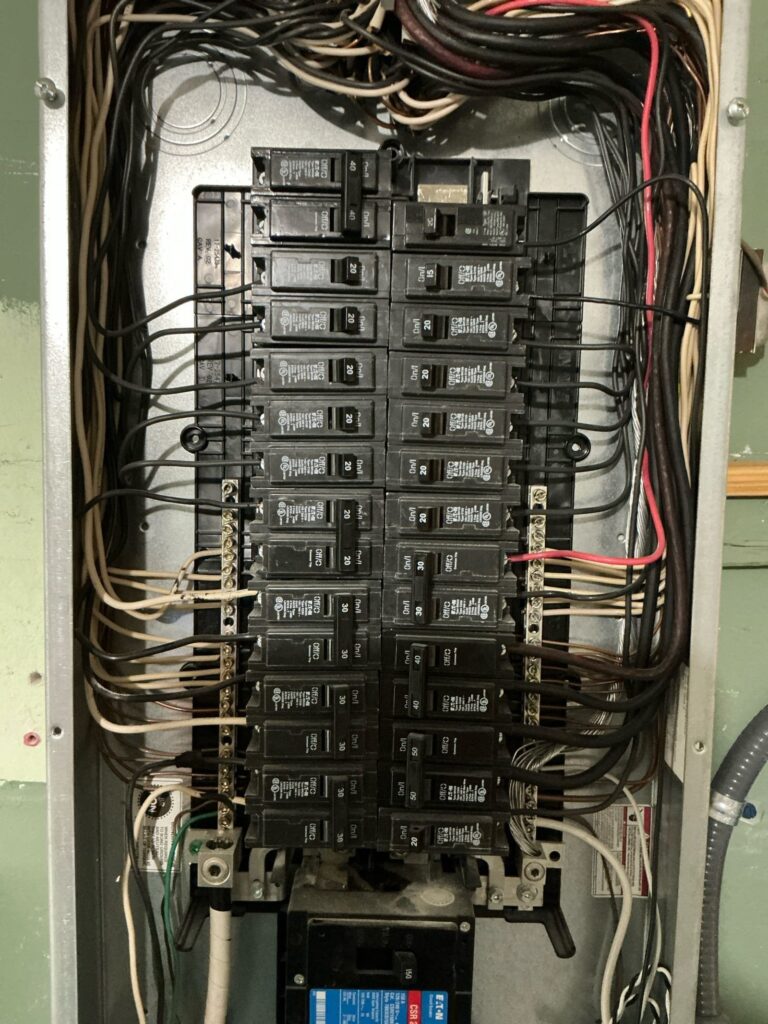
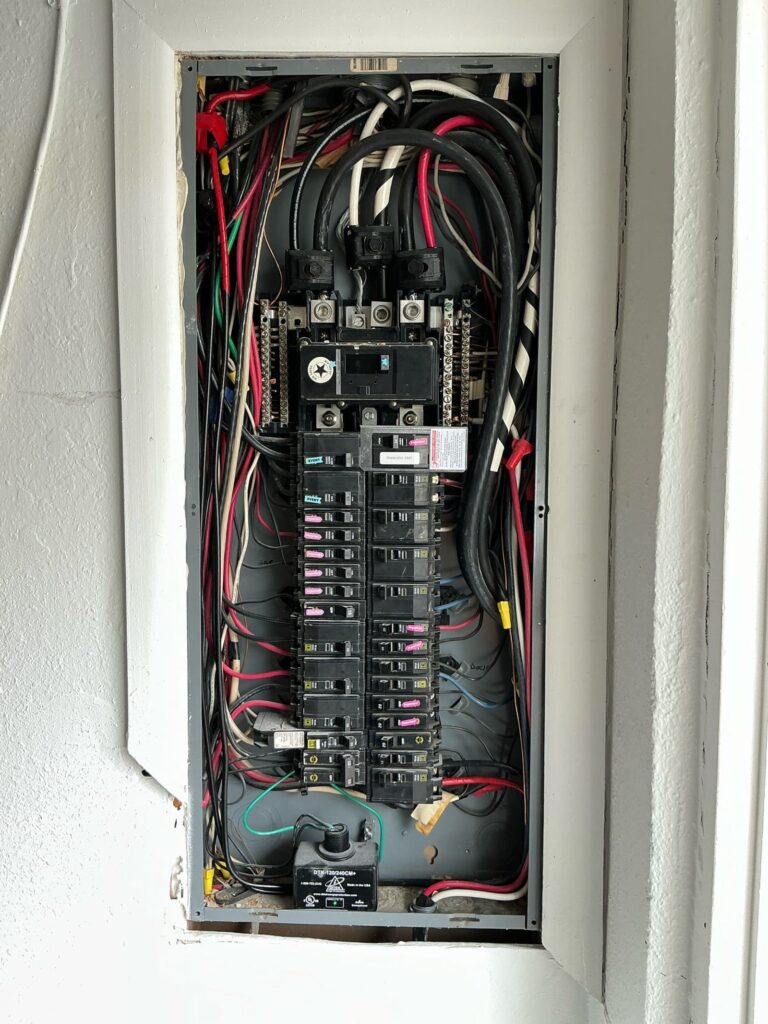
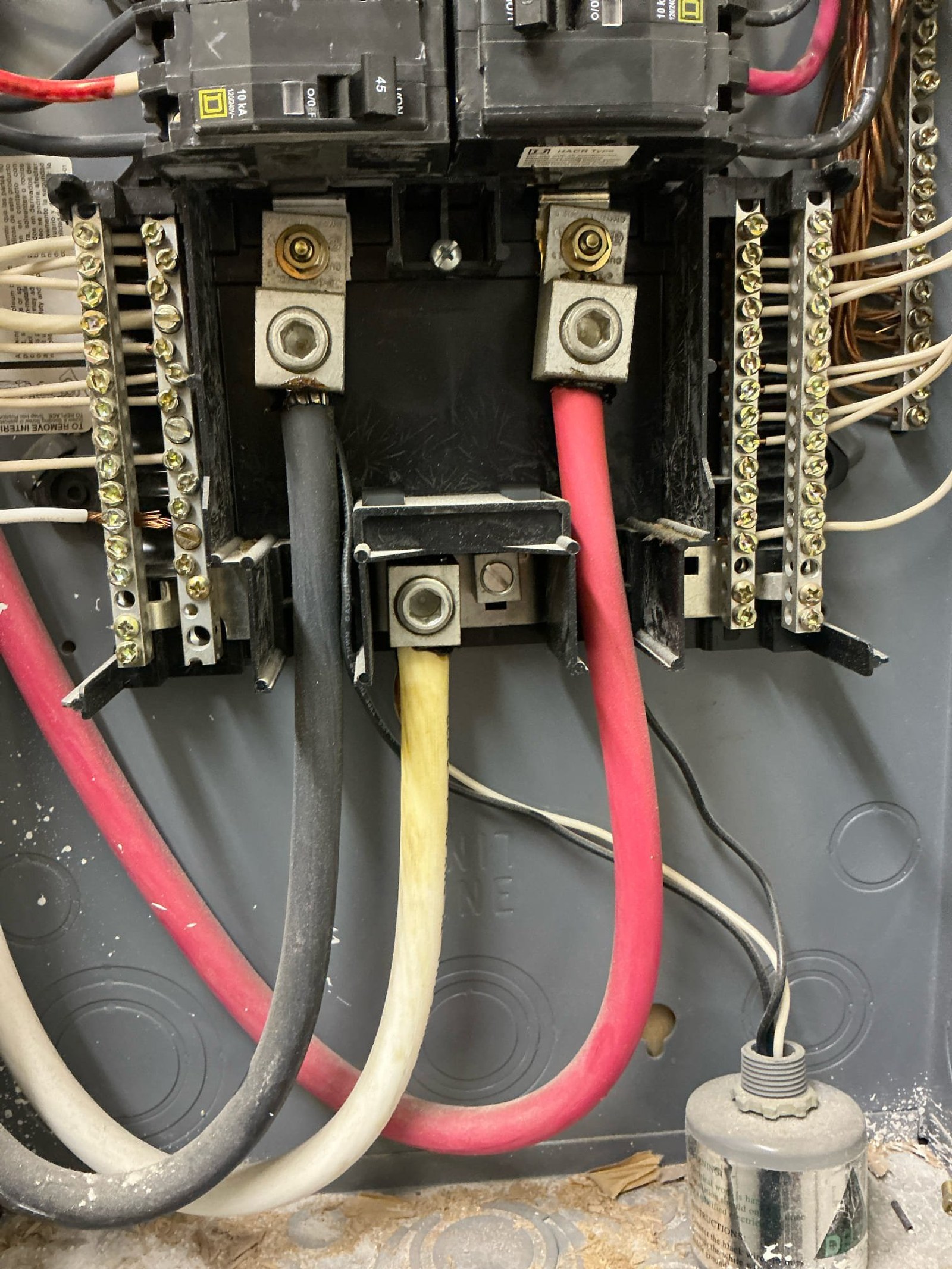
Inside the GE 200-amp service panel, the inspection flagged double-tapped terminals on the neutral and ground bus bar — a condition where more than one conductor shares a single lug. That setup predates current NEC 110.14(B) guidance on terminal connections, which calls for conductors to be landed on individually rated lugs. The inspection also noted corrosion and discoloration on the bus bar, open knockout openings in the panel enclosure, and the absence of whole-home surge protection — all common findings in panels of this era.
The grounding system showed as a concern worth revisiting. Outlets in several areas of the home registered as not fully grounded, and the inspection noted some backstabbed receptacle connections — a wiring shortcut common in homes built before roughly 2005, where a spring-clip connection replaces a screw terminal. Over time, spring tension in those clips eases and contact resistance rises, which can cause intermittent flickering or dead outlets.
Wiring Walk-Through
The crew also noted that some wiring in the home had been enclosed by wire mold when ceilings were lowered at some point — a detail worth flagging because NEC 408.7 requires panel openings to be closed, and accessible junction points are important for any future work. Smoke detectors were present but past their useful service life, and no carbon monoxide detector was found.
Additionally, no surge protective device was present at the service — a meaningful gap for a Florida home exposed to regular lightning activity.
What We Fixed
After walking the homeowner through every finding, the decision was straightforward: move ahead with the ceiling fan for now, and keep the panel and wiring notes on file for a future visit.
Our field team removed the existing patio light fixture and installed the client-provided ceiling fan at the existing ceiling box location. The patio ceiling height was approximately eight feet — within standard range for a flush or low-profile fan mount. Connections were made cleanly, the fan was tested through all speeds, and the circuit was confirmed operational before we packed up.
The homeowner also received a military discount on the work — something we’re glad to offer our veterans and active-duty customers.
All of the panel and wiring observations are documented and ready to act on whenever the homeowner is ready to move forward.
Why This Trinity Patio Fan Install Matters for Homeowners
A ceiling fan on a covered patio is one of those small upgrades that changes how a family uses their outdoor space. In Trinity’s warm climate, that patio goes from occasionally comfortable to genuinely enjoyable for evening meals, weekend gatherings, and the kids playing outside after school.
The other findings — double-tapped bus bar terminals, absent surge protection, backstabbed receptacles — are worth noting not because they demand immediate action, but because addressing them over time is how a home stays reliable year after year. Surge protection at the service panel, for example, means the family’s refrigerator, AC system, smart-home devices, and computers all keep running through Florida’s storm season without a second thought. Per NEC 230.67, a surge protective device is now required at the service of new dwelling units — and retrofitting one to an existing home is a straightforward upgrade.
Similarly, resolving the double-tapped bus bar connections brings the panel in line with current NEC 110.14(B) terminal standards and gives the household the clean, organized panel that makes every future electrical project easier. None of these are emergencies — they’re simply opportunities to bring the home forward, one step at a time, so everything keeps running the way the family expects it to.
Code Compliance Cited in This Job
Every fix above maps to a specific section of NEC 2023. Each card links to NFPA’s public NEC index.
Terminal Connections
This section requires that conductors be landed on terminals rated for the number and size of conductors involved. On this job, the inspection found double-tapped neutral and ground bus bar connections — a common condition in older panels where multiple wires share a single lug not rated for that configuration. Correcting this brings the panel in line with current connection standards. NFPA reference ›
Unused Panel Openings
Open knockout openings were identified in the GE panel enclosure during the visual inspection. NEC 408.7 requires all unused openings in panel enclosures to be closed with listed filler plates. Closing these openings maintains the enclosure’s integrity and keeps the interior clean for future service work. NFPA reference ›
Surge Protective Device at Service
No whole-home surge protective device was present at the service panel. NEC 230.67 now requires a listed SPD at the service for new dwelling unit installations, and retrofitting one to an existing home is a recommended upgrade — particularly in Florida where lightning activity is among the highest in the country. Adding an SPD keeps appliances, HVAC equipment, and electronics running reliably through storm season. NFPA reference ›
Replacement Receptacle Requirements
The inspection found backstabbed receptacle connections at several outlets — a wiring method common in homes built before approximately 2005 but no longer recommended under current standards. NEC 406.4(D) specifies that replacement receptacles must meet current requirements. When these outlets are addressed, transitioning from backstab to screw-terminal connections is the correct approach. NFPA reference ›
Type 2 SPD Installation Requirements
When a whole-home surge protective device is eventually installed at this property, NEC 285.25 governs the installation requirements for a Type 2 SPD at the load side of the service. This section covers listing requirements and connection methods to ensure the device performs as intended during a surge event. NFPA reference ›
Common Questions
Questions homeowners ask after seeing this kind of work.
Can a standard ceiling box support a ceiling fan on a patio?
Not always. Standard outlet boxes are rated for light fixtures, not the dynamic load of a spinning fan. A fan-rated box — either a purpose-built ceiling fan brace or a listed fan-rated box secured to solid framing — is required to safely support the weight and movement. Our crew always confirms the box is rated before installing any fan. If yours isn’t, we can swap it in the same visit. Schedule online to get your patio fan installed correctly.
What does a double-tapped neutral bus bar mean for my home?
A double tap on the neutral or ground bus bar means two conductors share a single lug that may only be rated for one. Over time this can cause loose connections, intermittent circuit behavior, or voltage irregularities. It predates current NEC 110.14(B) guidance and is straightforward to correct when the panel is serviced. If your home has a similar panel finding, book a panel inspection and we can walk you through the options.
How often should I have my home’s electrical system inspected?
A yearly inspection is a solid baseline for most homes. Homes built before 1990 or homes that have been through recent storm activity may benefit from inspections more frequently, since older wiring and storm-related surges can create conditions that develop gradually. An annual check keeps small findings small. Schedule your yearly inspection online and our licensed team will document everything clearly.
Is whole-home surge protection worth adding to an existing Florida home?
Absolutely. Florida sees some of the highest lightning frequency in the country, and a whole-home surge protective device at the service panel gives every circuit — HVAC, refrigerator, washer, smart-home devices — a layer of protection that individual plug-in strips can’t match. NEC 230.67 now requires them on new installations, and adding one to an existing home is a relatively quick upgrade. Book a surge protection assessment to find out what’s right for your panel.
What are backstabbed outlets and should I be concerned about them?
Backstabbed outlets use a spring-clip connection on the back of the device instead of a screw terminal. This was a common and accepted shortcut in homes wired before roughly 2005. Over the years, the spring tension can ease, contact resistance climbs, and you may notice flickering lights or intermittent dead outlets — exactly the kind of thing that makes daily life annoying. Replacing them with screw-terminal connections is a durable fix done outlet by outlet. Schedule a redevice visit and our team can take care of them room by room.
Want to see more real jobs like this one? Browse our completed case studies or explore our services.