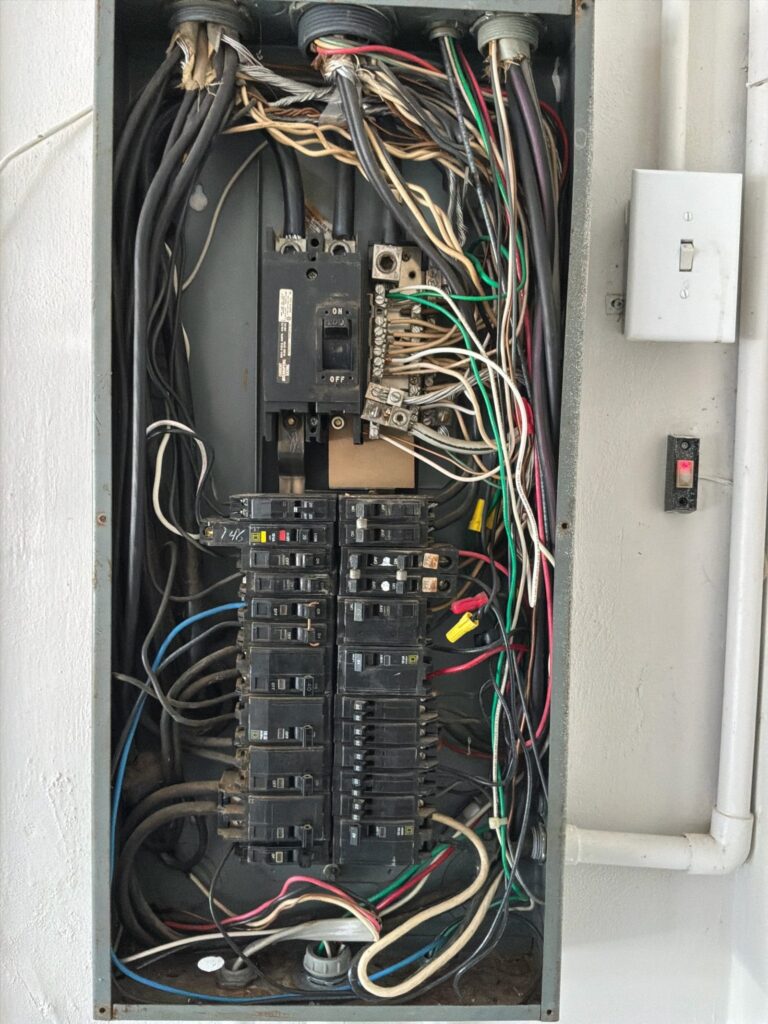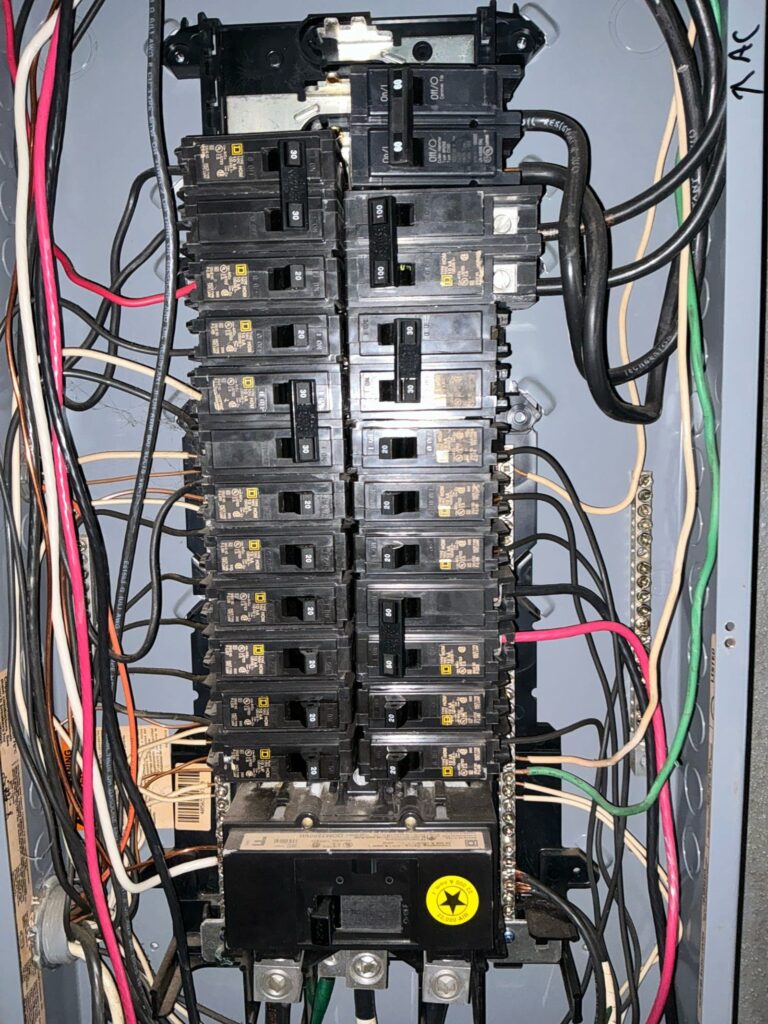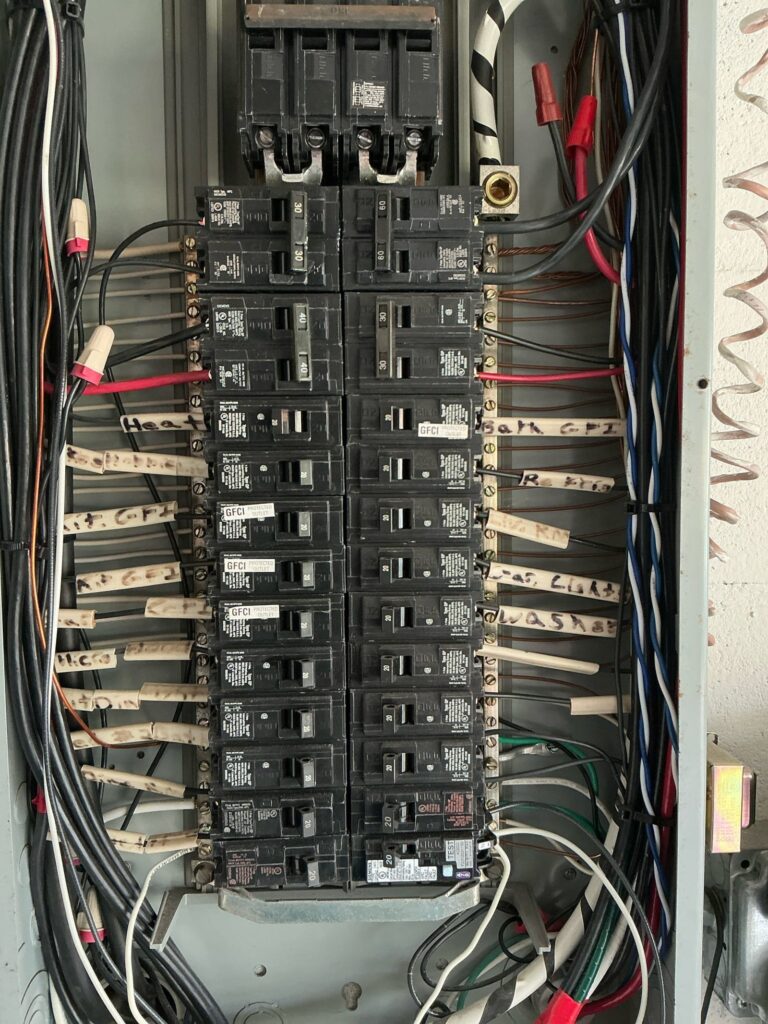
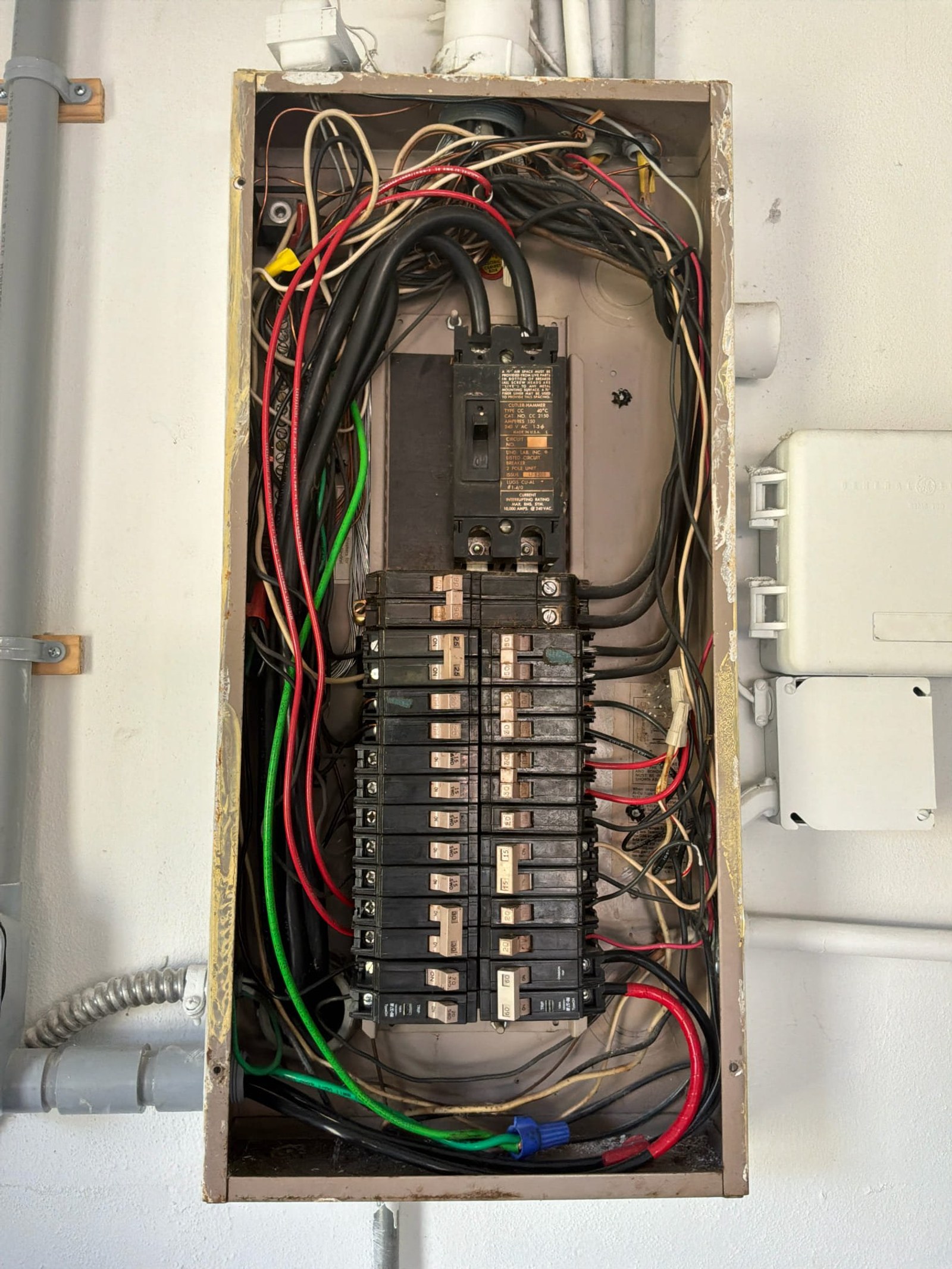
This Tarpon Springs breaker repair case study walks through the real diagnosis, the fix, and the code details from a recent service call. A homeowner in Tarpon Springs, FL contacted Thomas Edison Electric for assistance with damaged conduit and an air conditioning breaker that needed resizing. However, our comprehensive inspection revealed multiple opportunities to modernize the home’s electrical system and bring it up to current safety standards. We installed whole-home surge protection, upgraded five smoke/carbon monoxide detectors with smart features, and replaced several breakers to ensure proper protection throughout the home.
The Problem
The homeowner initially called about two specific issues: repairing broken conduit and resizing an AC breaker. Additionally, they mentioned attempting to replace a bathroom outlet themselves but were unable to complete the work.
Investigation
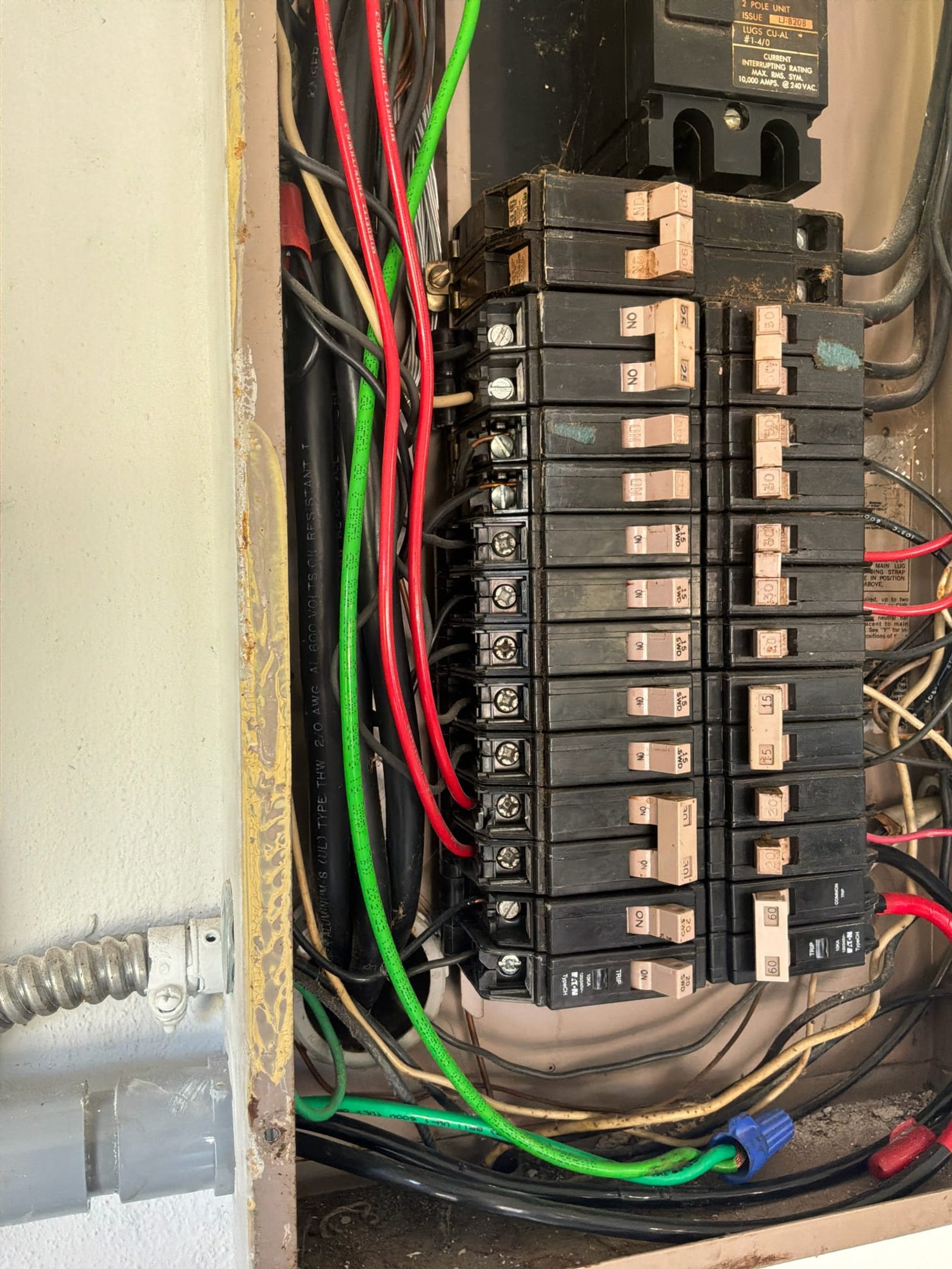
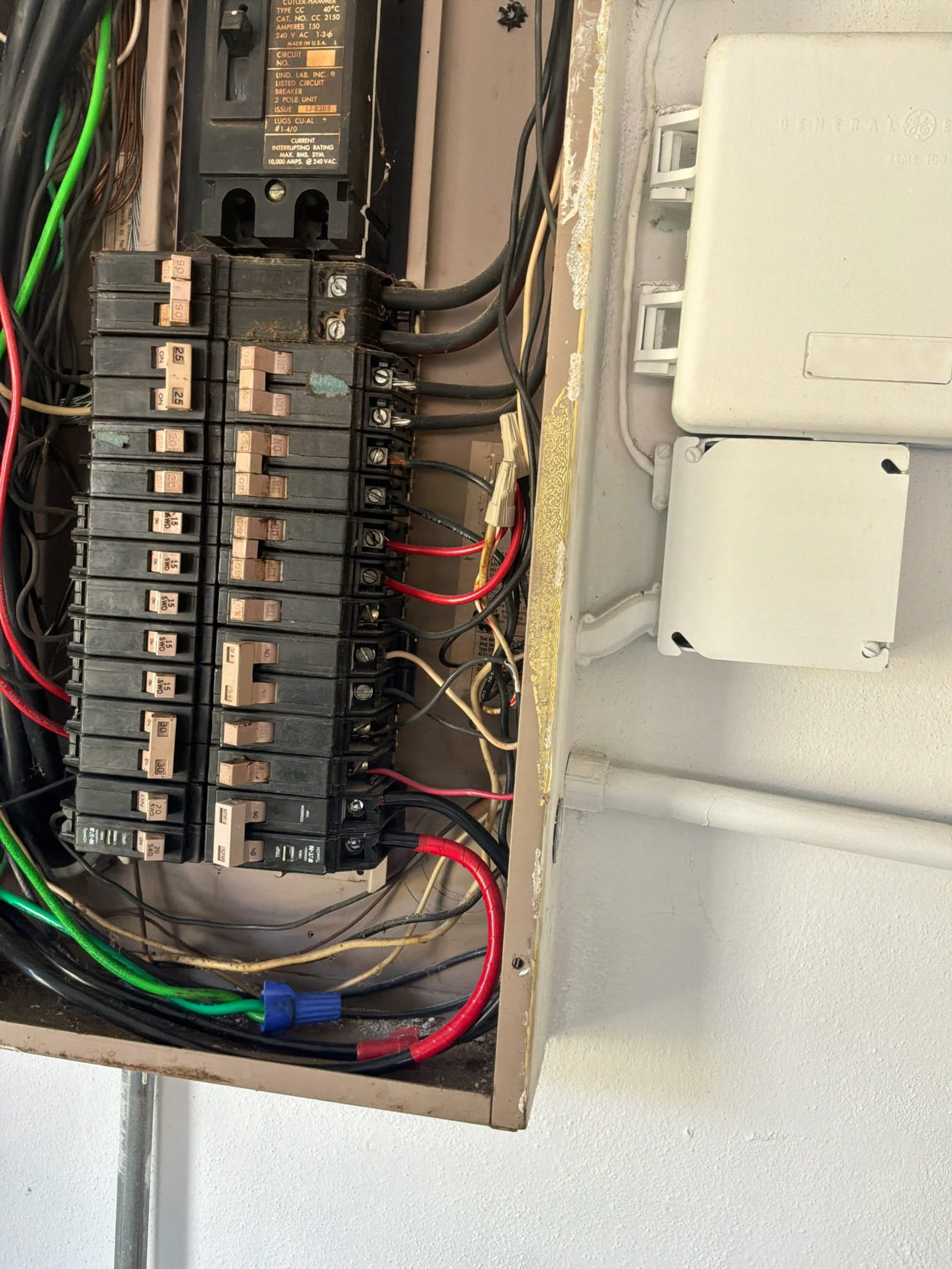
Our inspection of the 150-amp GE panel and electrical system revealed several areas where the home could benefit from modernization. We found backstabbed outlets and switches throughout the home, which were common in earlier wiring practices but can develop connection issues over time. One kitchen outlet lacked GFCI protection, and the master bathroom was also missing required GFCI outlets. Furthermore, the pool equipment wasn’t protected with GFCI circuits as required by current code.
The home had no whole-house surge protection, leaving appliances and electronics vulnerable to power surges. Additionally, some areas required by current code were missing smoke detectors, and the existing detectors didn’t meet modern safety standards. We also noted that some wires weren’t properly secured with connectors and that the electrical panel was missing several components to bring it up to current NEC standards, including proper bushings and AFCI breakers in required locations.
What We Fixed
We began by installing a PSP Vortex 120 kA whole-house surge protector to protect the home’s electrical systems and connected devices. Next, we replaced the problematic AC breaker with a new GE THQP230 30-amp two-pole breaker properly sized for the equipment.
To address the smoke detection gaps, we installed five smart smoke/carbon monoxide detectors with 10-year sealed lithium batteries and connected smart features. These units provide enhanced safety monitoring and can alert homeowners through smartphone notifications.
For the circuit protection updates, we installed new Square D HomeLine breakers including a HOM115 15-amp single-pole breaker and a HOM240 40-amp two-pole breaker where needed. We also completed the bathroom outlet installation the homeowner had started, installing a tamper-resistant single receptacle with proper grounding in a new single-gang remodel box.
Additionally, we replaced a decorator switch to ensure reliable operation and installed a 15-amp cord cap on existing equipment to provide proper connection.
Why This Tarpon Springs Breaker Repair Matters for Homeowners
Modern electrical safety standards have evolved significantly over the past decades. Many homes built before recent code cycles lack the protection features now considered essential for family safety. Whole-house surge protection guards against voltage spikes that can damage expensive appliances and electronics, while modern smoke detectors with smart features provide faster notification and can alert you even when you’re away from home.
Proper GFCI protection in areas like kitchens, bathrooms, and around pools prevents shock incidents by instantly cutting power when ground faults occur. Similarly, backstabbed connections that were acceptable in earlier decades can loosen over time, leading to intermittent power issues and increased resistance that generates heat.
Regular electrical inspections help identify these opportunities for improvement before they become problems. Most findings in older homes aren’t emergency situations but rather chances to add modern safety features that weren’t required when the home was originally built.
Code Compliance Cited in This Job
Every fix above maps to a specific section of NEC 2023. Each card links to NFPA’s public NEC index.
GFCI Protection
Current code requires GFCI protection in bathrooms, kitchens, and pool areas. This home’s kitchen outlet and pool equipment predated these requirements, creating an opportunity to add this important safety feature. NFPA reference ›
Surge Protective Devices
NEC 2023 requires surge protection for new residential installations. Adding whole-house surge protection to existing homes provides valuable protection for modern electronics and appliances. NFPA reference ›
Conductors Entering Boxes
All conductors entering electrical boxes must be properly protected with appropriate connectors or bushings. We addressed several locations where wires lacked proper protection. NFPA reference ›
Electrical Connections
All electrical connections must be properly made and secured. Backstabbed connections, while once common, don’t provide the long-term reliability of screw-terminated connections. NFPA reference ›
Common Questions
Questions homeowners ask after seeing this kind of work.
How often should I have my electrical system inspected?
We recommend yearly electrical inspections for most homes to catch potential issues early. Older homes built before 1990 or homes that have weathered recent storms may benefit from more frequent inspections. A yearly check helps identify opportunities to modernize your system with current safety features. If you’d like to schedule your annual safety inspection, you can book online or call us directly.
What’s the difference between backstabbed and screw-terminated connections?
Backstabbed connections use spring tension to hold wires in place, while screw terminals use mechanical pressure. Over time, backstabbed connections can loosen due to thermal cycling, leading to increased resistance and potential flickering. Screw terminals provide more reliable, long-term connections. If you’re experiencing intermittent electrical issues, our team can evaluate your connections and recommend updates.
Do I really need whole-house surge protection if I have power strips?
Yes, whole-house surge protection works differently than power strips. It protects your entire electrical system from surges entering through the utility lines, while power strips only protect devices plugged into them. Whole-house protection also guards hard-wired appliances like your AC, water heater, and dishwasher. To learn more about surge protection options for your home, schedule a consultation with our team.
Why do smoke detectors need to be updated if the old ones still work?
Modern smoke detectors offer significant safety improvements including faster response times, reduced false alarms, and smart features like smartphone alerts. Units older than 10 years should be replaced regardless of whether they seem to work, as sensors degrade over time. Smart detectors can alert you to issues even when you’re not home. Our team can assess your current detectors and recommend appropriate upgrades.
Are electrical updates required by law in older homes?
Generally, electrical systems installed to the code in effect when built remain legal under grandfather provisions. However, when modifications are made or permits pulled, current code often applies to that work. Many homeowners choose to proactively update for enhanced safety and convenience. If you’re considering electrical updates, our licensed electricians can explain your options and help prioritize improvements.
Want to see more real jobs like this one? Browse our completed case studies or explore our services.