This Largo surge protection case study walks through the real diagnosis, the fix, and the code details from a recent service call. A homeowner in Largo, FL, reached out asking about fixture work — exit signs, a new outlet, and an LED light. What our field team found during the walkthrough told a fuller story: a home that had served its family well for years and was now ready for a meaningful round of modernization. By the end of the visit, the household had whole-home surge protection, five interconnected smart smoke and CO detectors, new breakers, a properly seated outlet, and a switch replacement — everything running quietly in the background so the family never has to think about it.
The Problem
The original request was straightforward: install some fixtures and add an outlet. Once our technician on-site completed a full visual safety inspection — standard practice on every visit — a clearer picture emerged.
“I wanted the exit signs and a light taken care of. I didn’t realize there were other things worth looking at until they walked me through the panel.”
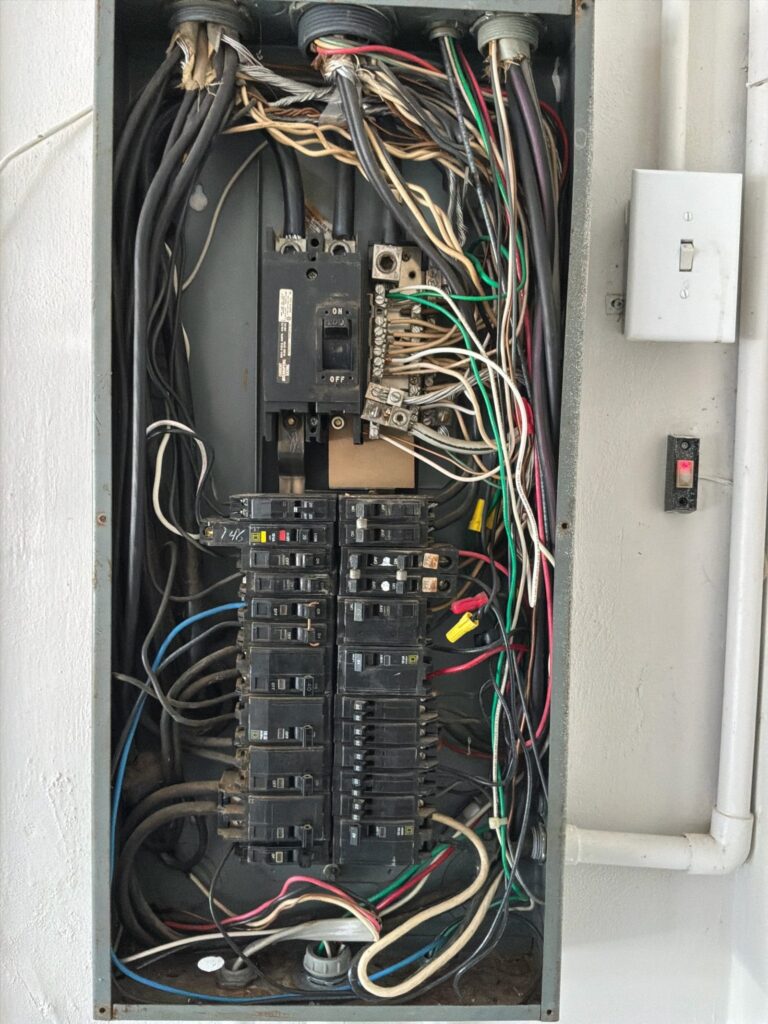
That walkthrough uncovered several conditions common in Florida homes of this era: backstabbed outlets and switches, a kitchen receptacle without GFCI protection, pool equipment circuits also missing GFCI coverage, a master bathroom outlet that needed attention, no whole-home surge protection, and a grounding system that predated current standards. The panel itself — a GE 150-amp service — had a missing 2-inch bushing, no arc-fault breakers on the circuits that now require them, and a polarity tap that needed correction. Additionally, several required areas lacked smoke and CO detection.
Investigation
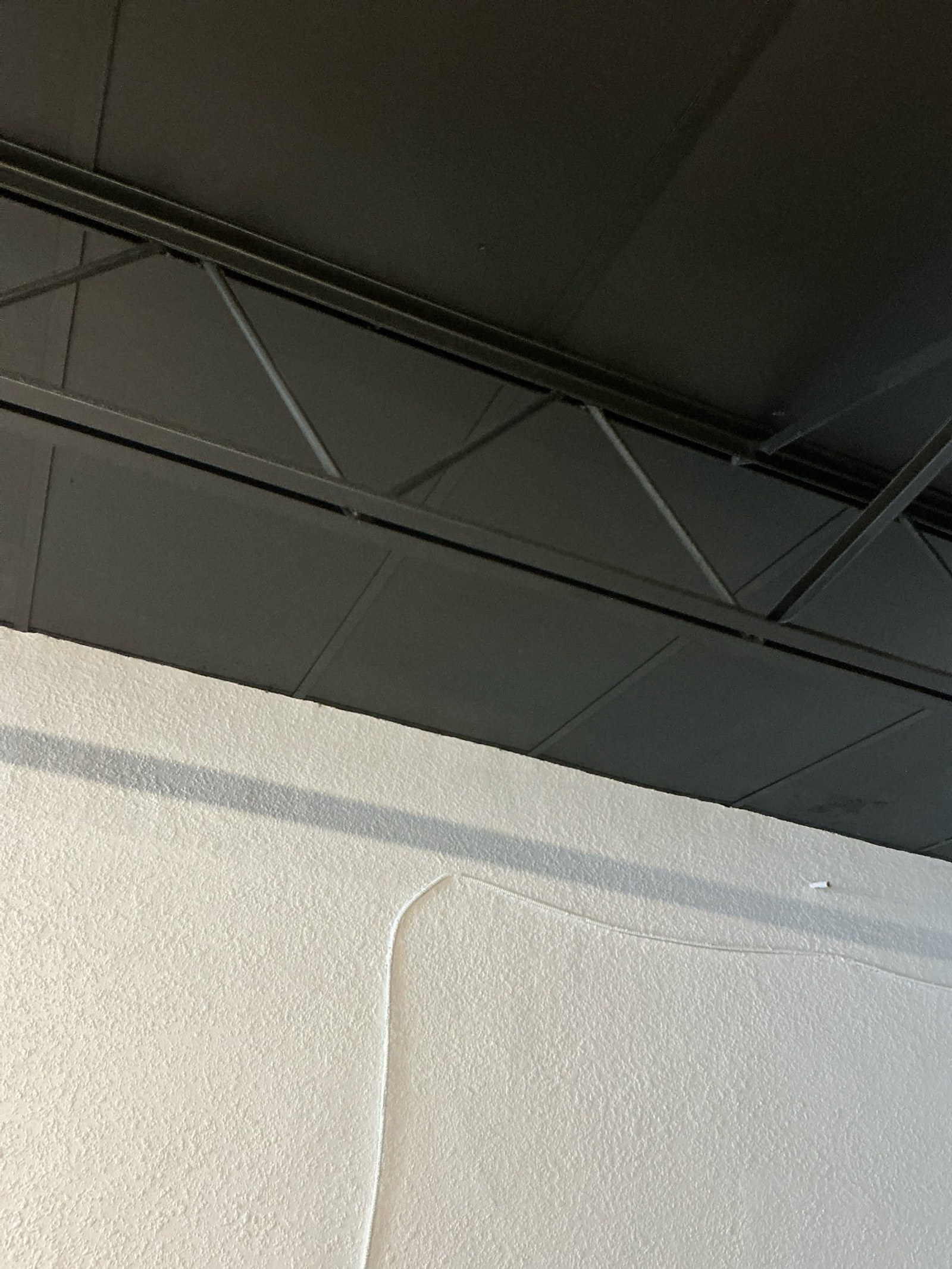
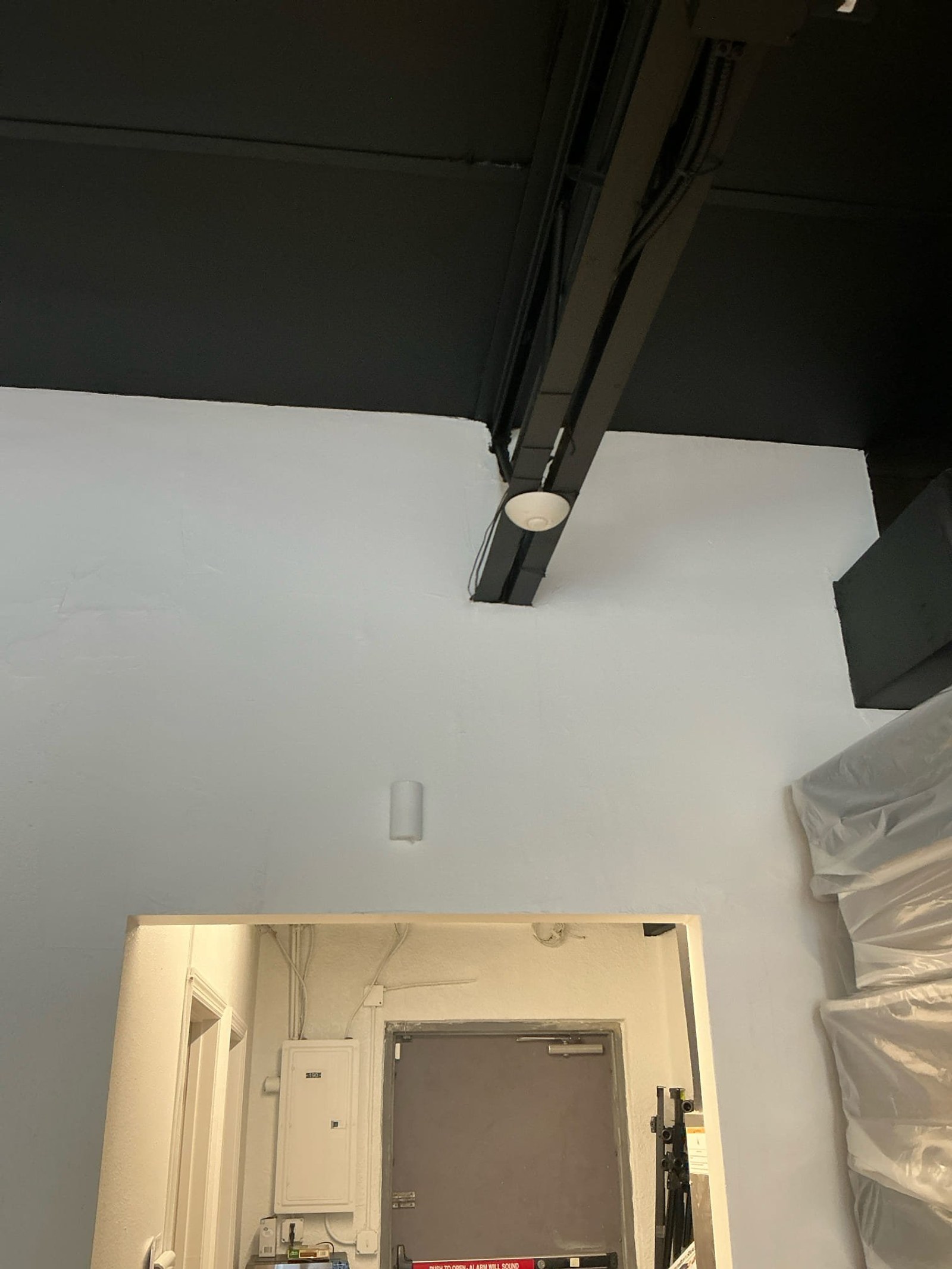
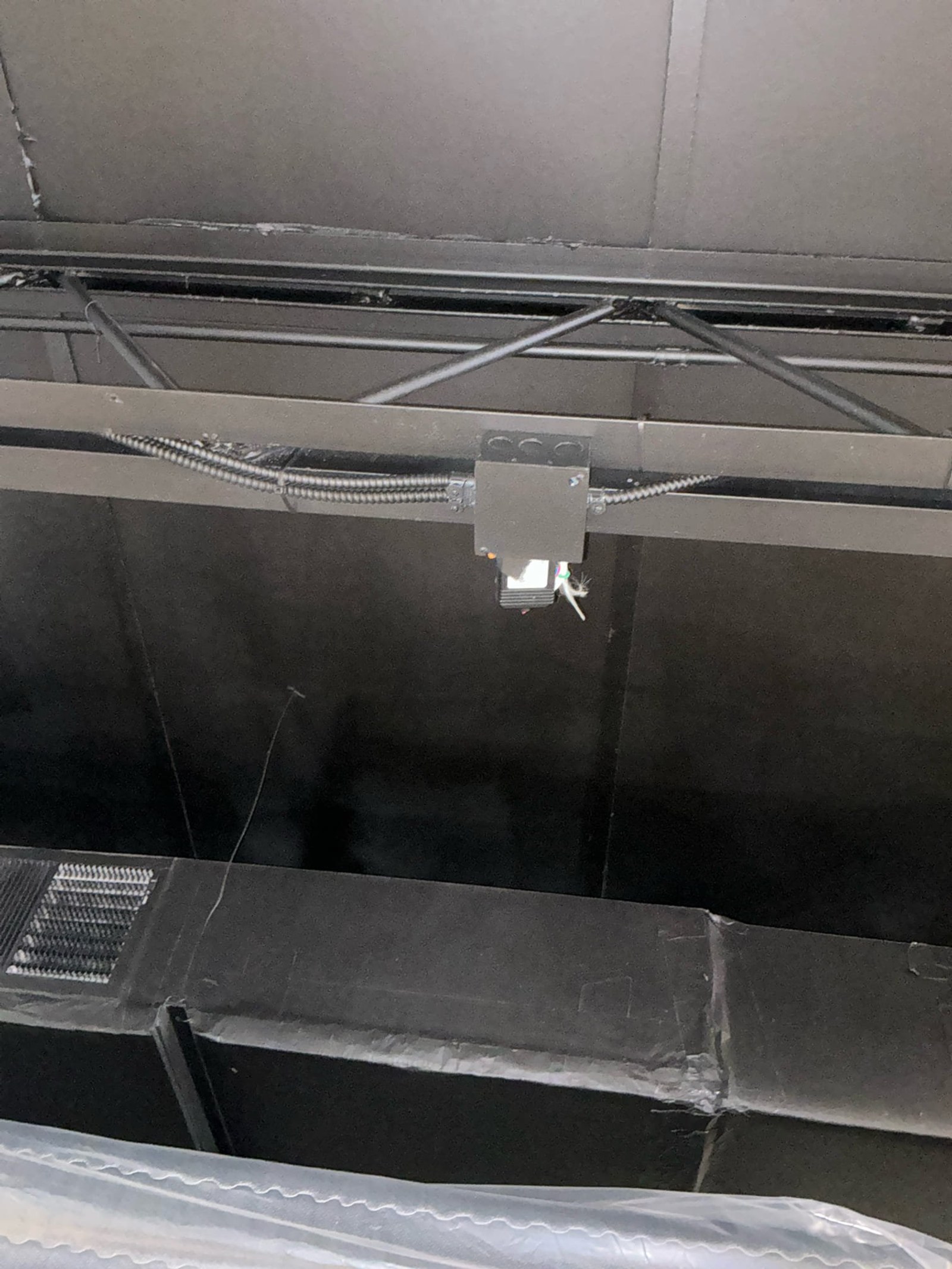
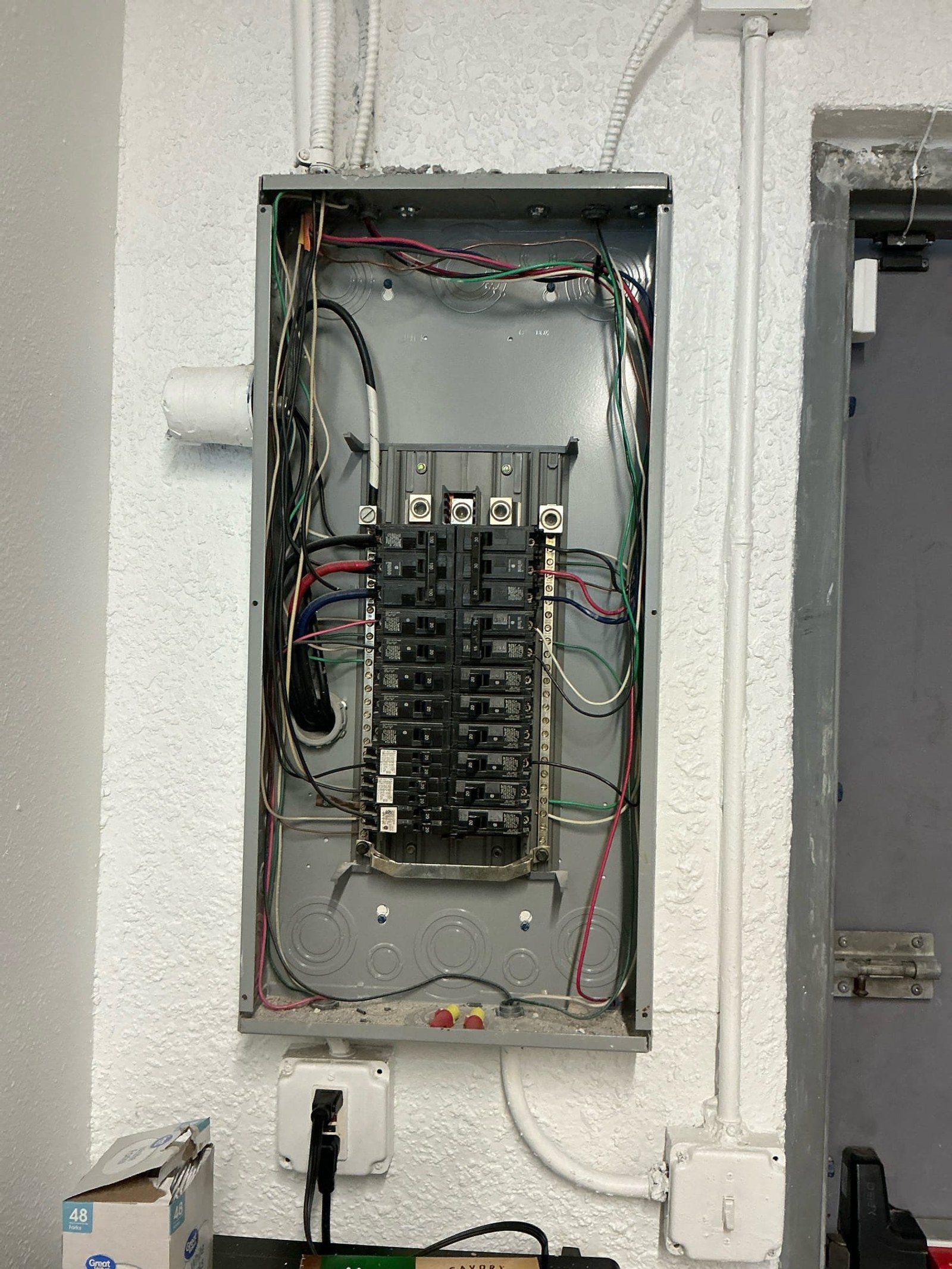
Our crew worked through the panel and branch circuits methodically. The inspection scorecard confirmed what the visual walkthrough suggested: AFCI protection was absent on circuits where NEC 2023 now calls for it, surge protection was not present, and the smoke and CO detector count fell short of current NFPA 72 requirements. Meanwhile, several outlets and switches had been backstabbed — a shortcut common in homes wired before roughly 2005, where the spring-clip terminals ease over time and cause the kind of intermittent contact resistance that shows up as flicker or warm face plates.
Panel Findings
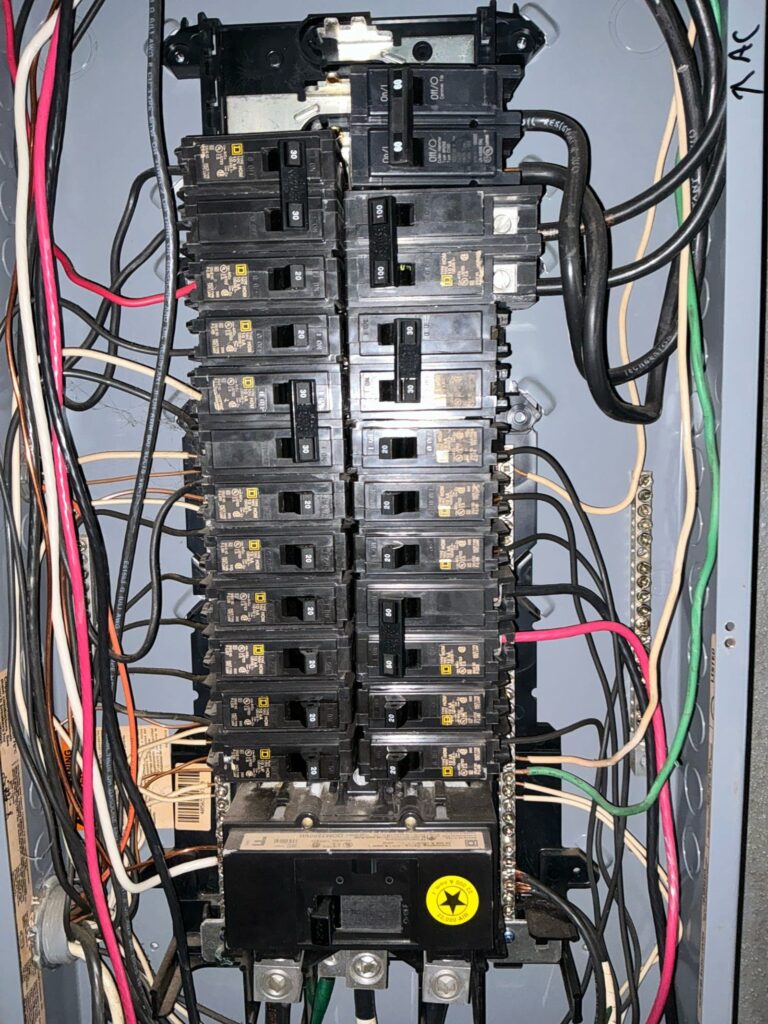
Inside the GE 150-amp panel, the field team found the missing bushing on a knockout opening, an incorrect polarity tap configuration, and several slots where arc-fault breakers are now required under current code. These findings are consistent with a panel installed under an earlier code cycle — nothing unusual for a home this age, and all of it straightforwardly correctable.
Branch-Circuit and Fixture Findings
The bathroom outlet the homeowner had attempted to replace himself was still mid-project. The kitchen had one receptacle position without GFCI coverage. Pool equipment circuits lacked the GFCI protection that current code requires for that environment. Several smoke detector positions called for under NFPA 72 were empty. Additionally, some wire runs were not secured with proper connectors at entry points — a detail that’s easy to overlook but worth addressing to keep everything neat and code-compliant.
What We Fixed
The field team addressed each finding in turn.
Surge protection: We installed a PSP Vortex 120 kA whole-home surge protector onto the GE panel. This Type 2 device, installed per NEC 230.67 and NEC 285.25, means the refrigerator, AC, computers, and televisions now ride out Florida’s afternoon lightning storms without skipping a beat.
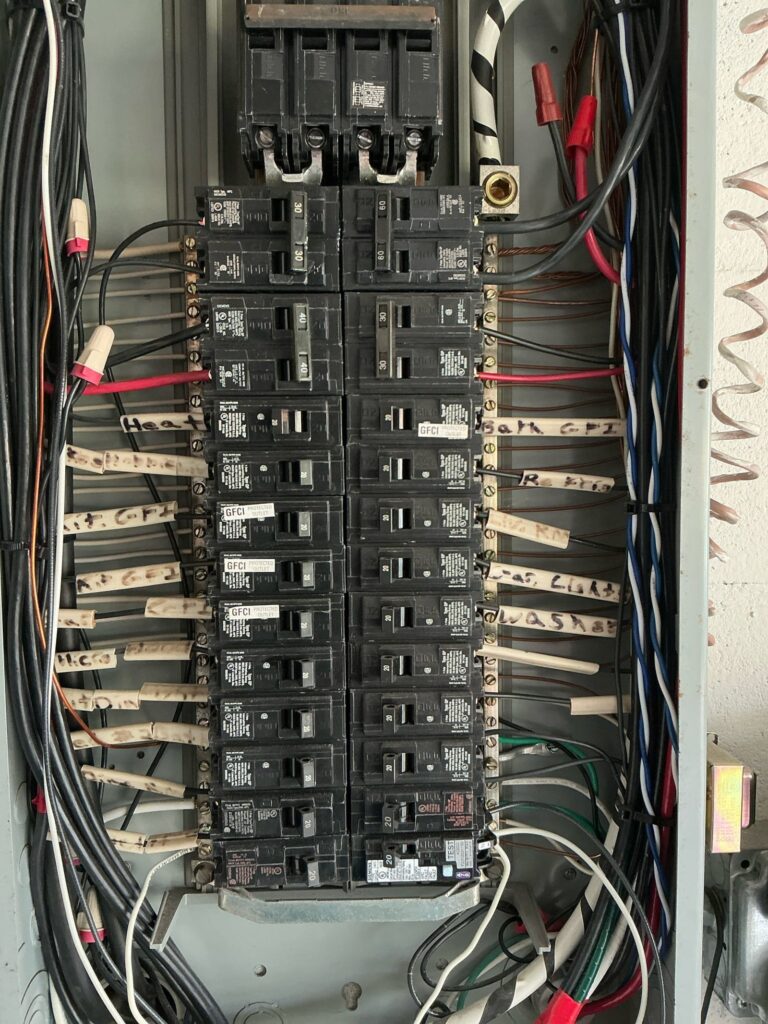
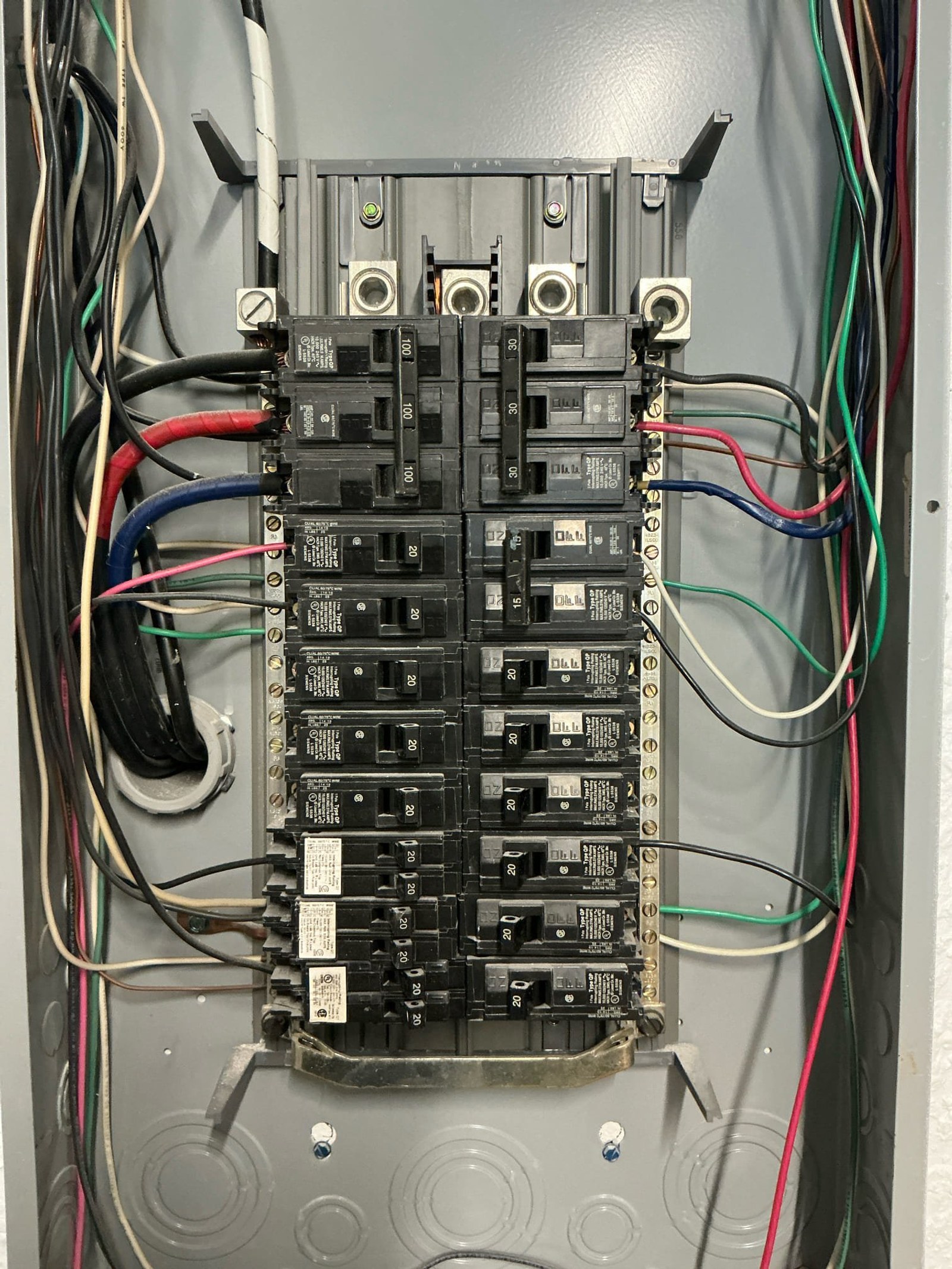
Breaker replacements: The team installed a Square D HOM115 single-pole 15-amp breaker and a Square D HOM240 two-pole 40-amp breaker in the HomeLine panel positions that needed them, along with a GE THQP230 two-pole 30-amp breaker for another circuit. Each breaker was torqued to spec and logged.
Smoke and CO detection: Five 120V smart smoke and CO combination detectors with 10-year sealed lithium backup were installed throughout the home. Every unit interconnects — so if one detector senses a change, every room in the house responds at once. This brings the home in line with NFPA 72 coverage requirements.
Outlet and switch work: The technician completed the bathroom outlet replacement the homeowner had started, installed a new 15-amp tamper-resistant receptacle in a single-gang old-work box with a metal plate, and replaced a switch with a decorator-style 15-amp rocker. The cord cap on an existing appliance cord was also renewed with a fresh 15-amp NEMA 5-15P plug.
Why This Largo Surge Protection Matters for Homeowners
Homes in Largo and the broader Pinellas County area face one of the highest annual lightning-strike densities in the United States. Without a whole-home surge protector, every storm is an unmanaged event for every appliance and device on the circuits. With the PSP Vortex in place, the family’s electronics, HVAC system, and kitchen appliances are covered — the home keeps running the way the household expects it to, quietly, through every storm and season.
The interconnected smoke and CO detector network matters in a different, everyday way. Rather than isolated alarms that only cover one room, each detector talks to every other detector. That means the whole house knows at once — whether the family is at dinner, asleep, or getting the kids ready in the morning. It’s the kind of upgrade that earns its place in the background, never noticed until it’s needed, and always ready.
Finally, bringing the panel’s breakers up to current code and adding arc-fault protection on the required circuits means the home’s electrical system now matches the demands of modern life — streaming, charging, cooking, and cooling — without any guesswork about whether the panel can keep up. For a family that just wanted some fixtures updated, this visit delivered a genuinely modernized system underneath.
Thomas Edison Electric holds Florida electrical contractor license EC13015487, and all work is backed by our service warranty.
Code Compliance Cited in This Job
Every fix above maps to a specific section of NEC 2023. Each card links to NFPA’s public NEC index.
GFCI Protection
NEC 210.8 requires GFCI protection for receptacles in kitchens, bathrooms, garages, outdoor locations, and pool/spa areas. On this job, the inspection confirmed a kitchen receptacle and pool equipment circuits were missing GFCI protection — conditions consistent with an older installation. Bringing these positions up to current standards adds a layer of protection that wasn’t required when the home was originally wired. NFPA reference ›
AFCI Protection
NEC 210.12 requires arc-fault circuit interrupter protection on branch circuits supplying living areas, bedrooms, kitchens, and similar spaces in dwelling units. The inspection found several circuits without arc-fault breakers — typical for a panel installed under an earlier code cycle. The breaker replacements performed on this visit address those positions, bringing the panel closer to current NEC requirements. NFPA reference ›
Surge Protective Device at Service
NEC 230.67 requires a surge protective device (SPD) at the service for new dwelling-unit installations and strongly informs best-practice recommendations for existing homes. This home had no surge protection prior to the visit. The PSP Vortex 120 kA unit was installed directly onto the GE 150-amp panel to satisfy this requirement and protect the home’s appliances and electronics. NFPA reference ›
Type 2 SPD Installation Requirements
NEC 285.25 governs how Type 2 surge protective devices must be installed at the load side of the service entrance. The PSP Vortex was mounted and connected per these specifications, ensuring the device provides maximum coverage across all branch circuits in the home. NFPA reference ›
Tamper-Resistant Receptacles
NEC 406.12 requires tamper-resistant receptacles throughout dwelling units. The replacement receptacle installed in this home is a 15-amp tamper-resistant spec-grade unit, consistent with this requirement and with current best practice for homes where children may be present. NFPA reference ›
Unused Panel Openings
NEC 408.7 requires that all unused openings in panelboards be closed. The missing 2-inch bushing identified in the GE panel was an open knockout that predated current standards. Correcting this detail keeps the panel interior properly enclosed and consistent with current code. NFPA reference ›
Common Questions
Questions homeowners ask after seeing this kind of work.
What is a whole-home surge protector and why does a Largo home need one?
A whole-home surge protector — also called a Type 2 SPD — mounts directly inside the main panel and absorbs voltage spikes before they reach any appliance or device in the house. Pinellas County sits in one of the most lightning-active corridors in the country, so Florida homes see more surge events per year than most. A single well-sized unit covers everything on every circuit simultaneously, so the refrigerator, AC, and electronics all ride through storms without interruption. If you’re not sure whether your home has one installed, our team can schedule a quick panel check and let you know.
How often should I have my home’s electrical system inspected?
A yearly inspection is a solid baseline for most households — once a year gives a licensed electrician a chance to catch small changes before they become larger ones. Homes built before 1990 and homes that have been through a recent storm season often benefit from inspections more frequently, since older wiring and weather stress can shift conditions between visits. If it’s been more than a year since anyone looked at your panel or branch circuits, it’s a good time to get eyes on it. Schedule online to get on our Clearwater-area calendar.
What does it mean when outlets and switches are backstabbed?
Backstabbing is a wiring shortcut where the conductor is pushed into a spring-clip hole in the back of the device rather than being wrapped around a screw terminal. It was common in homes wired before about 2005. Over time the spring tension relaxes, contact resistance increases, and you can get intermittent flicker, warm outlets, or tripped breakers. Replacing backstabbed connections with properly torqued screw terminals is a straightforward fix that restores a solid, lasting connection. If you’re noticing flickering lights or warm outlet faces, our team can take a look and confirm the cause.
Why do smoke and CO detectors need to be interconnected throughout the house?
Interconnected detectors operate as a single mesh — when one unit senses smoke or carbon monoxide, every detector in the network sounds at once, no matter which room triggered it. NFPA 72 sets the coverage requirements for detector placement in dwellings, and interconnection is a core part of those standards. For a family spread across multiple rooms or floors, the whole-house response means no one relies on hearing a single distant alarm. If your home’s detectors are standalone units or are past their service life, our crew can book an assessment and quote a full replacement.
Is GFCI protection really required for pool equipment circuits?
Yes — NEC 210.8 and NEC 680.22 both address GFCI requirements in and around pools, and current code calls for GFCI protection on receptacles within 20 feet of the pool edge as well as on equipment circuits in that environment. Homes built or last permitted before those requirements took effect may not have GFCI protection in place, which is common and easy to correct. If your pool equipment or outdoor receptacles were installed under an earlier code cycle, it’s worth having a licensed electrician schedule a review to bring those circuits up to today’s standards.
Want to see more real jobs like this one? Browse our completed case studies or explore our services.