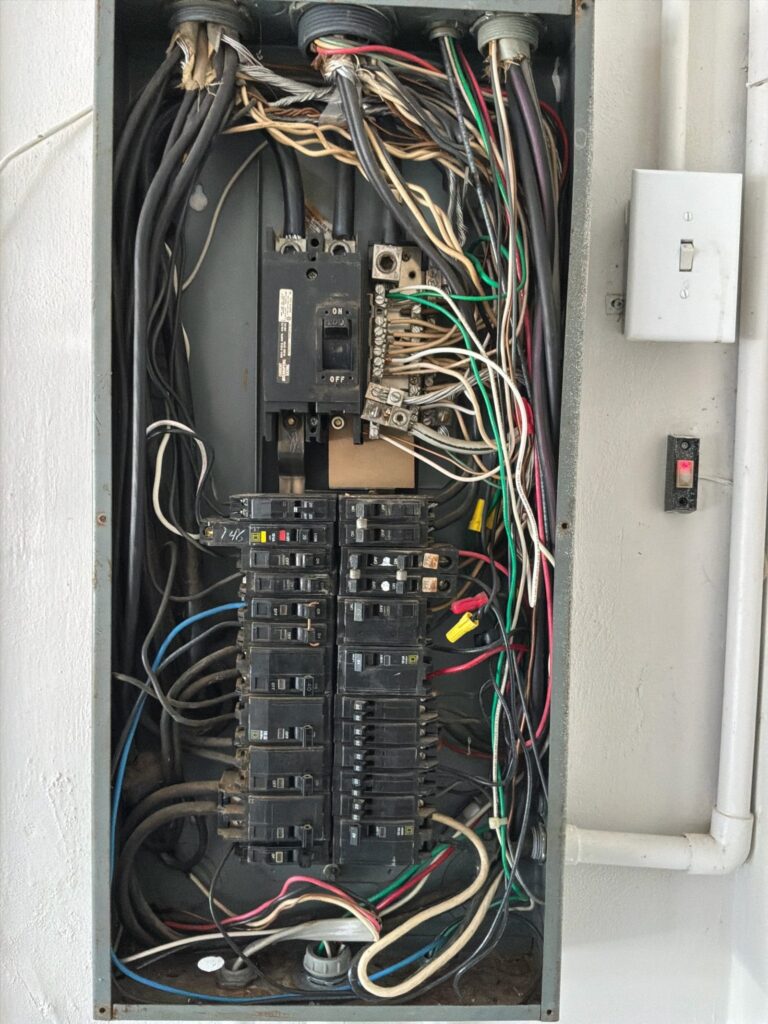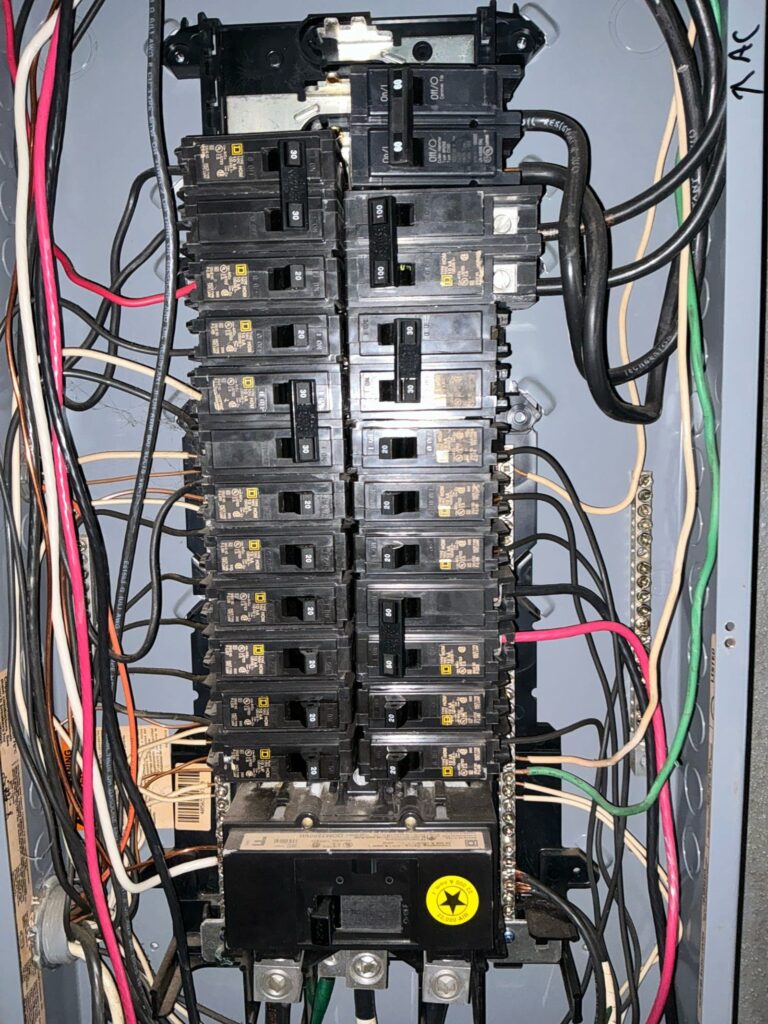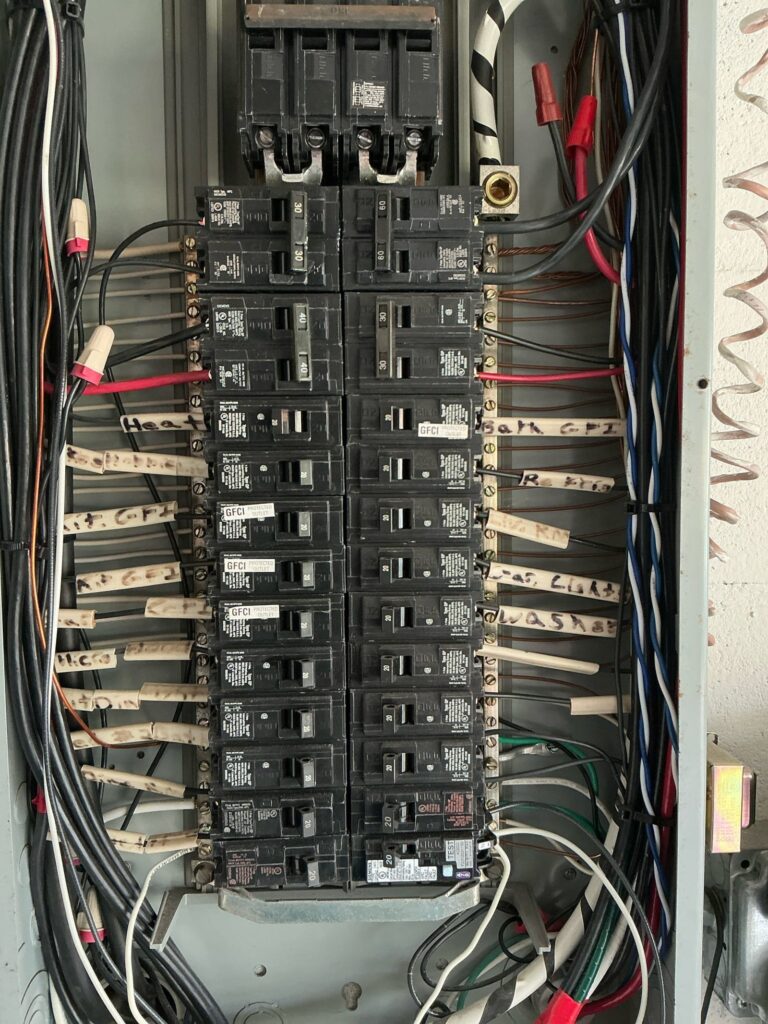
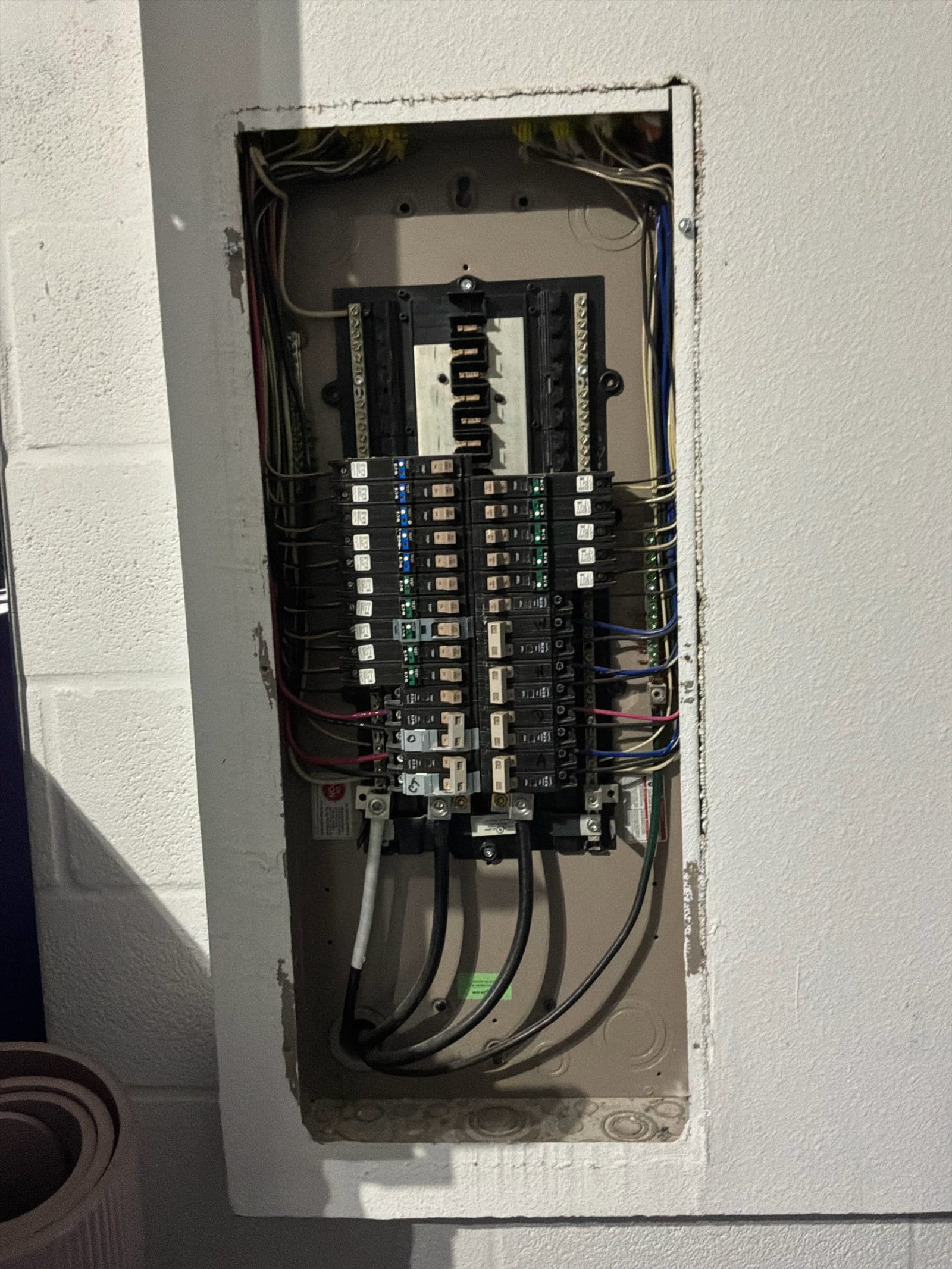
This Lutz surge protection case study walks through the real diagnosis, the fix, and the code details from a recent service call. What started as a straightforward ceiling fan replacement in Lutz, FL turned into a full-picture look at how well the home’s electrical system could support the family’s everyday routine — and our field team left it noticeably more capable than when they arrived.
The Problem
A homeowner in Lutz, FL (33558) reached out for help swapping out an existing ceiling fan on a 10-foot ceiling. The original mounting was already in place, so the call looked simple. However, our team follows a complimentary visual safety inspection as a standard part of every visit — and that inspection uncovered several items worth modernizing.
“I just needed the fan replaced. I had no idea there were this many things to look at.”
Investigation
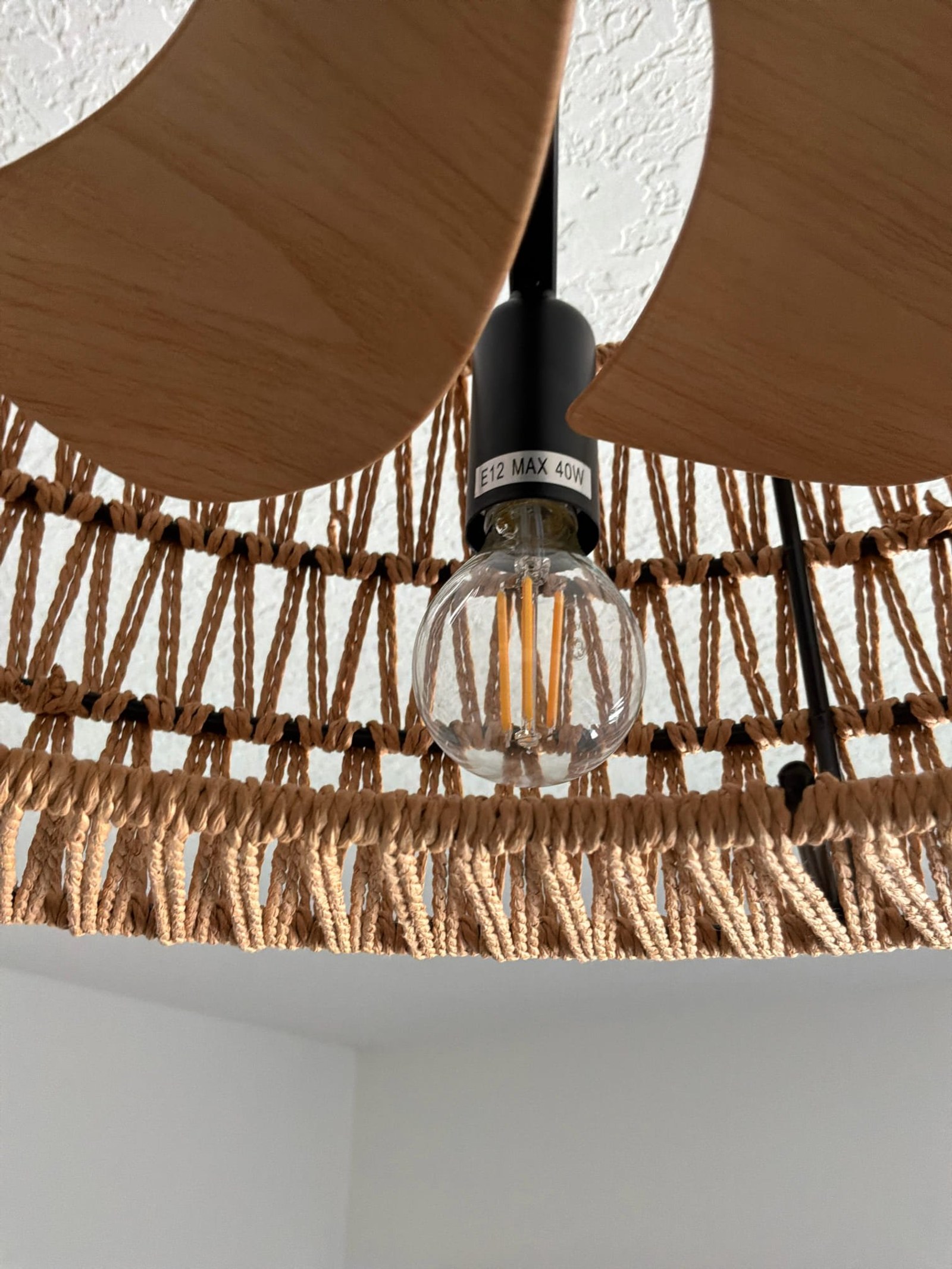
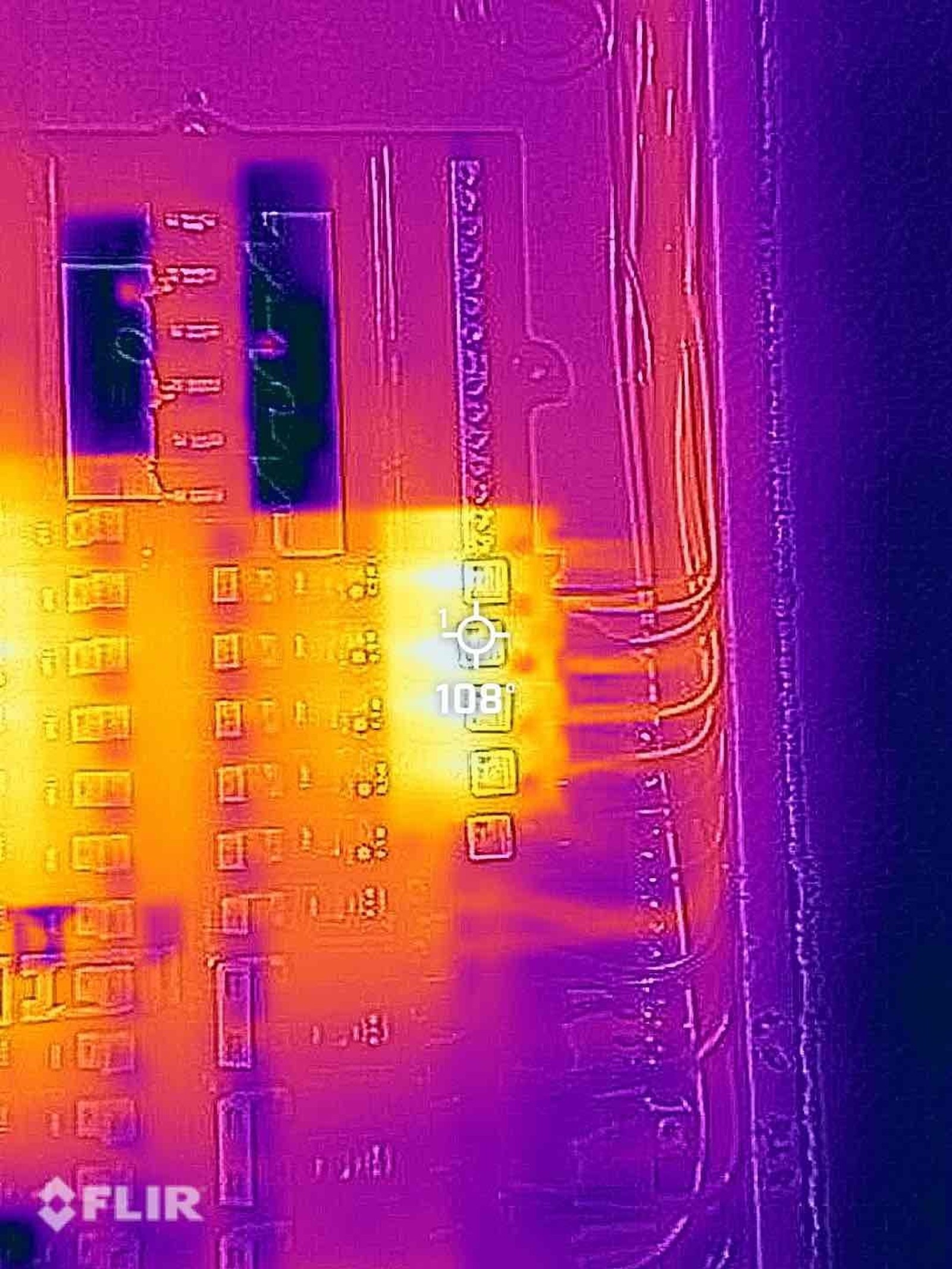
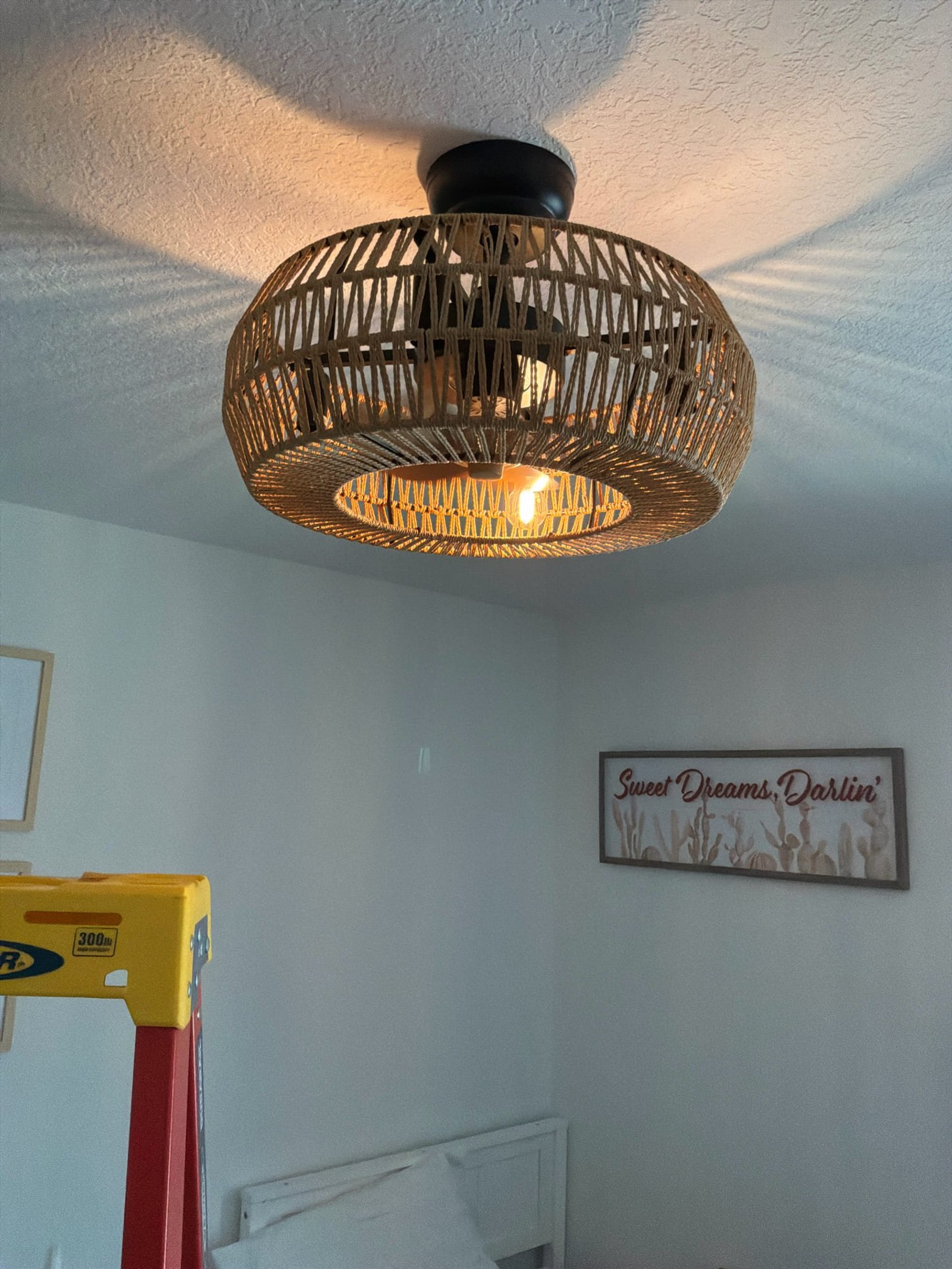
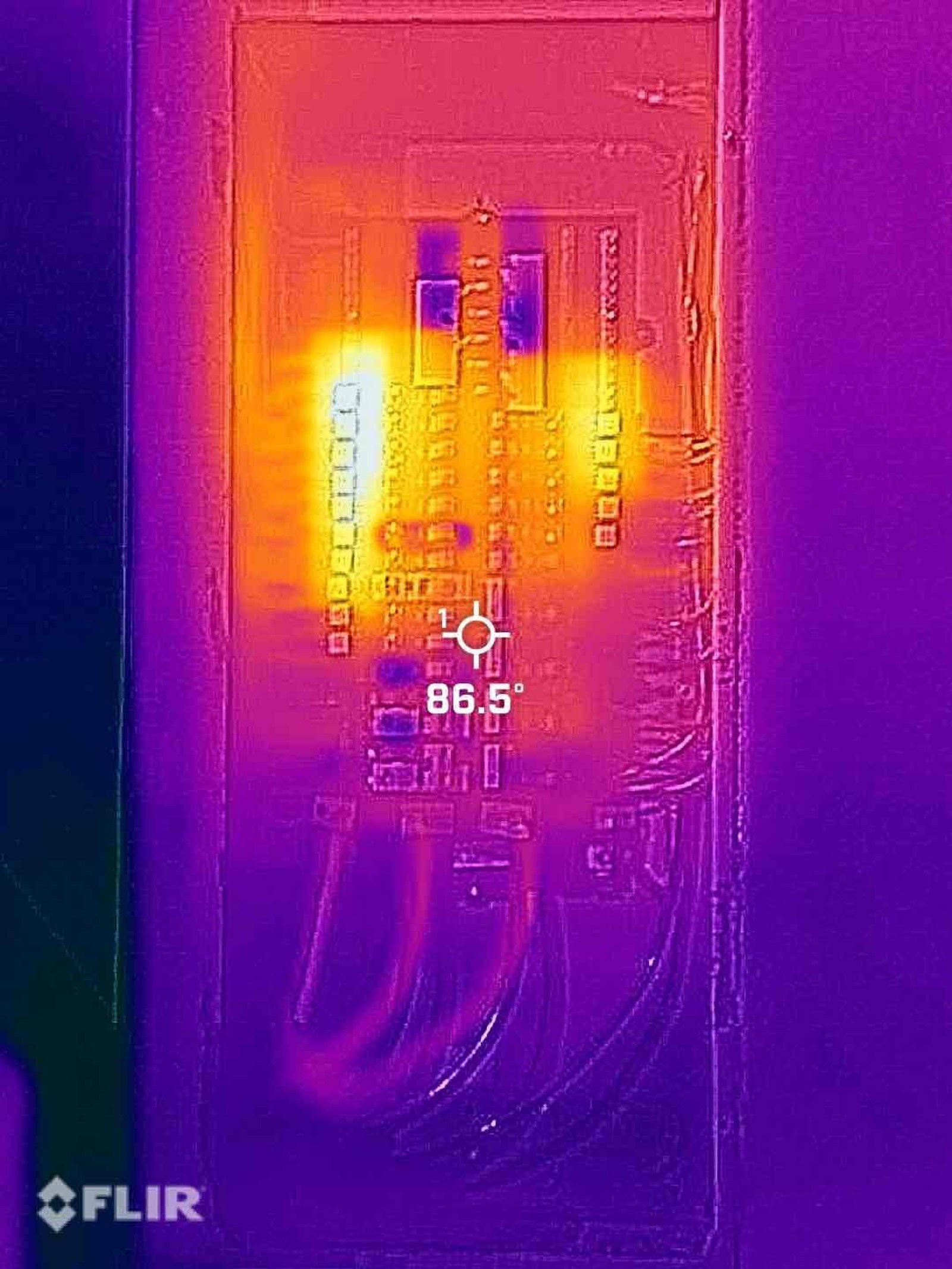
Once the ceiling fan was handled, our licensed electrician on site worked through the home’s electrical system methodically.
Panel and Circuit Review
The home runs on a GE 150-amp service panel. Overall, the panel was in reasonable shape — breakers were properly sized, neutrals and grounds were separated correctly, and there were no double-tapped breakers. That said, a few areas hadn’t kept pace with current code. AFCI (arc-fault circuit interrupter) protection was absent on branch circuits that NEC 210.12 now covers in dwelling units. A missing 2-inch bushing on a conduit entry and an improperly landed polar tap were also noted — both straightforward corrections that keep the panel tidy and up to standard. A GE THQP 30-amp two-pole breaker also needed replacement.
Surge Protection
The home had no whole-home surge protection. Florida’s lightning season puts real thermal stress on electronics, appliances, and HVAC equipment year after year. Without a panel-level device in place, every storm cycle passes that energy directly through the home’s circuits.
Smoke and CO Detection
Several required areas were missing smoke and carbon monoxide detectors. Under NFPA 72, detectors must cover each sleeping area, outside each sleeping area, and on every level of the home. Five locations fell short of that baseline.
Receptacle and Wiring Conditions
Some wiring in the home lacked proper connector protection where it entered boxes — a condition that invites wear over time. The homeowner had also attempted to replace a bathroom receptacle on their own but had run into trouble mid-project. Our team completed the installation properly, including a new single-gang remodeler box, a tamper-resistant 15A receptacle, and a finished cover plate. A 15-amp decorative switch was replaced at an existing location as well.
Grounding System
The grounding system, while functional enough to pass basic continuity, was flagged as not fully meeting current standards under NEC 250.50 — consistent with homes of this era. This was noted in the inspection record for future follow-up.
What We Fixed
Our crew addressed every actionable item during the visit:
- Ceiling fan — disassembled the old unit and installed the new fan into the existing mounting on the 10-foot ceiling.
- PSP Vortex 120 kA Whole-Home Surge Protector — installed onto the GE panel per NEC 230.67 and NEC 285.25, providing a 120 kA rated barrier at the service entrance.
- Square D HOM115 15-amp single-pole breaker and Square D HOM240 40-amp two-pole breaker — installed as replacements in the panel.
- GE THQP230 30-amp two-pole breaker — replaced at the appropriate circuit position.
- Five 120V smart smoke/CO combination detectors with 10-year sealed lithium batteries and interconnect capability — installed at all locations flagged during the inspection.
- Bathroom receptacle project — completed the homeowner’s unfinished swap using a tamper-resistant 15A receptacle, a new old-work single-gang box, and a metal cover plate, per NEC 406.4(D).
- Decorator switch — replaced with a 15A single-pole decora-style switch at an existing location.
- Cord cap — installed a 15A, 125V NEMA 5-15P plug onto an existing appliance cord.
Why This Lutz Surge Protection Matters for Homeowners
This visit is a good example of how a small project can open a useful window into the bigger picture. The family called about a fan — and that’s what we installed. Additionally, the inspection gave them a clear, current snapshot of their home’s electrical health, something many homeowners haven’t had since they moved in.
The PSP Vortex surge protector now sits between the utility feed and every circuit in the house. That means the refrigerator, the AC, the televisions, and the computers all ride through Florida’s storm season without absorbing the cumulative wear of repeated surge events. It works quietly, all year, without anyone having to think about it.
Five interconnected smoke and CO detectors mean that every room in the home talks to every other room. If one unit senses a change, the whole house responds — so the family has the same awareness whether they’re asleep, cooking dinner, or spread across different floors. That kind of whole-home coverage is what NFPA 72 is designed to ensure, and it’s exactly what this home now has.
Finally, the completed bathroom outlet means one less unfinished project in the house. Small things like that add up. When a home just works — when the outlets are finished, the fan runs smoothly, and the panel is current — the family can focus on everyday life instead of a to-do list.
Code Compliance Cited in This Job
Every fix above maps to a specific section of NEC 2023. Each card links to NFPA’s public NEC index.
AFCI Protection
NEC 210.12 requires arc-fault circuit interrupter protection on branch circuits serving dwelling-unit living areas, bedrooms, kitchens, and other specified spaces. The GE panel in this Lutz home lacked AFCI breakers on several applicable circuits — common in homes wired before the AFCI requirements were broadened in the 2014 and later code cycles. New Square D HOM-series breakers were installed to address this gap. NFPA reference ›
Surge Protective Device at Service
NEC 230.67 requires a listed surge protective device (SPD) at the service of new and upgraded dwelling units. This Lutz home had no panel-level surge protection in place. Installation of the PSP Vortex 120 kA SPD directly onto the GE 150-amp panel brings the service into alignment with this requirement. NFPA reference ›
Type 2 SPD Installation Requirements
NEC 285.25 governs the installation specifics for Type 2 SPDs connected on the load side of the service disconnect. The PSP Vortex was installed and connected per these requirements, ensuring the device is properly integrated with the panel’s busbar and grounding system for effective surge diversion. NFPA reference ›
Replacement Receptacle Requirements
NEC 406.4(D) states that when a receptacle is replaced in a dwelling unit, it must comply with current requirements — including tamper resistance where applicable. The bathroom receptacle the homeowner had partially attempted to replace was completed using a tamper-resistant 15A device installed in a properly secured old-work box, meeting current standards. NFPA reference ›
Tamper-Resistant Receptacles
NEC 406.12 requires tamper-resistant receptacles in all areas of a dwelling unit. The replacement receptacle installed in the bathroom is a tamper-resistant, spec-grade 15A device, consistent with this requirement and appropriate for a home with children or future occupants. NFPA reference ›
Grounding Electrode System
NEC 250.50 defines the required components of a complete grounding electrode system for a dwelling service. The grounding system in this Lutz home was noted as not fully meeting current standards — a condition typical of homes wired under earlier code cycles. This finding was documented for the homeowner as a recommended follow-up item. NFPA reference ›
Common Questions
Questions homeowners ask after seeing this kind of work.
Can a ceiling fan installation visit really turn into a larger electrical project?
It can — and in the best way. Our team includes a visual safety inspection with every visit, at no added charge. When a technician is already on site and takes a systematic look at the panel, outlets, and detectors, it often reveals straightforward items that are easy to address the same day. The homeowner in this case left with a new fan plus surge protection, updated smoke detectors, and a finished bathroom outlet — all in one trip. If you’d like us to take the same approach at your home, schedule online and we’ll get you on the calendar.
How does a whole-home surge protector differ from a power strip surge protector?
A power strip protects only the devices plugged into it. A whole-home surge protector, like the PSP Vortex installed here, mounts directly onto your electrical panel and intercepts surge energy before it reaches any circuit in the house — including hardwired equipment like your AC, water heater, and built-in lighting. For Florida homeowners who see regular lightning activity, panel-level protection is the more complete solution. Schedule online to find out whether your panel is compatible with a whole-home SPD.
How many smoke detectors does a home in Florida actually need?
Under NFPA 72 — the national standard Florida’s building code references — detectors are required inside each sleeping room, outside each sleeping area (typically a hallway), and on every level of the home including the basement if present. Many older homes were installed with fewer units than current guidelines call for. In this Lutz home, five locations needed coverage. Not sure where your home stands? Book a safety check and our team will map it out for you.
How often should I have my home’s electrical system inspected?
Once a year is a solid baseline for most homes. Homes built before 1990 — or those that have come through a recent storm season — often benefit from more frequent checkups, since aging wiring and weather-related stress can shift conditions between visits. An annual inspection keeps small findings small, before they become larger projects. Schedule online to set up your yearly electrical review.
What does it mean when outlets or switches are described as backstabbed?
Backstabbing refers to a wiring shortcut where conductors are pushed into spring-loaded holes on the back of a receptacle or switch rather than secured under a screw terminal. It was a common installation method in homes wired before roughly 2005. Over time, the spring tension in those connections eases, contact resistance climbs, and intermittent flickering or warm outlets can result. Replacing them with properly screw-terminated devices is a quick, durable correction. If your home is from that era and you’ve noticed any flickering, our team can take a look and let you know what’s there.
Want to see more real jobs like this one? Browse our completed case studies or explore our services.