Before & After
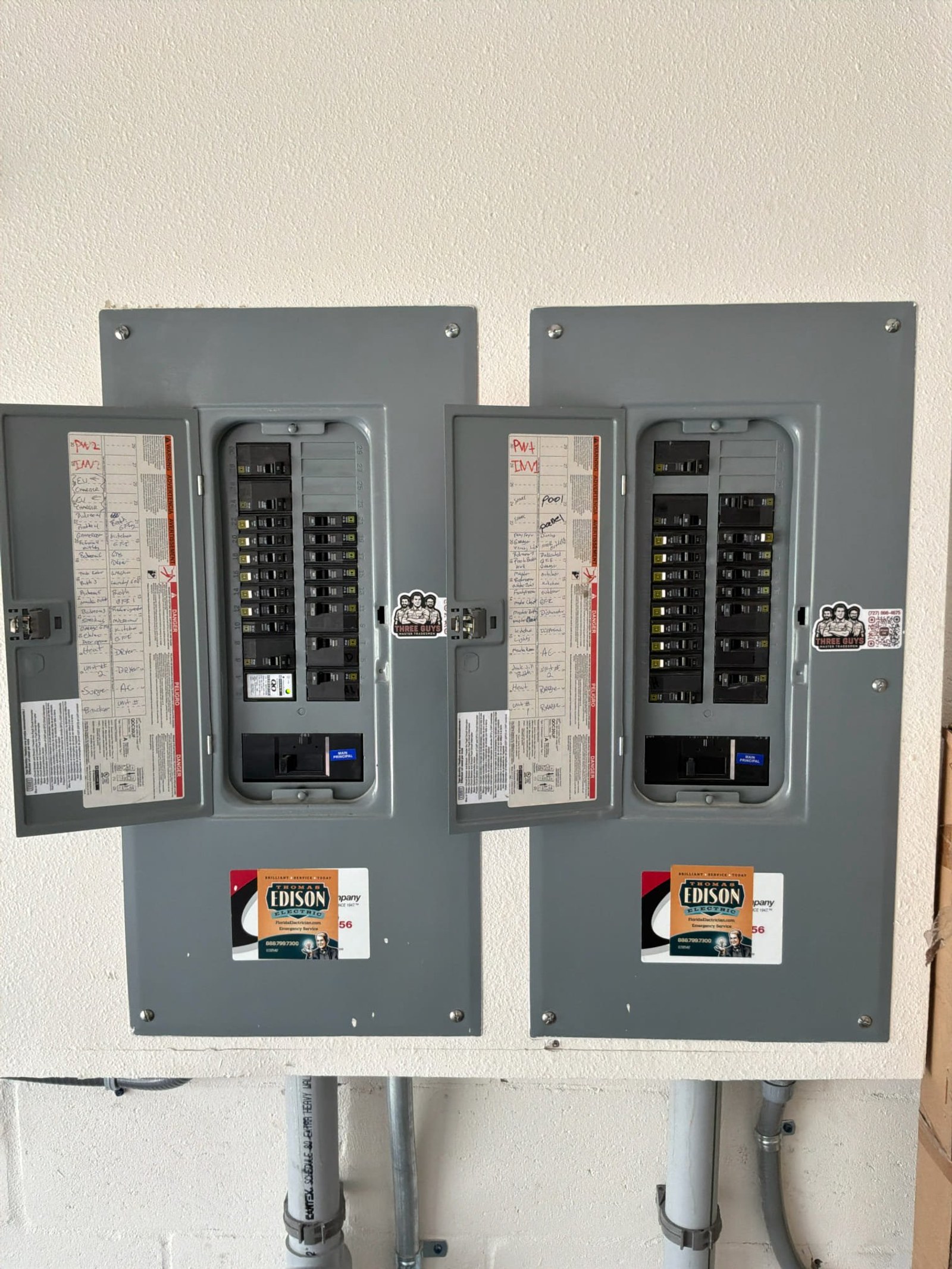
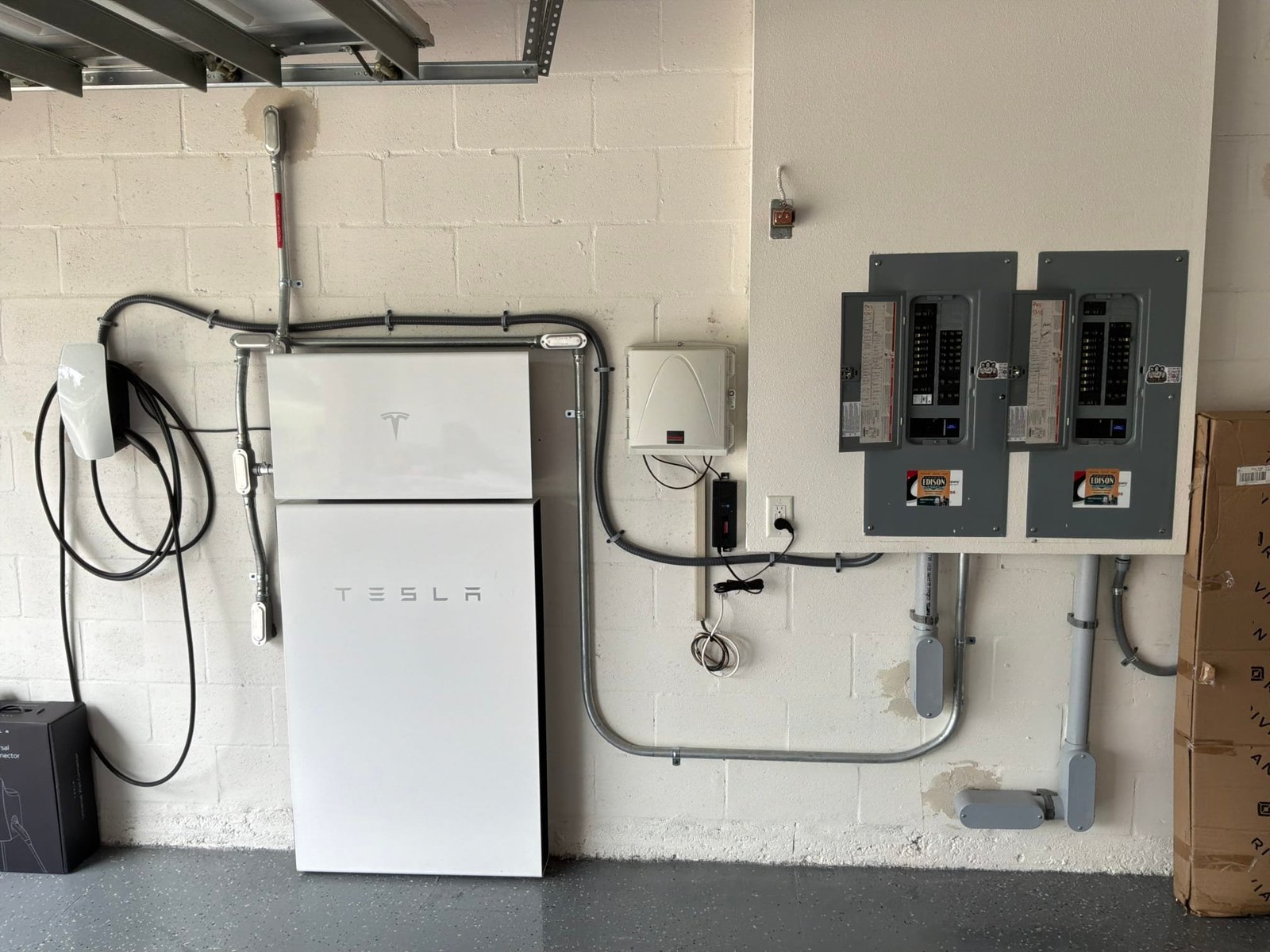
This Palm Harbor EV install case study walks through the real diagnosis, the fix, and the code details from a recent service call. A homeowner in Palm Harbor, FL reached out to schedule EV charger wiring and a patio ceiling fan repair. What began as two focused tasks turned into a comprehensive whole-home electrical inspection — and the findings gave the family a clear picture of where their home stood today and what updating it would look like.
The Problem
The homeowner had a new EV charger ready to install and a patio ceiling fan that had stopped working. During the visit, our field team performed a full visual safety inspection — and the picture that emerged went well beyond the original two requests.
“The ceiling fan on the patio just stopped working. And we needed the EV charger wired up. We didn’t realize there was so much else to look at.”
Investigation
Our licensed electrician on site worked through the home systematically, starting at the main panel and working outward to every major circuit and device location.
What the Panel Revealed
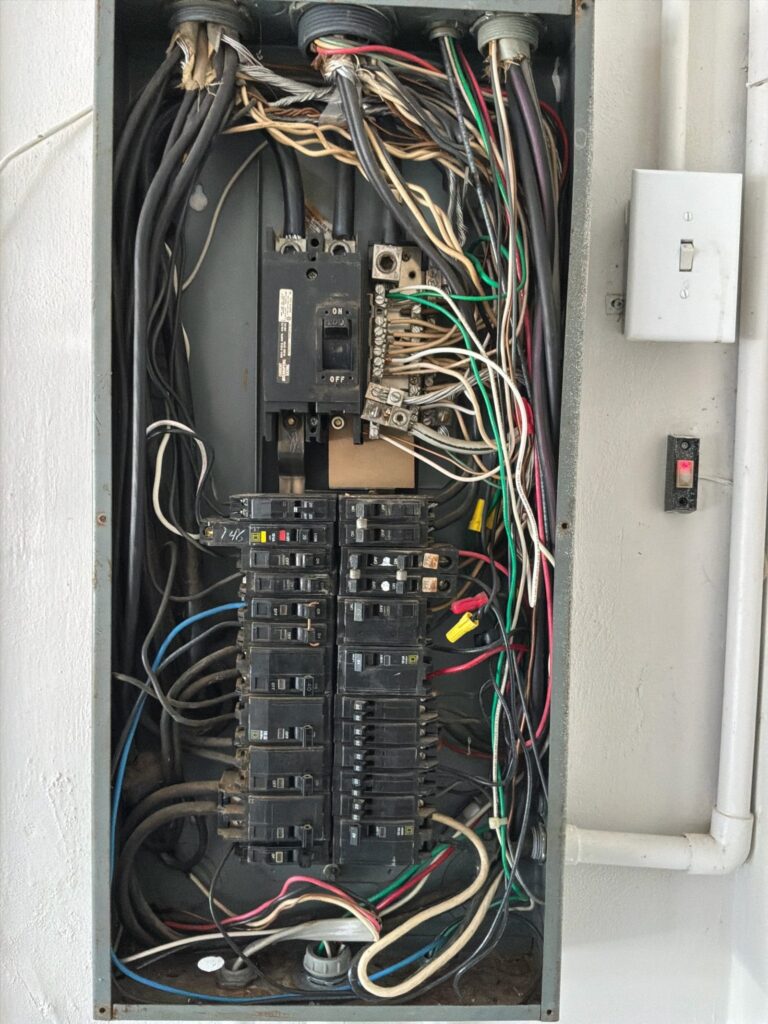
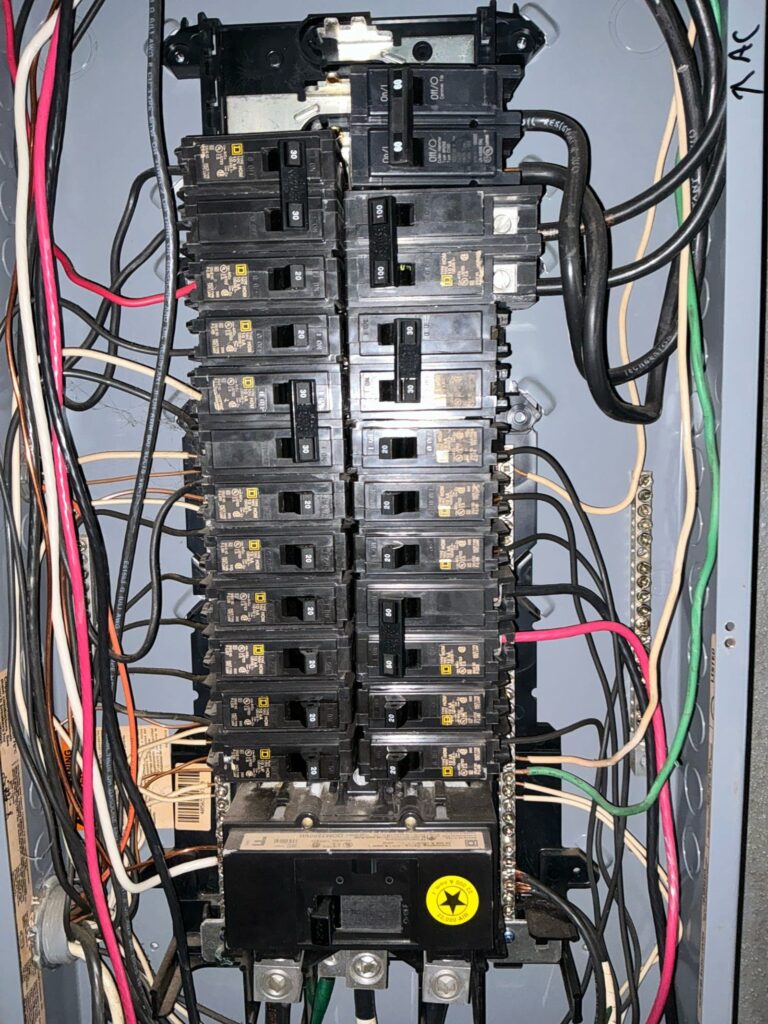
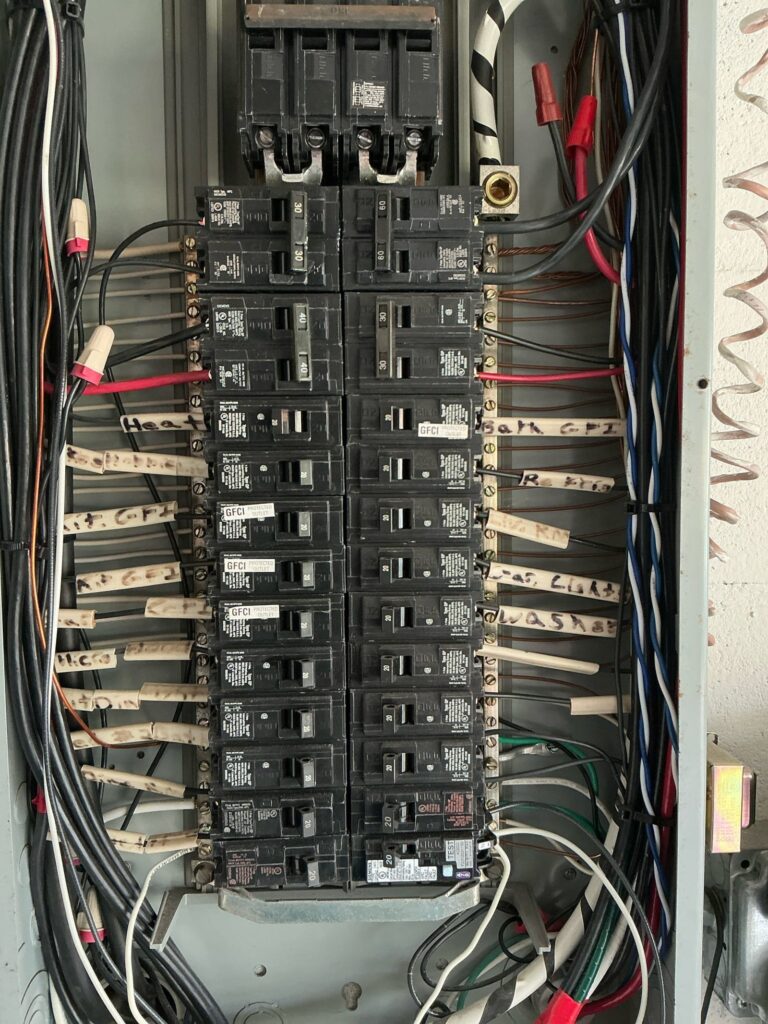
The main panel is a Federal Pacific Electric (FPE) Stab-Lok unit — common in Florida homes built and wired through the 1970s and 1980s. FPE panels were standard at the time, but decades of research have shown that their breakers can fail to trip reliably under overload conditions, which means the panel can’t protect appliances and devices the way a modern panel is designed to. Additionally, the inspection revealed double-tapped connections on the neutral and ground bus bar, an obsolete grounding system, an open outside service disconnect, and open knockouts in the enclosure (covered under NEC 408.7). Some minor corrosion was also noted at the service entry.
The GE 150-amp meter can and weatherhead showed minor concerns worth monitoring, and the breakers have not been updated to a currently listed product line — something the current NEC 408.4 circuit directory requirements flag for attention.
Branch Circuits and Devices
Throughout the home, our team found backstabbed outlets and switches. Backstabbing — pushing wire conductors into spring-clip slots on the back of a device rather than wrapping them around a screw terminal — was a widely used shortcut in residential wiring through the early 2000s. Over time, spring tension eases and contact resistance climbs, which is exactly the kind of intermittent behavior that can disrupt appliances like the dishwasher the homeowner mentioned. Replacing backstabbed devices with properly screw-terminated connections is a straightforward, durable fix.
No GFCI protection was present in any of the required locations — kitchen, bathrooms, garage, or outdoor circuits. Under NEC 210.8, GFCI protection is required in all of these areas. No AFCI protection was present either, which predates the NEC 210.12 requirement for arc-fault protection on bedroom and living-area branch circuits. Outlets throughout the home lacked tamper-resistant receptacles, which current NEC 406.12 requires in all dwelling-unit receptacle locations.
The grounding system was found to be obsolete and does not meet current NEC 250.50 requirements. No whole-home surge protection was present — a notable gap given Palm Harbor’s exposure to Florida’s lightning season. NEC 230.67 now requires a surge protective device at the service for new dwelling-unit installations.
No smoke detectors or carbon monoxide detectors were found anywhere in the home. NFPA 72 requires detectors in every sleeping area, outside each sleeping area, and on every level of the home.
The wiring in areas where the ceilings had been lowered was also noted as a concern: wire mold and conductors in some locations have been covered and are no longer accessible, which doesn’t meet current accessibility requirements.
The Patio Fan and EV Charger Circuit
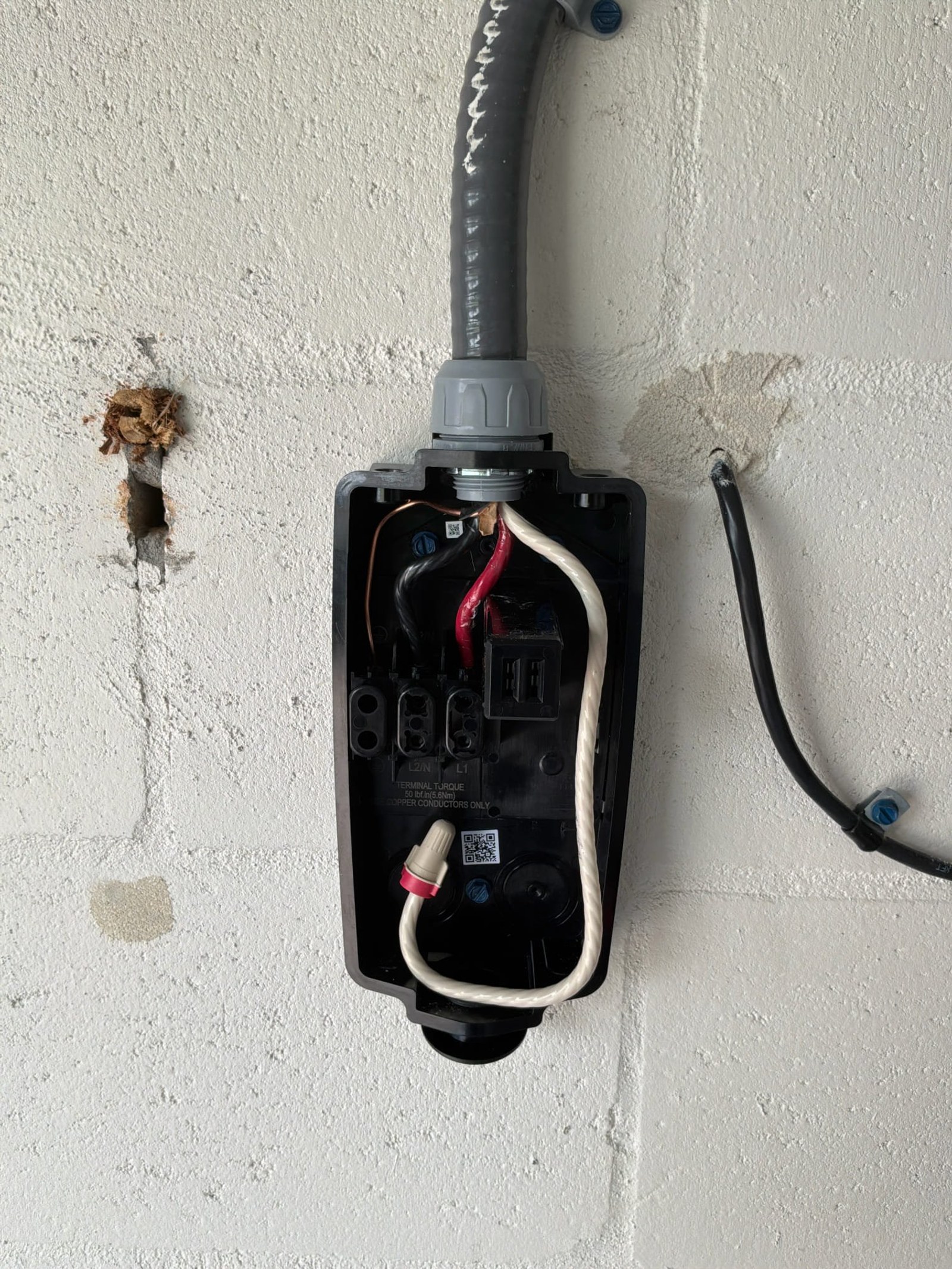
Our team diagnosed the non-functioning patio ceiling fan and provided options for the repair. For the EV charger, the crew ran a 50-amp, 6 AWG Romex circuit in open area to support Level 2 charging — giving the household a dedicated, properly sized branch circuit for reliable overnight charging at home.
What We Fixed
On this visit, our technician on-site completed the following:
- EV charger circuit: Installed a dedicated 50-amp, 6/2 Romex circuit (up to 10 ft in open area, with 15 ft of 6/2 NM wire) to support the homeowner’s Level 2 EV charger — properly sized for continuous load per NEC 625.41.
- Patio ceiling fan: Investigated the non-functioning fan and provided the homeowner with repair options.
- Whole-home inspection: Delivered a complete documented inspection report with recommendations for the panel, GFCI, AFCI, smoke and CO detectors, grounding, surge protection, and device replacements — so the family has a full roadmap for future upgrades on their own schedule.
The homeowner chose to focus on the ceiling fan and EV charger circuit for now and to hold on the panel and broader electrical upgrades for a future visit. That’s a reasonable choice — and having the full inspection report means there are no surprises when the family is ready to move forward.
Why This Palm Harbor EV Install Matters for Homeowners
For any household in a home of this era, a whole-home electrical inspection is one of the most useful things you can do — not because something is necessarily wrong today, but because knowing exactly where your home stands gives you options and control.
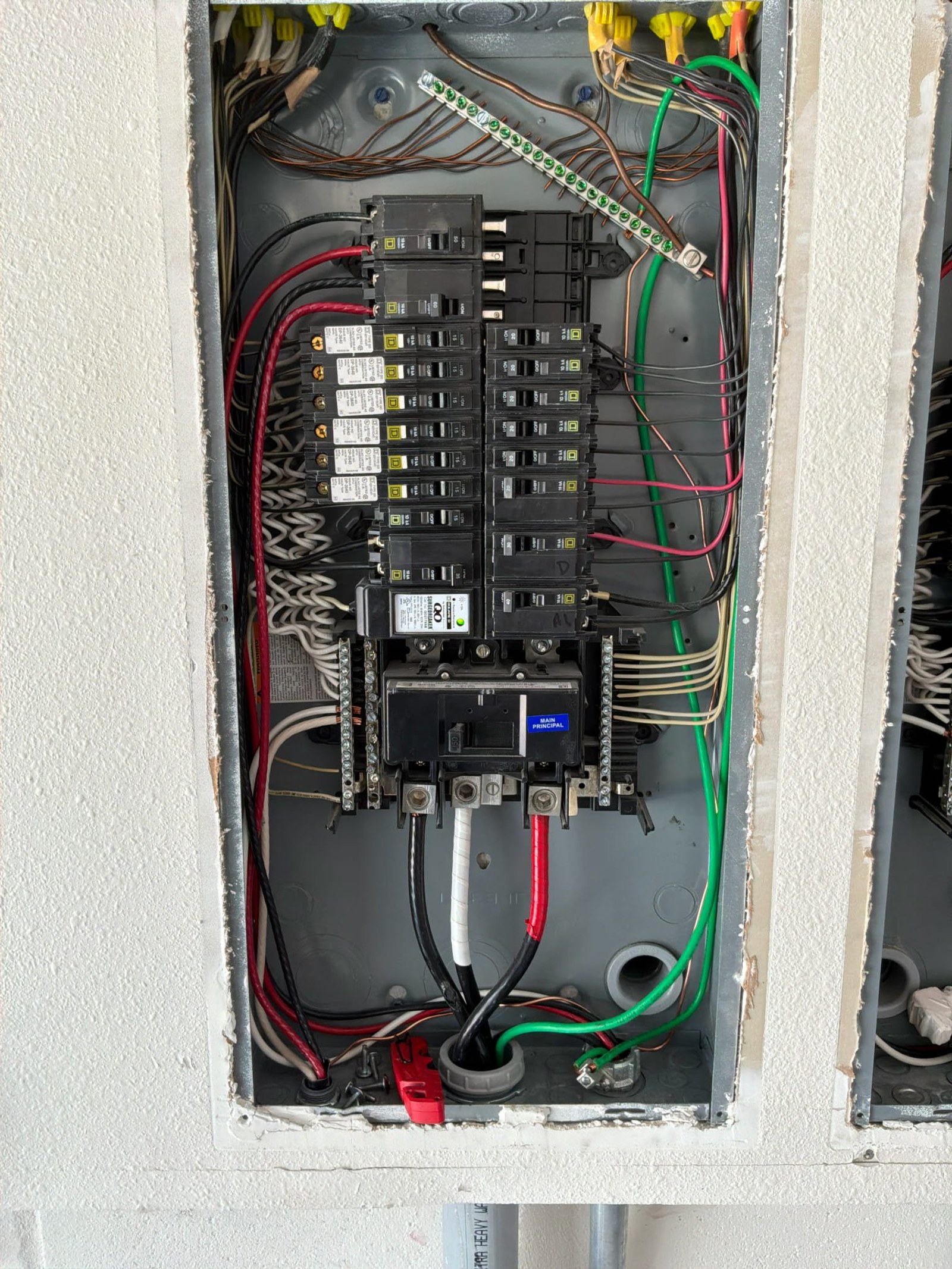
FPE Stab-Lok panels were standard equipment when they were installed. Today’s code and decades of field experience point toward replacing them, because modern panels offer more reliable circuit protection for everything running in the home — from the dishwasher and refrigerator to the new EV charger. A Square D or Eaton replacement panel gives the family all the headroom they need for today’s loads without ever wondering whether the breaker will do its job.
Additionally, adding whole-home surge protection — sized and installed per NEC 285.25 — means the EV charger, AC, appliances, and electronics ride through Florida’s lightning season without skipping a beat. It’s one of the highest-value upgrades a Palm Harbor homeowner can make before storm season arrives.
Above all, having a clear, documented picture of the home’s electrical system means the family can plan upgrades confidently — no guesswork, no surprises. That kind of peace of mind is exactly what a thorough inspection is designed to deliver.
Code Compliance Cited in This Job
Every fix above maps to a specific section of NEC 2023. Each card links to NFPA’s public NEC index.
GFCI Protection
NEC 210.8 requires GFCI protection for personnel at receptacles in kitchens, bathrooms, garages, outdoor areas, and other specified locations in dwelling units. The inspection found no GFCI protection in any required area of this Palm Harbor home. Installing GFCI receptacles or breakers in these locations brings the home in line with current code and adds a layer of protection that wasn’t standard when the home was originally wired. NFPA reference ›
AFCI Protection
NEC 210.12 requires arc-fault circuit interrupter protection on branch circuits supplying outlets in bedrooms, living rooms, kitchens, and other dwelling-unit areas. No AFCI protection was present in this home, consistent with wiring that predates the phased rollout of AFCI requirements. Adding AFCI breakers during a future panel upgrade would bring the home’s branch circuits up to current standards. NFPA reference ›
Surge Protective Device at Service
NEC 230.67 requires a listed surge protective device at the service for new dwelling-unit installations. No whole-home SPD was found during this inspection. For a Palm Harbor home with a new EV charger and existing appliances, adding a whole-home surge protector at the panel is a straightforward upgrade that protects connected equipment through every storm season. NFPA reference ›
Grounding Electrode System
NEC 250.50 requires a grounding electrode system that bonds all available electrodes — ground rods, metal water pipe, and concrete-encased electrodes — into a unified system. The grounding system at this Palm Harbor home was found to be obsolete and doesn’t meet this current requirement. Updating the grounding system is part of the recommended panel modernization. NFPA reference ›
Tamper-Resistant Receptacles
NEC 406.12 requires tamper-resistant receptacles in all dwelling-unit receptacle locations. The outlets throughout this home lack tamper-resistant protection, which is common in homes wired before this requirement became standard. Replacing devices with code-compliant tamper-resistant receptacles is part of the recommended re-device scope for this home. NFPA reference ›
EV Charging Branch-Circuit Ampacity
NEC 625.41 requires that the branch circuit supplying an EV charging system be sized for the continuous load, with the circuit rated at no less than 125 percent of the charger’s maximum load. The field team installed a dedicated 50-amp, 6 AWG circuit for this homeowner’s Level 2 EV charger, meeting the ampacity and continuous-load sizing requirements for reliable home charging. NFPA reference ›
Common Questions
Questions homeowners ask after seeing this kind of work.
What is an FPE Stab-Lok panel and why do electricians recommend replacing it?
Federal Pacific Electric Stab-Lok panels were widely installed in Florida homes built from the 1950s through the 1980s — they were the standard of the era. Over time, research and field experience have shown that their breakers can fail to trip reliably when a circuit is overloaded, which means the panel may not protect your appliances and devices the way a modern panel is designed to. Replacing an FPE panel with a Square D or Eaton unit gives your home a fresh service center built to current standards with full headroom for today’s loads. If your home still has an FPE panel, a licensed electrician can walk you through your options — to set up a time.
How often should I have my home’s electrical system inspected?
A yearly inspection is a solid baseline for most homes. Homes built before 1990 — or homes that have been through recent storm seasons — often benefit from more frequent check-ins, since older wiring and components can develop wear that isn’t visible from the outside. A full visual inspection takes about an hour and gives you a clear, documented picture of where your system stands. to get your annual inspection on the calendar.
Can I add a Level 2 EV charger to a home that still has an older electrical panel?
In many cases, yes — but the panel’s condition and available capacity matter. A licensed electrician will evaluate your panel’s amperage, the number of available breaker slots, and whether the panel brand is one that accepts new breakers reliably. For this Palm Harbor home, the EV charger circuit was installed while the broader panel decision was deferred to a future visit — a practical approach that gets the charger running now. If you’re planning an EV charger installation, and we’ll confirm your panel is ready to support it.
Why are backstabbed outlets worth replacing even if they seem to be working?
Backstabbed connections use a spring-clip slot on the back of the device rather than a screw terminal. When the home was wired, this was a common and accepted shortcut. Over years of heating and cooling cycles, the spring tension can ease and contact resistance climbs — leading to the kind of intermittent outlet behavior or appliance issues that are easy to overlook. Replacing backstabbed devices with screw-terminated connections is a quick fix that makes the whole device circuit more consistent and reliable. if you’d like us to evaluate the outlets in your home.
Does whole-home surge protection really make a difference in Florida?
Florida leads the country in lightning strikes, which makes whole-home surge protection one of the most practical upgrades a homeowner here can make. A panel-mounted Type 2 surge protective device, installed per NEC 285.25, absorbs voltage spikes before they can reach your appliances, EV charger, AC unit, and electronics — so your equipment keeps running the way you expect it to, storm after storm. If your home doesn’t have a whole-home SPD yet, and we can add one during your next service visit.
Want to see more real jobs like this one? Browse our completed case studies or explore our services.