This St. Petersburg fan repair case study walks through the real diagnosis, the fix, and the code details from a recent service call. A homeowner in St. Petersburg, FL (33703) called us about a patio ceiling fan that had stopped working. Our field team got the fan running again — and during a thorough walkthrough, found several opportunities to bring the home’s electrical system further in line with today’s standards. The homeowner chose to focus on the fan repair for now, and we documented everything else clearly so nothing gets overlooked down the road.
The Problem
The call started simply enough:
“The ceiling fan on the patio just stopped working. I also want to swap out some of the outdoor lighting at the front entrance.”
Both requests were straightforward. However, once our technician on-site got a look at the full picture, it was clear the visit was worth more than just a fan fix.
Investigation
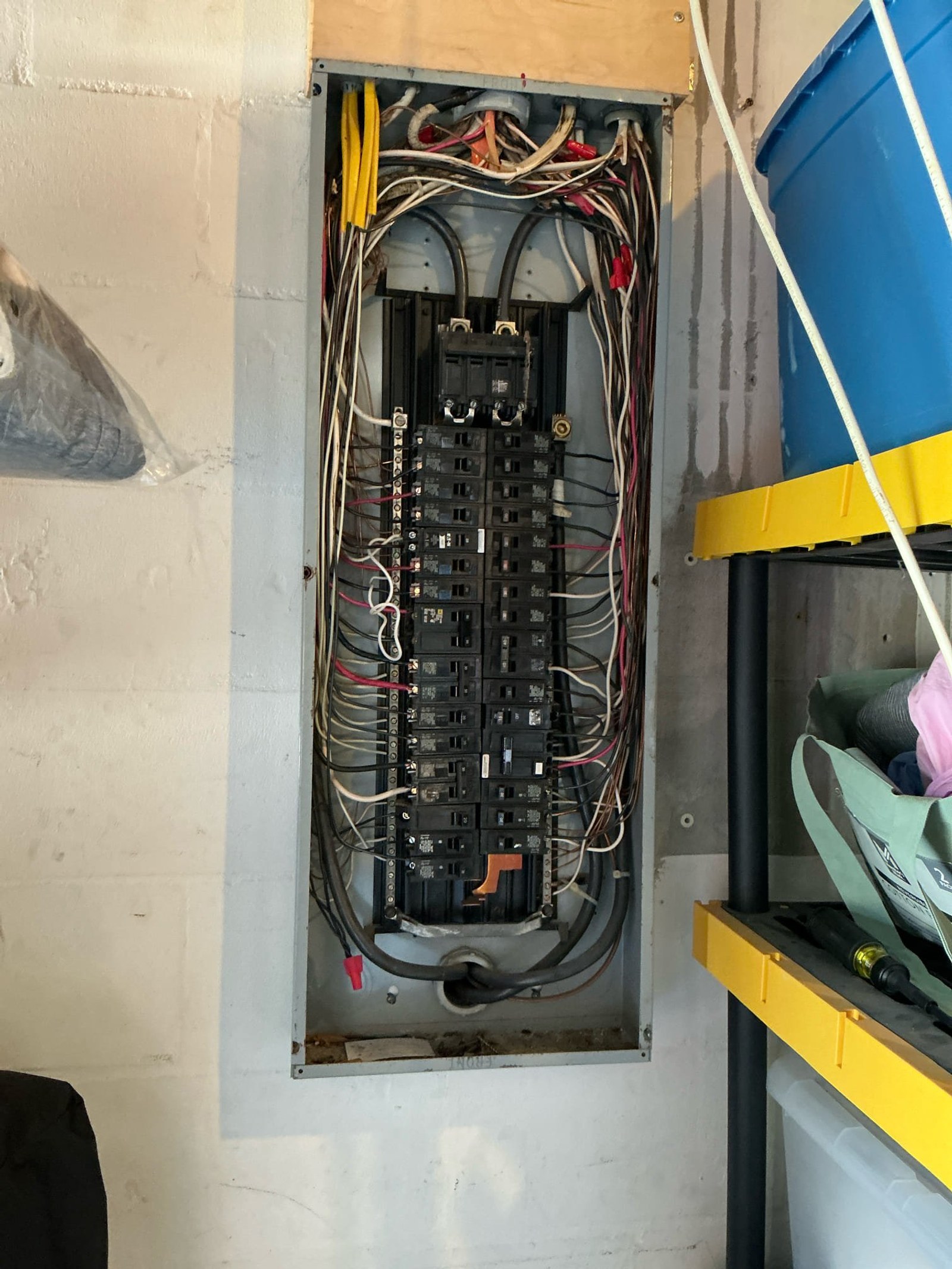
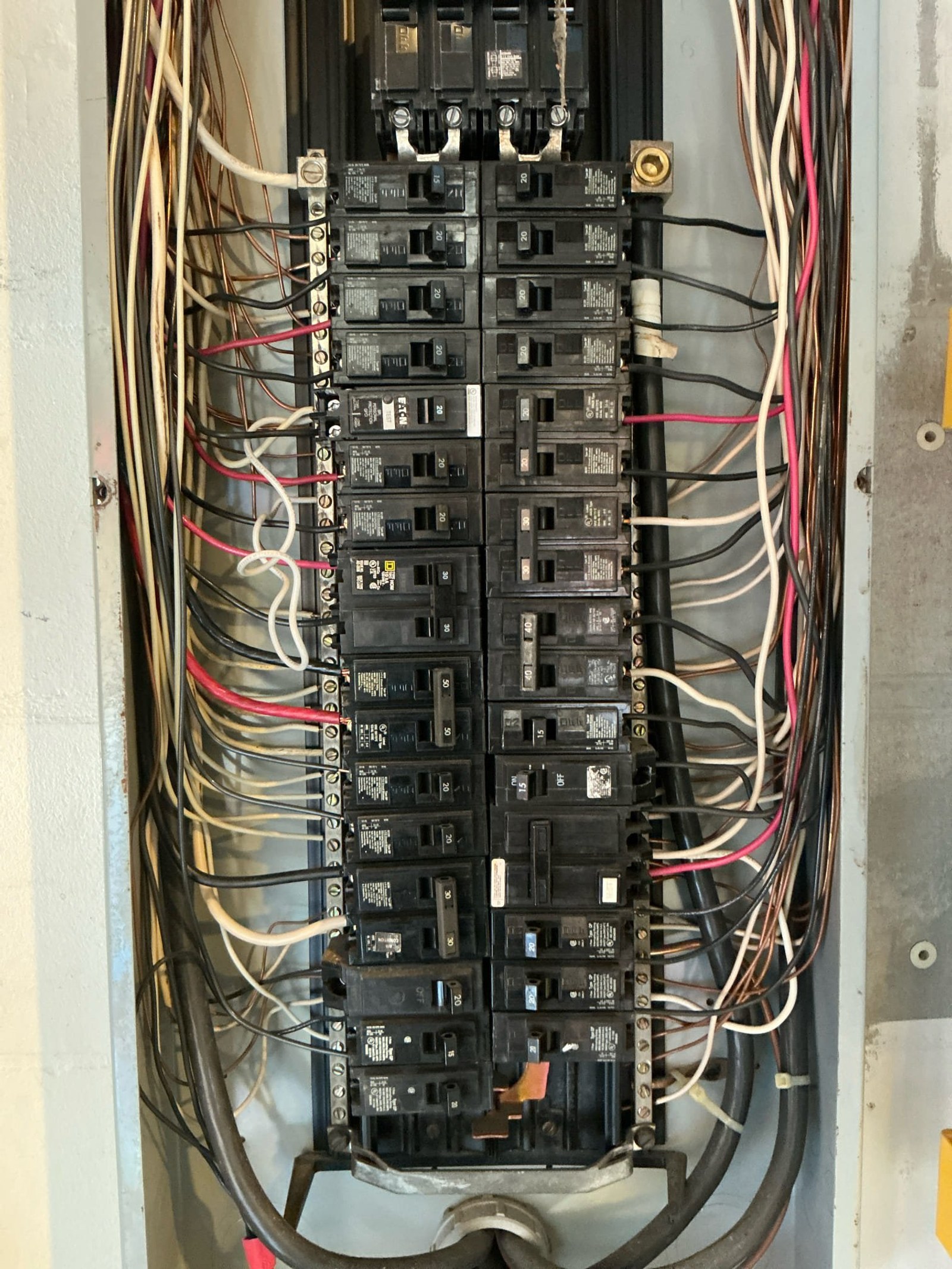
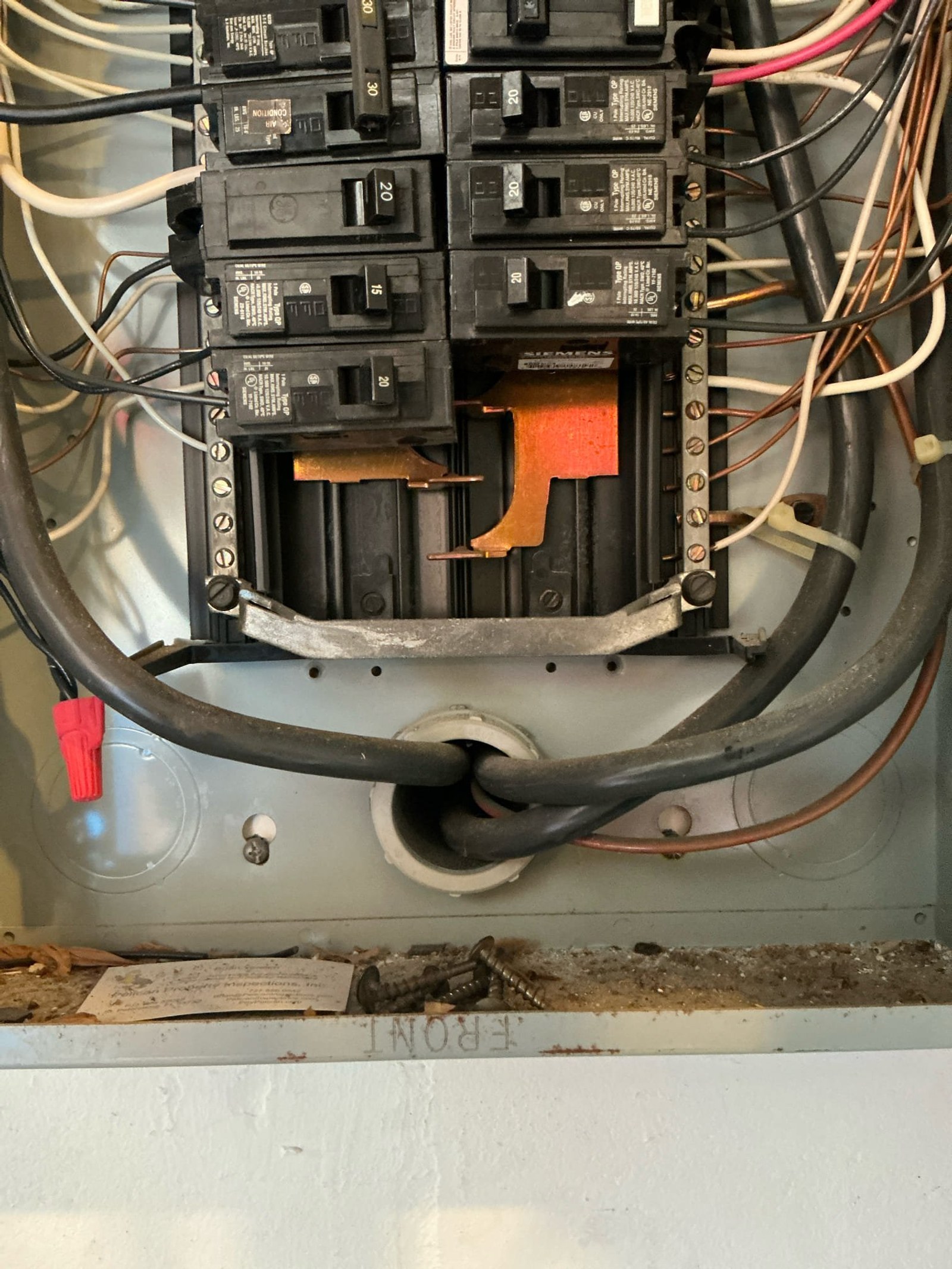
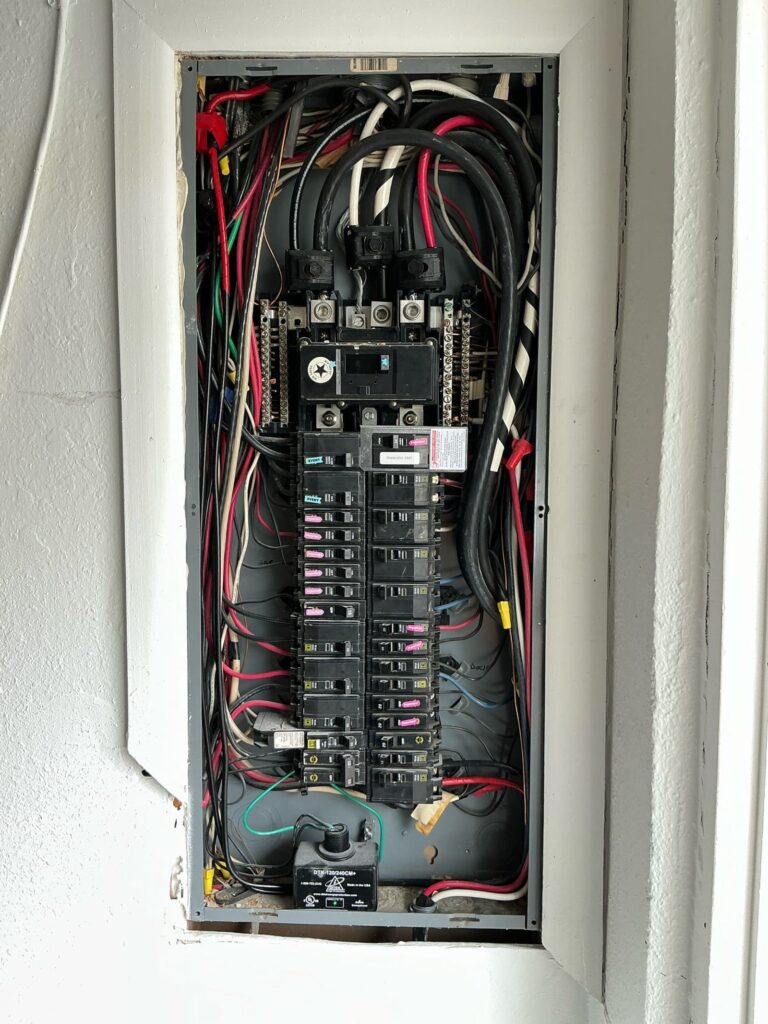
Our field team started at the patio ceiling fan and traced the circuit back through the panel — a 200-amp Square D Homeline unit. The fan issue turned out to be a wiring problem at the fixture itself, not a breaker or upstream fault.
What the Panel Walkthrough Revealed
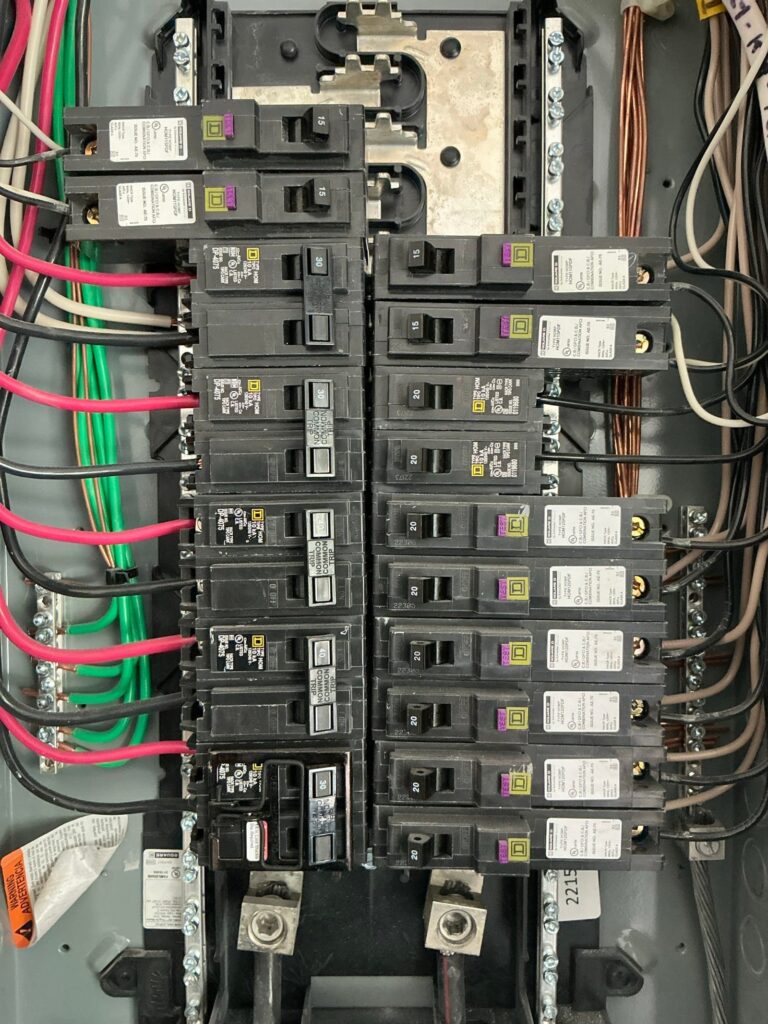
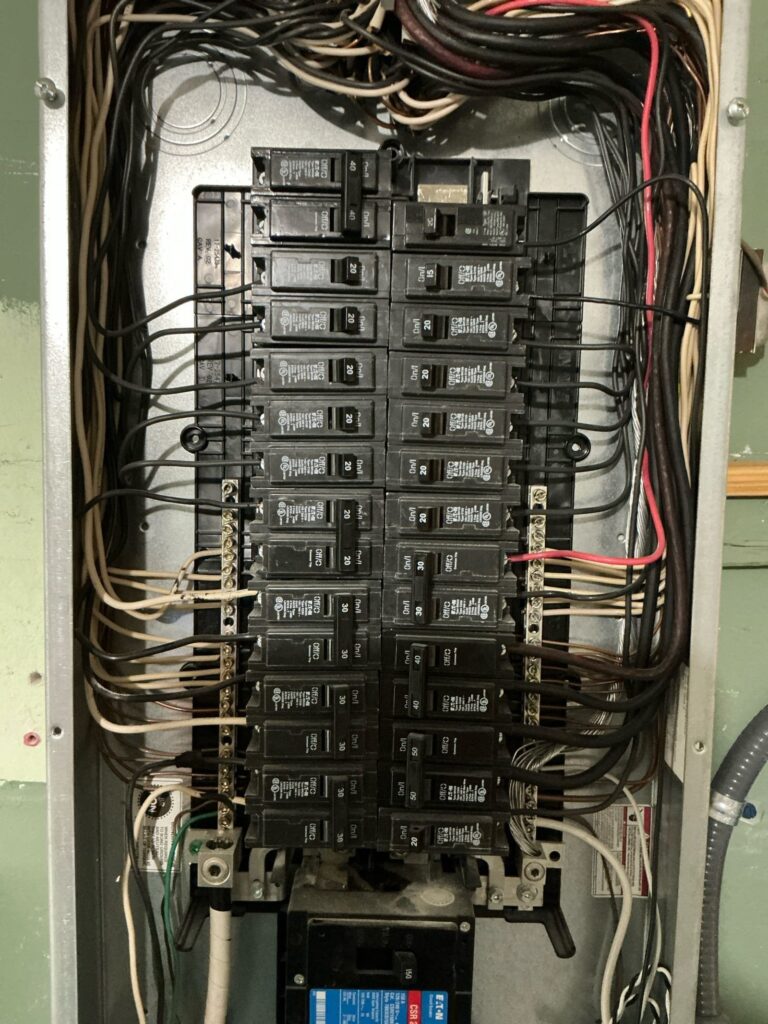
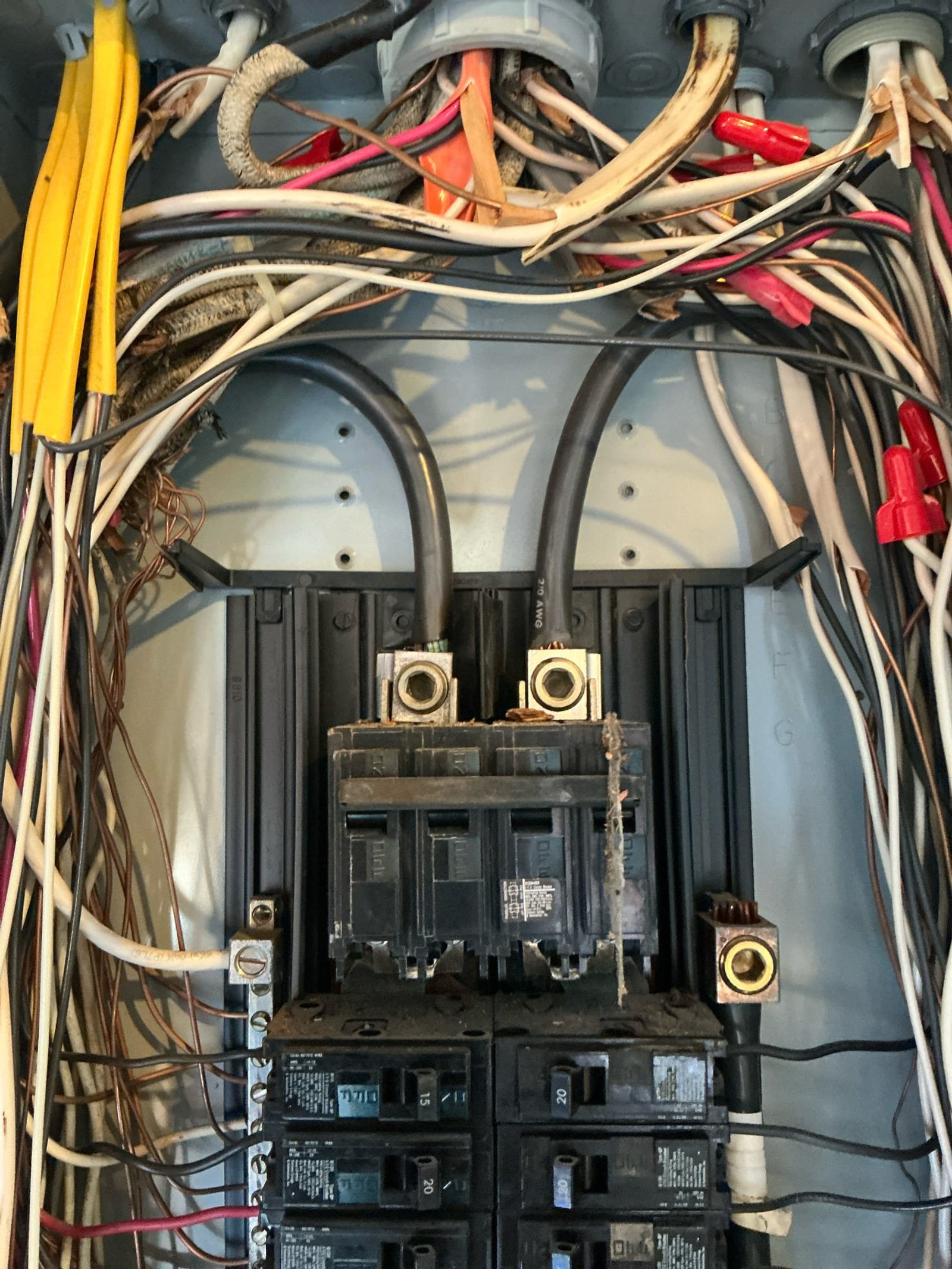
With the panel open, the team noted a few items worth flagging. Some conductors on the neutral and ground bus bars showed double-tapping — two wires sharing a single terminal lug. That’s a connection style that predates tighter torque and termination guidance in today’s code. Over years of thermal cycling, that kind of arrangement can loosen, which is exactly the sort of thing worth correcting during any planned panel work.
The inspection also confirmed no whole-home surge protection is currently installed. For a home in the Tampa Bay area — where afternoon lightning storms are a regular part of summer — that’s a meaningful gap. The home’s smoke detectors also flagged as needing replacement; they were beyond their recommended service life and lacked carbon monoxide detection.
Wiring Accessibility Concerns
The team also noted that at some point, interior ceilings had been lowered and wire mold had been used to conceal wiring runs. Under NEC 2023, junction boxes and splices must remain accessible. Covering them during a remodel — even neatly — doesn’t meet current requirements. This is common in older homes that have had cosmetic updates over the decades, and it’s worth addressing whenever larger work is planned.
What We Fixed
For this visit, the homeowner’s priority was clear: get the patio ceiling fan working. Our crew diagnosed the fault at the fixture, made proper screw-terminated connections, confirmed the circuit was sound, and restored operation. The fan runs reliably now.
Additionally, the team documented all inspection findings — the double-tapped bus bar terminals, the missing surge protection, the outdated smoke and CO detectors, and the wiring accessibility concerns — and presented the homeowner with a clear set of options. The homeowner decided to hold on the panel work and other upgrades for now, but has everything in writing for when the timing is right.
What Remains on the Table
For future visits, our team has already scoped out what a full modernization would look like. That includes:
- Panel rejuvenation — correcting the double-tapped terminals and tightening connections to current torque standards per NEC 110.14(D)
- Whole-home surge protection — a Type 2 SPD at the service entrance, per NEC 230.67
- Smoke and CO detector replacement — new 10-year sealed lithium combination detectors with interconnect, meeting NFPA 72 placement requirements
- Wiring accessibility corrections — bringing concealed junction boxes back into compliance
The homeowner also has an interest in an EV charger installation down the line, which would require a load calculation first — something the team is already prepared to conduct.
Why This St. Petersburg Fan Repair Matters for Homeowners
A ceiling fan call is rarely just a ceiling fan call. For families in older St. Petersburg homes, the electrical system underneath everyday fixtures often tells a more complete story — one that’s worth knowing even if you’re not ready to act on all of it at once.
That’s exactly why a thorough walkthrough matters. The family in this home can run their patio fan comfortably right now, and they have a clear, prioritized list of next steps whenever they’re ready. No surprises. No rushed decisions.
Furthermore, the items identified — surge protection, smoke and CO detection, panel terminal corrections — are all things that quietly support the household’s daily routine. A whole-home surge protector means the TV, the fridge, the router, and the AC all ride out summer storms without skipping a beat. Updated smoke and CO detectors with interconnect mean every room communicates with every other room — so the family can sleep at night knowing the system is working the way it should.
Above all, having a licensed electrician document the full picture means nothing falls through the cracks between now and the next project. That’s the kind of peace of mind that lasts well beyond a single service call. Thomas Edison Electric holds Florida electrical license EC13015487, and every recommendation we make is backed by that standard.
Learn more about home electrical safety education at ESFI.org.
Code Compliance Cited in This Job
Every fix above maps to a specific section of NEC 2023. Each card links to NFPA’s public NEC index.
Electrical Connections
Double-tapped neutral and ground bus bar terminals place two conductors under a single lug not rated for that configuration. NEC 110.14(B) requires that connections be made in a manner that ensures a reliable, low-resistance joint. Correcting these during planned panel work restores proper terminal integrity for the long term. NFPA reference ›
Torque Verification on Lugs
NEC 110.14(D) requires that listed torque values be applied and verified at panel lugs and bus bar terminals. On this job, the double-tapped terminals were flagged for future correction to ensure each conductor is properly seated and torqued to the manufacturer’s specification. NFPA reference ›
Surge Protective Device at Service
NEC 230.67 now requires a surge protective device (SPD) at the service entrance of dwelling units. This home currently has no whole-home surge protection installed — a straightforward addition that gives the household’s appliances and electronics consistent protection through every storm season. NFPA reference ›
Type 2 SPD Installation Requirements
When a Type 2 SPD is installed at the service panel, NEC 285.25 governs placement, lead-length limits, and connection requirements. Our team scoped this work during the walkthrough so a future installation can proceed efficiently against a known panel layout. NFPA reference ›
Circuit Directory and Panel Identification
NEC 408.4 requires that every circuit in a panel be legibly identified as to its clear, evident purpose. During the panel inspection, the team confirmed the Square D Homeline directory and noted areas for improvement as part of any future panel rejuvenation work. NFPA reference ›
Common Questions
Questions homeowners ask after seeing this kind of work.
What causes a patio ceiling fan to stop working even when the breaker hasn’t tripped?
Most of the time, the fault lives at the fixture itself — a loose or improperly terminated connection at the fan’s wiring box. Vibration from years of operation can work a wire free, especially if it was originally backstabbed or lightly secured. Our crew can trace the circuit from the fan back to the panel to pinpoint the issue quickly. If your patio fan has gone quiet, schedule a diagnostic online and we’ll get it sorted.
How often should I have my home’s electrical system inspected?
A yearly inspection is a solid baseline for most households. Homes built before 1990, homes that have had renovation work done over the years, and homes that have weathered recent storms may benefit from checks more often. An annual walkthrough catches small items — loose terminals, outdated detectors, missing surge protection — before they become bigger projects. Book a safety check online to get on the calendar.
Is it a problem if my panel has double-tapped bus bar terminals?
It depends on the specific terminals and lugs involved, but generally, placing two conductors under a single lug not rated for that configuration affects connection reliability over time. Thermal cycling — the panel heating and cooling with daily load — gradually loosens the joint. It’s a common finding in homes of a certain vintage and straightforward to correct during any planned panel work. Schedule a panel inspection if you’d like us to take a look.
Why do I need a whole-home surge protector if I already have power strips?
Power strips protect the devices plugged directly into them, but they do nothing for hardwired loads — your AC system, refrigerator, water heater, washer, and dryer. A Type 2 surge protector installed at the service panel covers all of those simultaneously, so every storm that rolls through the St. Petersburg area passes without reaching your appliances and electronics. Book a surge protection consultation online to find the right fit for your home.
When should smoke detectors be replaced, and do they need to include carbon monoxide detection?
Smoke detectors have a recommended service life of ten years from the manufacture date — not the installation date. After that, the sensing chamber degrades and reliability drops. Carbon monoxide detection is a separate sensor, and NFPA 72 recommends CO detection in homes with any fuel-burning appliance or attached garage. Combination smoke/CO units with 10-year sealed lithium batteries are the most practical upgrade. Schedule online and our team can assess and replace all detectors in a single visit.
Want to see more real jobs like this one? Browse our completed case studies or explore our services.