This St. Petersburg breaker replacement case study walks through the real diagnosis, the fix, and the code details from a recent service call. When a homeowner in St. Petersburg, FL (33703) needed to address a buyer’s inspection report before closing, our field team arrived expecting a quick outlet swap — and instead found a home full of opportunities to bring every system up to current standards. From backstabbed connections and missing GFCI protection to a panel lacking surge protection and AFCI breakers, the home needed more than a cosmetic fix. By the time our crew finished, everything from the panel to the pool equipment was modernized, and the family could hand over the keys with genuine peace of mind.
The Problem
The sale was on the line. A buyer’s inspection had flagged two outlets for replacement, and the homeowner wanted the work done cleanly and quickly before closing.
“Selling home and need to make a few repairs based on the buyer’s inspection. Need two outlets replaced.”
What our team found during the on-site walkthrough, however, went well beyond two outlets.
Investigation
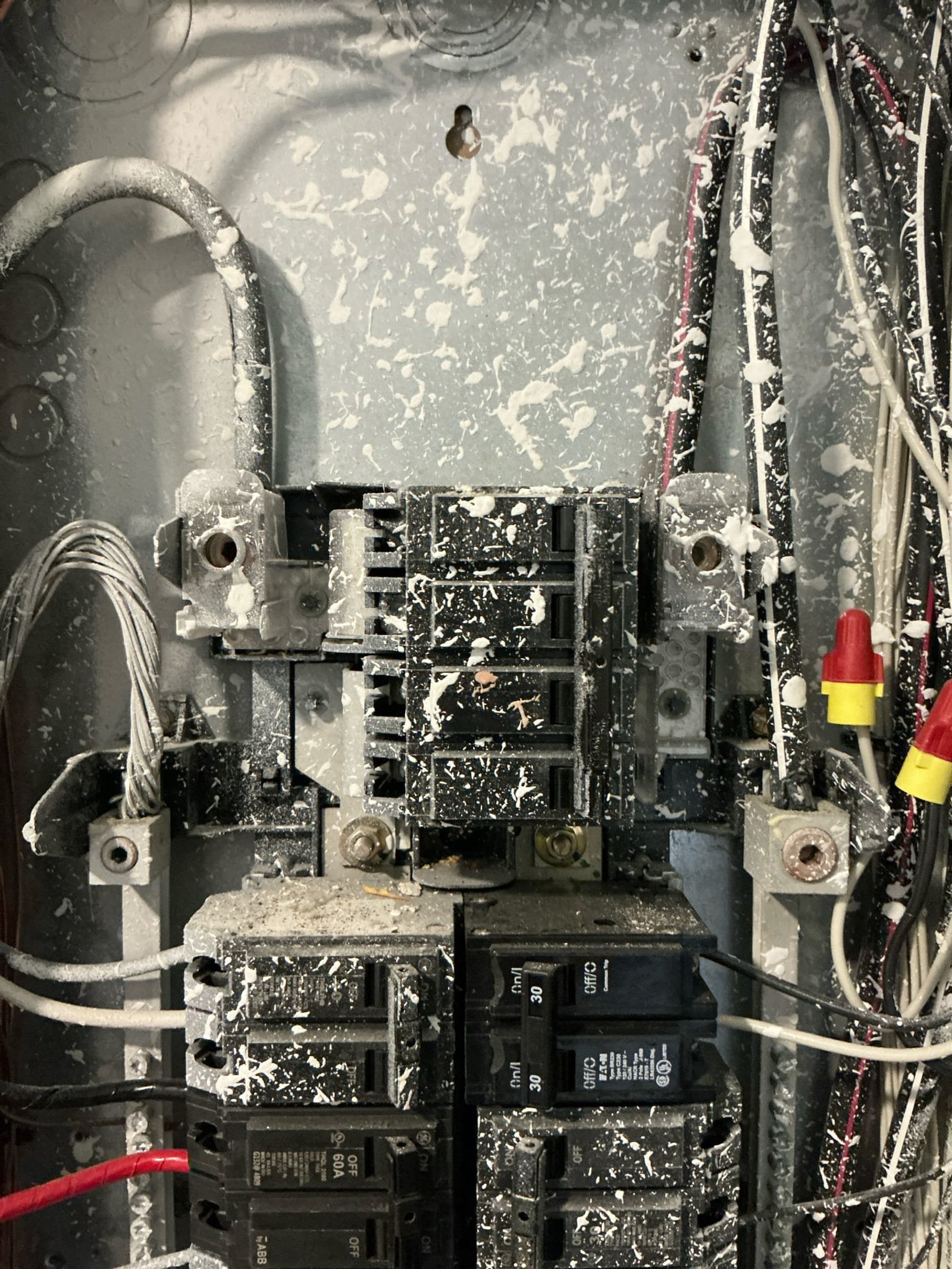
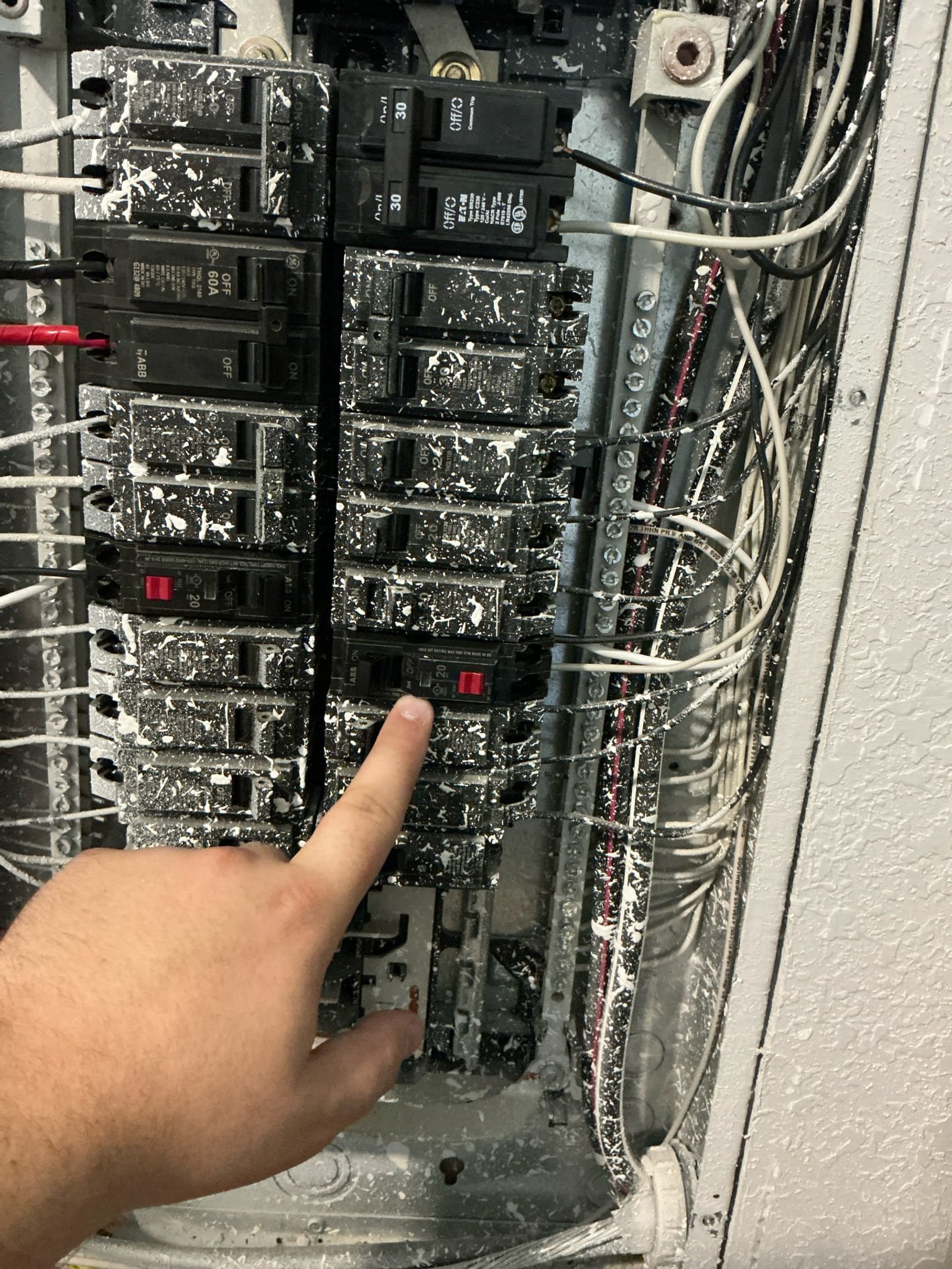
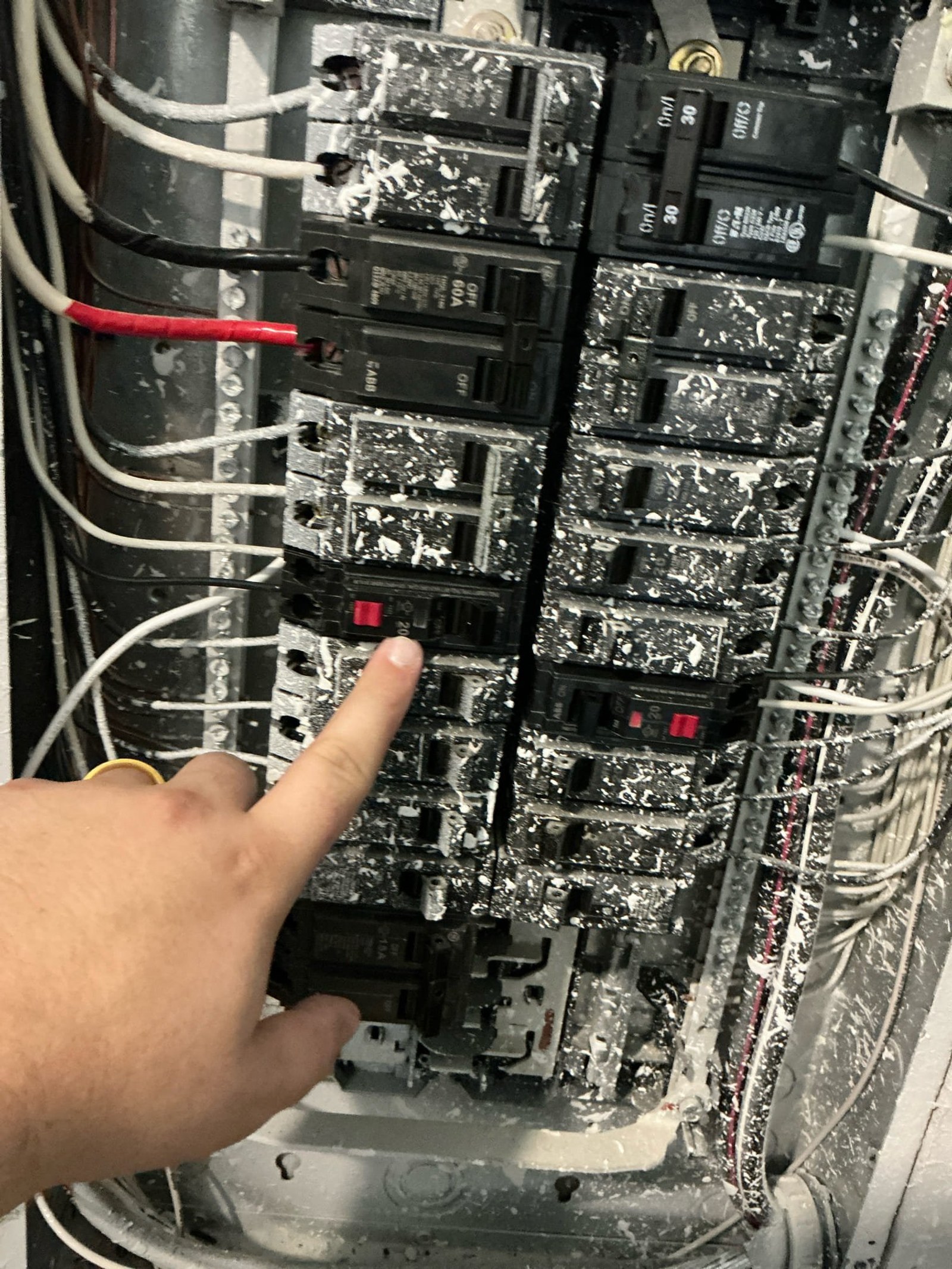
Our licensed electrician on-site began with the reported outlets and quickly identified a broader pattern throughout the home.
Outlets, Switches, and Backstabbed Connections
Many of the outlets and switches were backstabbed — a wiring shortcut common in homes built before roughly 2005. With backstabbed connections, the spring-loaded contacts gradually lose their tension over years of thermal cycling. The result is climbing contact resistance and the kind of intermittent behavior that frustrates homeowners. This is consistent with the era this home was wired, and replacing them with screw-terminated connections is a straightforward, durable fix.
The bathroom outlet presented its own story: the homeowner had attempted a DIY replacement but wasn’t able to complete it. Our team stepped in, installed a proper remodel box, and brought that outlet to spec.
GFCI and Panel Findings
One kitchen outlet lacked GFCI protection — a requirement under NEC 210.8 for countertop-area receptacles. The master bathroom was also missing GFCI coverage. Pool equipment circuits had no GFCI protection either, which doesn’t meet current standards for equipment within reach of water.
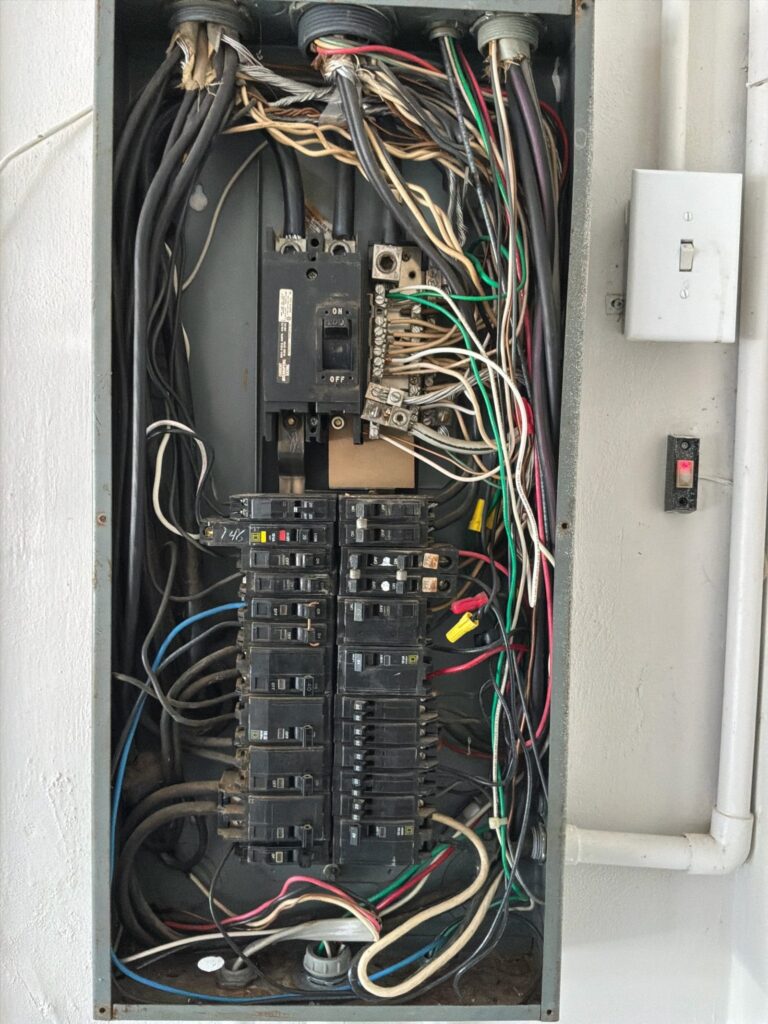
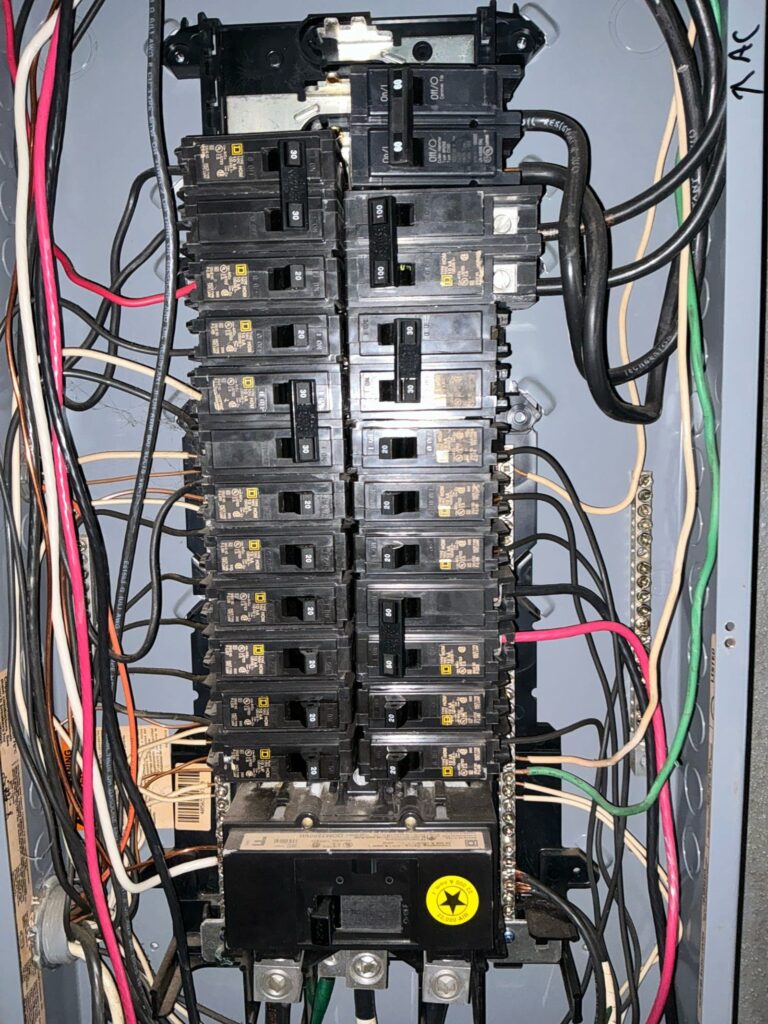
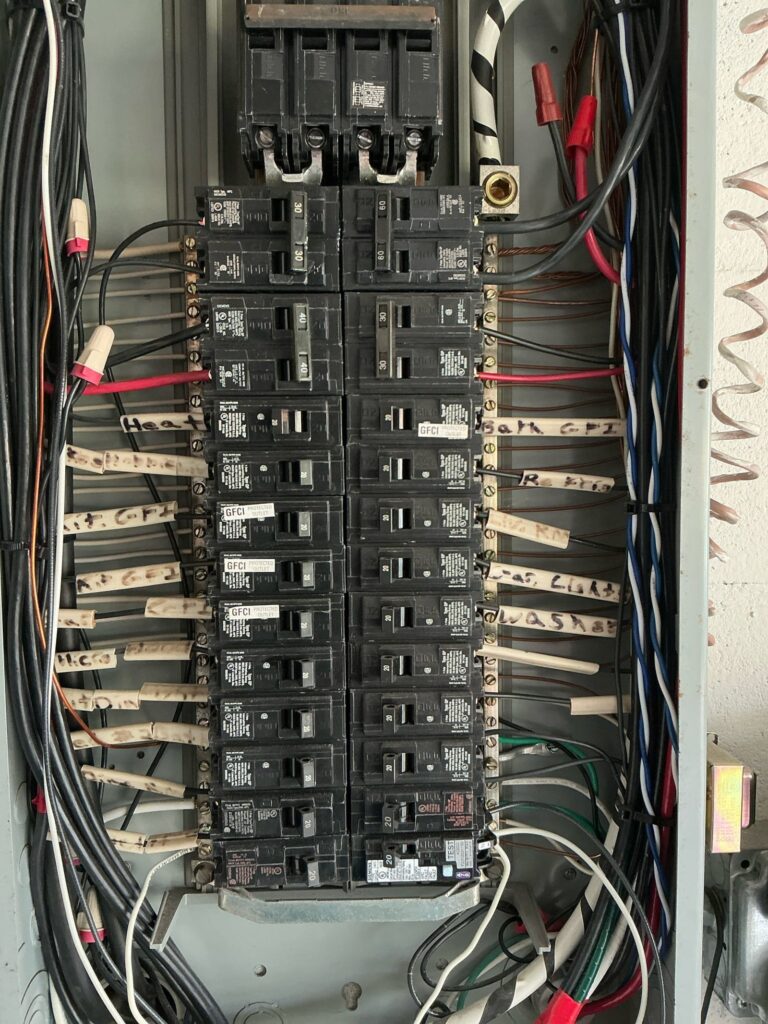
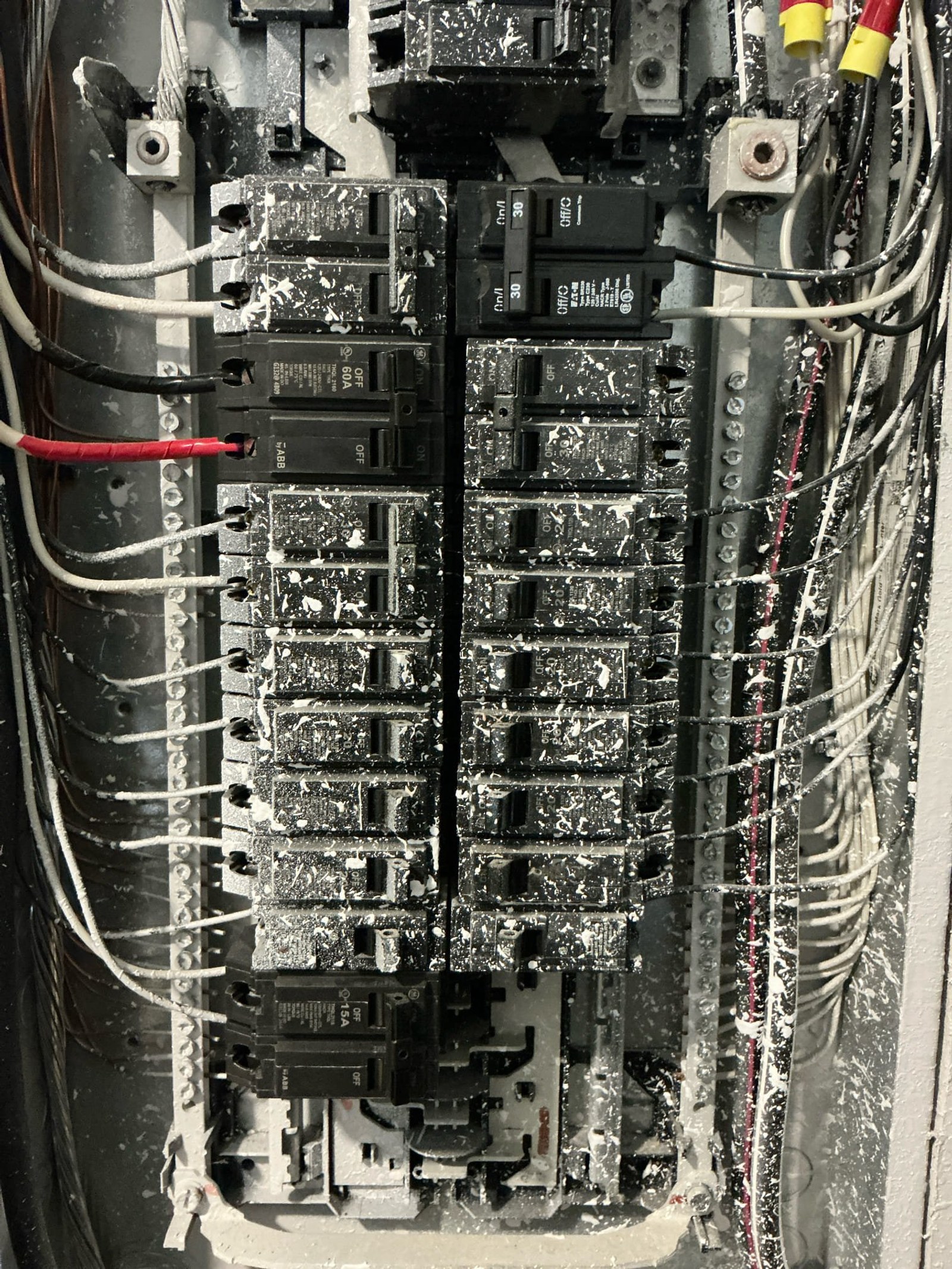
Inside the GE 150-amp panel, our crew identified several items worth addressing: a missing 2-inch bushing on a knockout, absent AFCI breakers on circuits that now require them under NEC 210.12, and a polarity tap that wasn’t configured correctly. The inspection stoplight also flagged the grounding system as needing attention, the meter can condition as a concern, and the absence of whole-home surge protection.
Smoke and CO Detection
Several areas required by NFPA 72 were missing smoke detectors entirely, and no carbon monoxide detector was present. For a home changing hands, bringing detector coverage up to current standards is one of the most straightforward ways to give the next family full confidence from day one.
What We Fixed
Our field team worked through each finding systematically.
Panel work: We installed a Square D HOM115 single-pole 15-amp breaker and a Square D HOM240 two-pole 40-amp breaker where circuits needed proper protection. We also added a GE THQP230 two-pole 30-amp breaker to serve equipment previously without correct overcurrent protection. The missing bushing was fitted, and polarity connections were corrected.
Whole-home surge protection: We installed a PSP Vortex 120 kA whole-home surge protector directly on the panel. Per NEC 230.67 and NEC 285.25, dwelling-unit services now require surge protection — and this home now meets that standard. The refrigerator, AC, computers, and any electronics the next family brings in will ride through Florida’s storm season without a single surge interruption.
Outlets and switches: Our crew replaced the backstabbed devices with properly screw-terminated tamper-resistant 15-amp receptacles, installed a new single-gang remodel box for the bathroom outlet, and replaced the switch with a 15-amp decorator-style rocker. A new NEMA 5-15P cord cap was installed on an existing appliance cord that needed a replacement plug.
Smoke and CO detectors: Five 10-year sealed lithium smart smoke/CO combination detectors with interconnect were installed throughout the home. Every room now talks to every other room — if anything changes in any part of the house, the whole home knows at once. That’s exactly the coverage NFPA 72 calls for, and exactly what the next family deserves from the first night they sleep there.
Why This St. Petersburg Breaker Replacement Matters for Homeowners
Selling a home shines a light on systems that often go years without a second thought. For this St. Petersburg household, the buyer’s inspection was actually an opportunity — a reason to hand over a home that’s genuinely modernized, not just patched.
Backstabbed connections predate current best practices by decades. They were perfectly acceptable when installed, but today’s code and today’s load demands favor the more reliable screw-terminal method. Similarly, GFCI requirements have expanded steadily through successive NEC cycles. A kitchen outlet installed in the 1980s or 1990s may have been compliant then; NEC 210.8 now requires GFCI coverage at kitchen countertop receptacles, bathroom outlets, and pool equipment circuits.
For the family moving in, the result is a home where the morning routine runs without tripped breakers, the kids’ bedrooms have AFCI-protected circuits, and every storm that rolls through Tampa Bay is handled quietly by the surge protector on the panel — not by a scramble to replace fried electronics afterward. Above all, they inherit a home where the electrical system has been documented, inspected, and brought to current standards by a licensed Florida electrical contractor. That kind of peace of mind doesn’t appear on the listing sheet, but the next family will feel it every day.
“Ian is amazing! Showed up early, did an incredible job annnd finished early. Would highly recommend.”
Code Compliance Cited in This Job
Every fix above maps to a specific section of NEC 2023. Each card links to NFPA’s public NEC index.
GFCI Protection for Personnel
This home had an unprotected kitchen countertop outlet and missing GFCI coverage in the master bathroom and at pool equipment circuits. NEC 210.8 requires GFCI protection in kitchens, bathrooms, garages, outdoor areas, and near pools. Our crew brought all required locations into compliance during this visit. NFPA reference ›
AFCI Protection
The inspection found that several branch circuits lacked the arc-fault circuit interrupter breakers now required under NEC 210.12 for dwelling-unit living spaces, bedrooms, and kitchens. New Square D HomeLine AFCI-capable breakers were added to address this gap and bring the panel in line with current standards. NFPA reference ›
Surge Protective Devices at Services
The home had no whole-home surge protection — flagged as a concern during the inspection stoplight review. NEC 230.67 now requires a listed SPD at the service for dwelling units. Installing the PSP Vortex 120 kA unit on the GE 150-amp panel satisfies this requirement. NFPA reference ›
Type 2 SPD Installation Requirements
The PSP Vortex unit is a Type 2 SPD installed on the load side of the service disconnect, consistent with NEC 285.25. This placement ensures the device protects all downstream branch circuits from transient overvoltages, including those serving pool equipment, the AC system, and household electronics. NFPA reference ›
Replacement Receptacle Requirements
When receptacles are replaced in existing dwellings, NEC 406.4(D) requires that replacements meet current code, including tamper-resistant construction and GFCI protection where required. All receptacles replaced on this job were upgraded to tamper-resistant spec-grade devices, satisfying this requirement. NFPA reference ›
Receptacles and GFCI Near Pools
Pool equipment circuits at this property lacked GFCI protection, which doesn’t meet current standards under NEC 680.22. Our field team added the required GFCI protection to bring the pool circuits into compliance before the home changed hands. NFPA reference ›
Common Questions
Questions homeowners ask after seeing this kind of work.
What are backstabbed outlets and why do they matter in an older home?
Backstabbed outlets use a push-in spring contact instead of a screw terminal to secure the wire. This method was common in homes wired before roughly 2005, and it was acceptable under the code of that era. Over time, the spring tension relaxes and contact resistance increases, which can cause intermittent flickering or outlets that stop working reliably. Replacing them with screw-terminated devices is a straightforward upgrade that restores dependable performance. If your home is from that era, our team can book a 30-minute visual inspection so you know exactly what you’re working with.
Does a home need GFCI protection on pool equipment circuits?
Yes. NEC 210.8 and NEC 680.22 require GFCI protection for receptacles and equipment near pools and spas. Homes built or wired before those requirements took effect may not have it — which is common and consistent with the code cycle when they were installed. Adding GFCI protection now brings the home up to current standards and means the pool area works the way today’s code intends. If you’re unsure about your pool circuits, our crew can schedule an inspection and confirm coverage.
How often should I have my home’s electrical system inspected?
Once a year is a solid baseline for most homes. Homes built before 1990 and homes that have come through recent storms may benefit from inspections more frequently, since older wiring systems and weather events can both accelerate wear on connections, breakers, and protective devices. A yearly check gives you a clear picture of where things stand before small issues become bigger ones. Our licensed team can schedule your annual inspection at a time that works for your household.
Is a whole-home surge protector worth adding before selling or buying a home?
It’s one of the higher-value upgrades relative to its footprint. NEC 230.67 now requires a surge protective device at the service for dwelling units — so newer construction will have one, and older homes are increasingly expected to catch up. For a home in Florida, where afternoon lightning is a seasonal routine, a device like the PSP Vortex 120 kA means the refrigerator, AC, computers, and TVs ride through every storm without skipping a beat. Schedule online to add surge protection before your next storm season.
What smoke and CO detector placement does current code require in a Florida home?
NFPA 72 sets the standard for detector placement — inside each bedroom, outside each sleeping area, and on every level of the home including the basement if present. Carbon monoxide detectors are required wherever fuel-burning appliances or an attached garage are present. Homes from earlier decades often have fewer detectors than current standards call for, which is simply a reflection of when they were built. Bringing coverage up to NFPA 72 means every part of the home is connected — if one detector activates, the whole network responds. Our team can book a detector audit and bring your home up to current requirements in a single visit.
Want to see more real jobs like this one? Browse our completed case studies or explore our services.