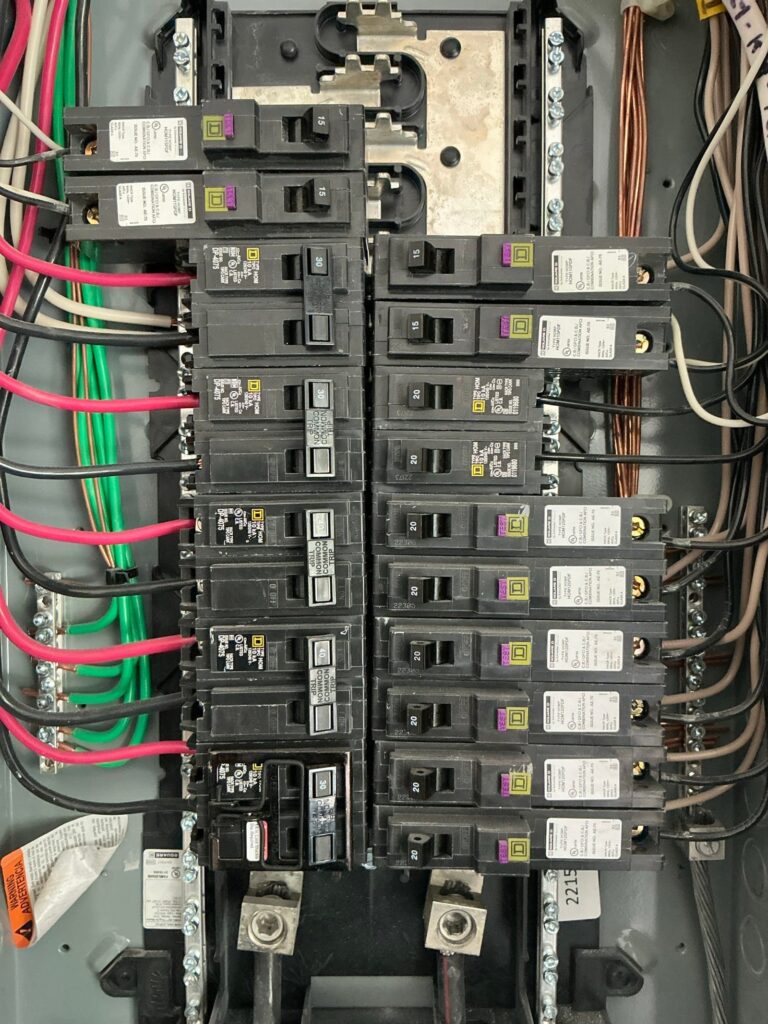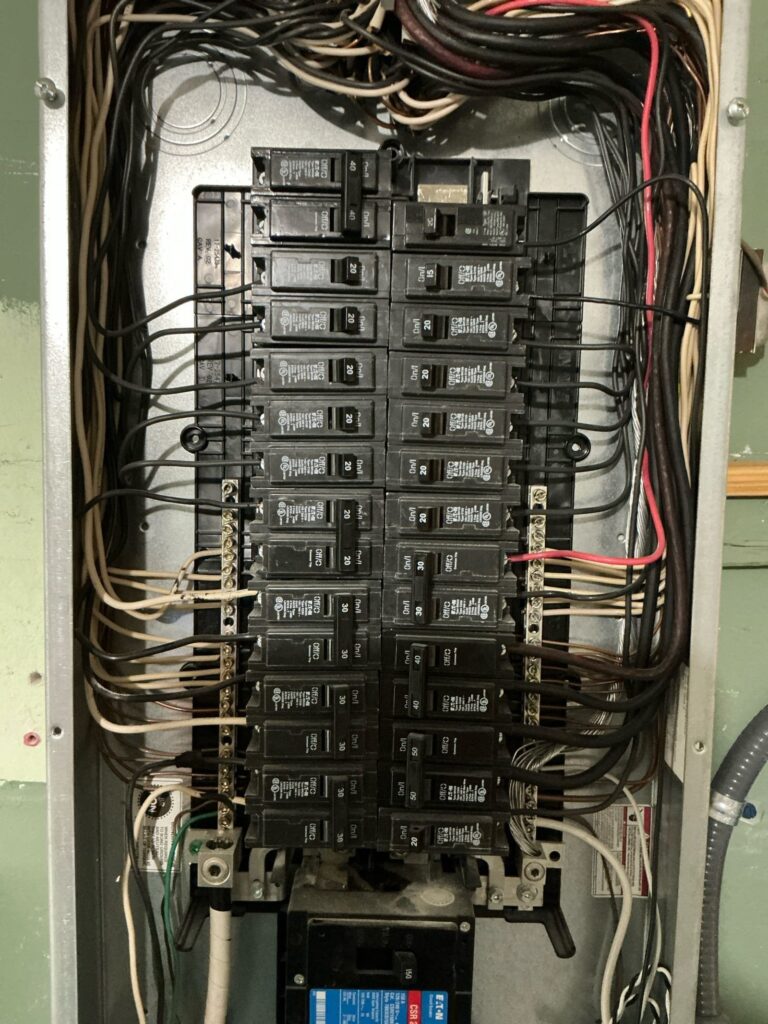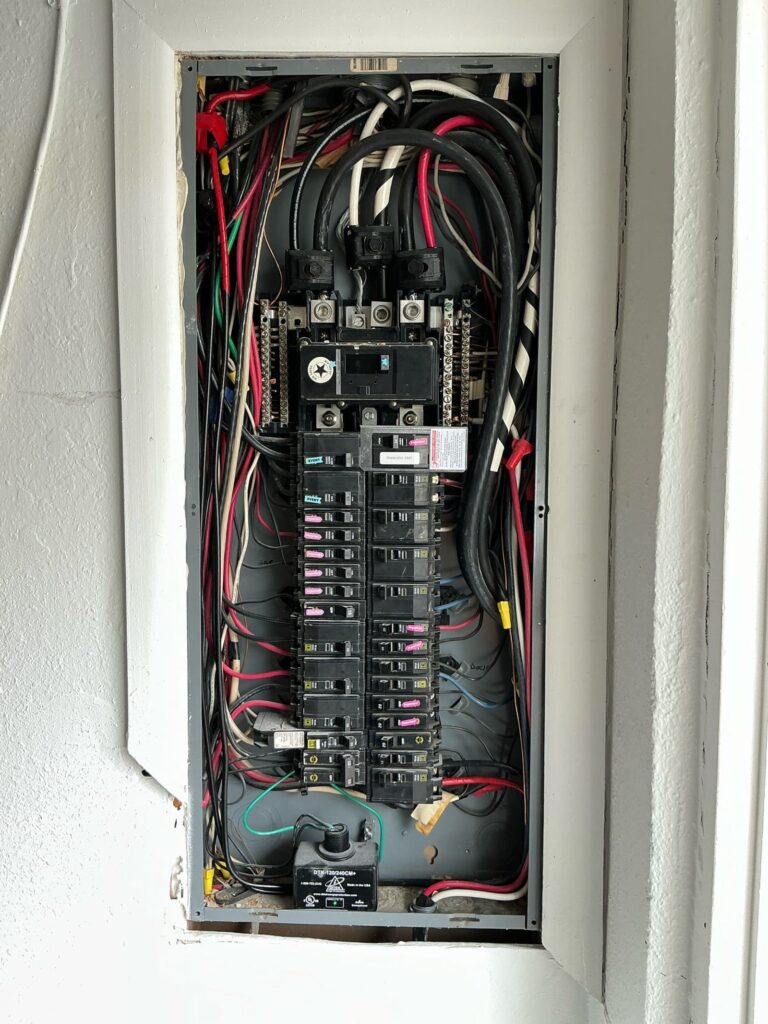
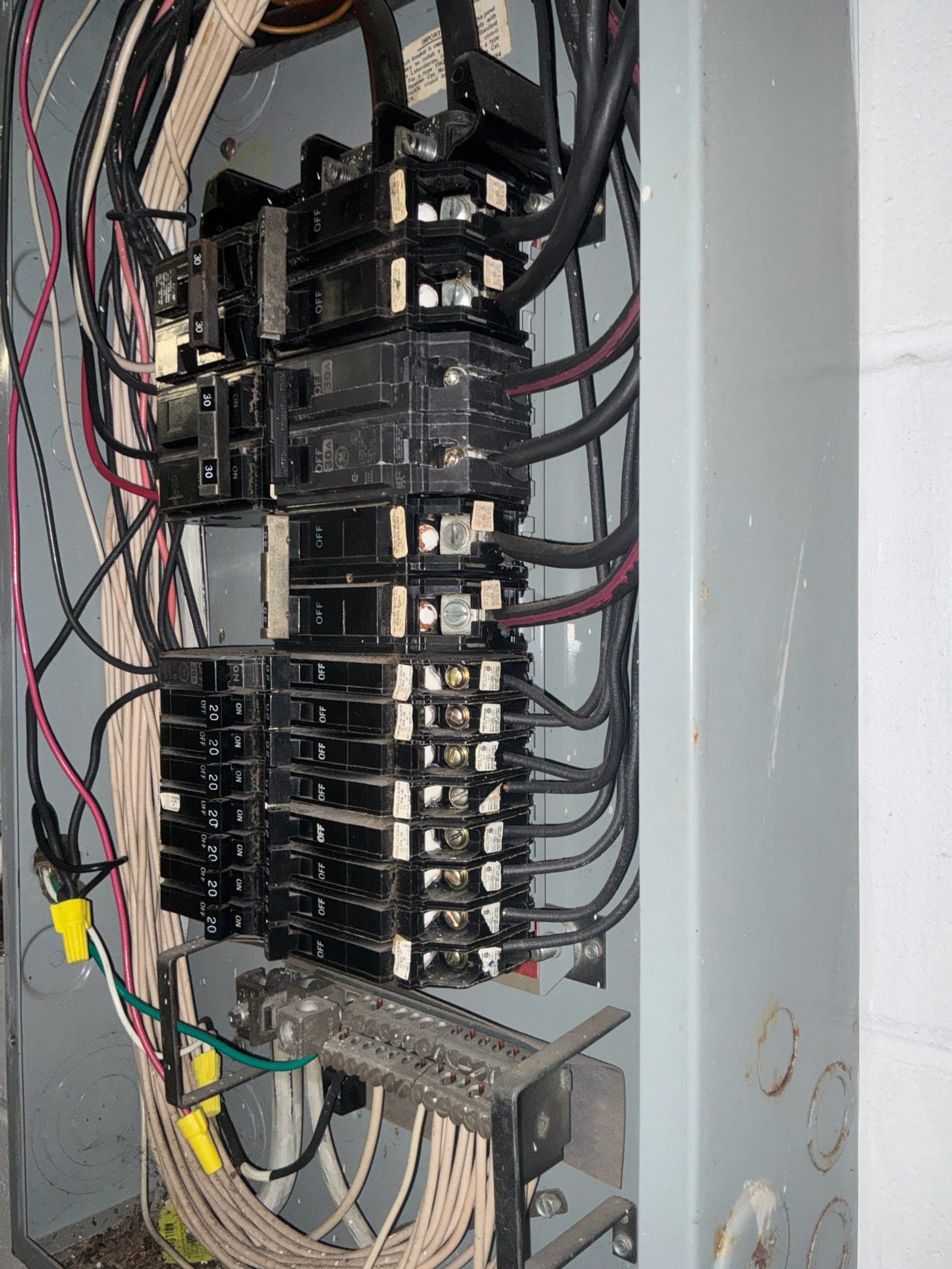
This Tampa attic wiring repair case study walks through the real diagnosis, the fix, and the code details from a recent service call. A homeowner in Tampa, FL called about exposed wiring in their 43-year-old home’s attic that needed to be properly secured. Additionally, we installed a whole-house surge protector, upgraded several breakers, and modernized the home’s smoke and carbon monoxide detection system with smart interconnected units.
The Problem
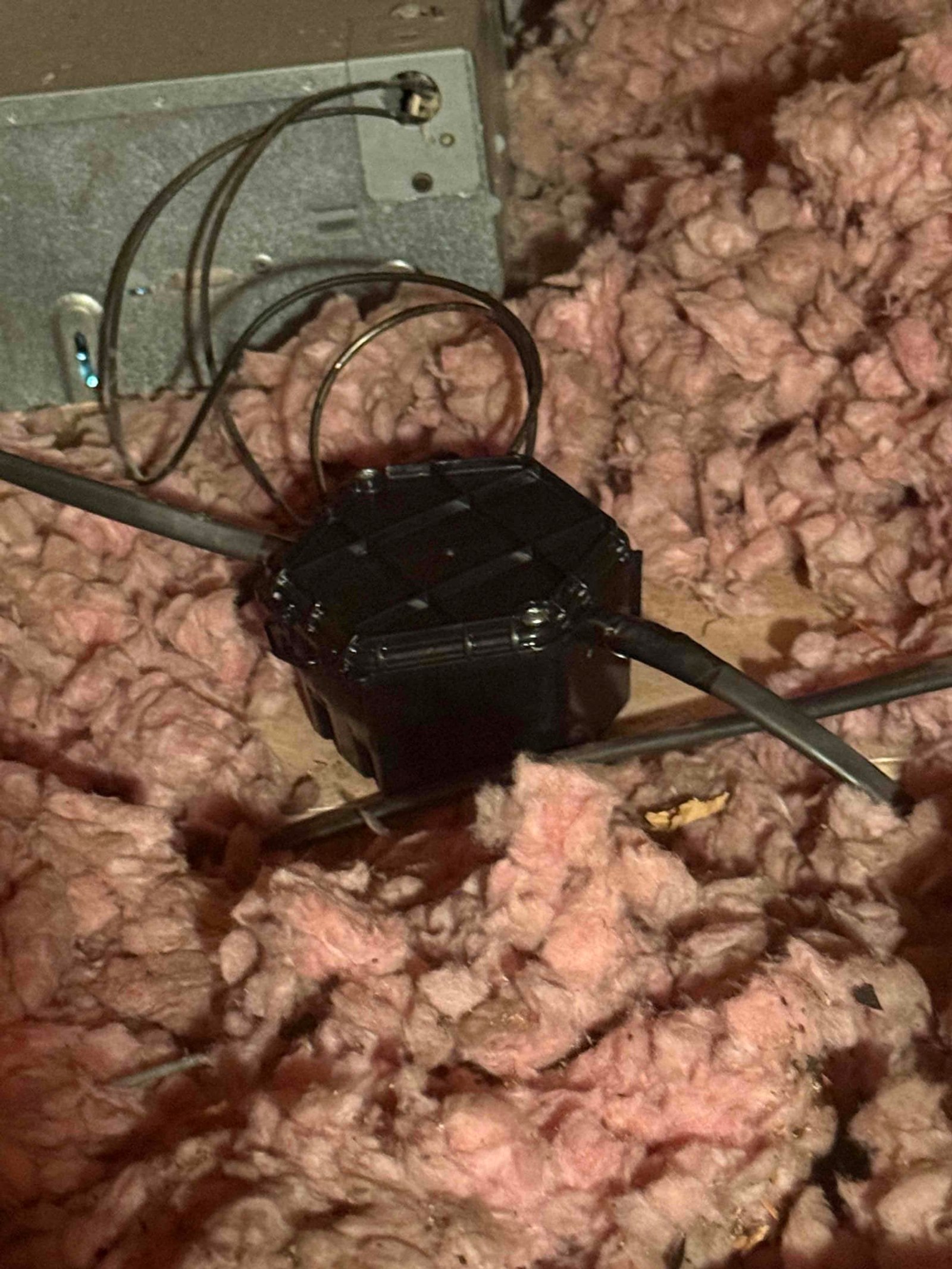
The customer discovered exposed wiring in their attic that wasn’t properly secured or protected. As they put it:
“Client wants to fix some exposed wiring in the attic that needs to be buttoned up.”
For a home built in 1981, this type of finding is fairly common. However, the homeowner wanted to address the issue properly and bring their electrical system up to current standards.
Investigation
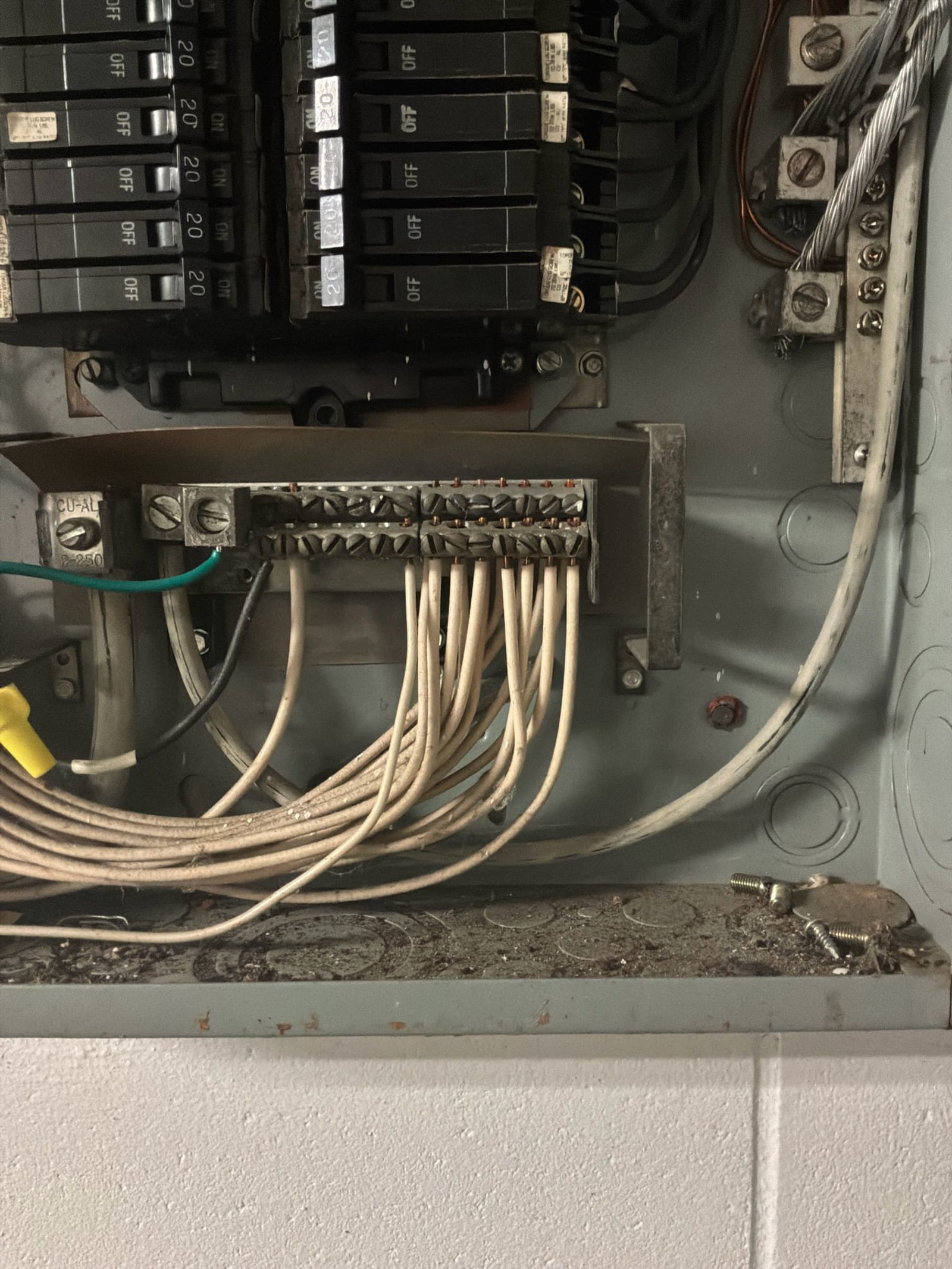
Our technician found several opportunities to modernize the home’s electrical safety systems. To start, the attic wiring needed proper securing and protection. Additionally, we identified areas where the home could benefit from current NEC standards, including surge protection and updated smoke/CO detection.
The existing panel had a mix of breaker types that could be standardized. Moreover, the home lacked whole-house surge protection—an important consideration for Florida homes during storm season. In fact, a comprehensive electrical safety inspection in Clearwater, FL can reveal similar opportunities in older homes.
What We Fixed
Securing the Attic Wiring Properly
First, we addressed the immediate concern by properly securing the exposed attic wiring. We installed appropriate cord caps where needed. This work ensures compliance with NEC 110.14 standards for electrical connections.
Installing Whole-House Surge Protection
Next, we installed a PSP Vortex 120 kA whole-house surge protector directly onto the main panel. This installation follows NEC 285.6 requirements for Type 2 SPDs. For example, this level of protection is essential for Tampa-area homes that face frequent lightning strikes.
Standardizing Breakers and Adding Capacity
For the breaker updates, we replaced one Square D HOM115 single-pole 15-amp breaker and one HOM240 two-pole 40-amp breaker to standardize the panel. We also installed a GE THQP230 30-amp two-pole breaker for another circuit. As a result, the panel now has consistent protection devices that meet NEC 240.6 standards.
Upgrading to Smart Smoke and CO Detectors
The most significant upgrade involved replacing the home’s smoke and carbon monoxide detection system. We installed five smart 10-year sealed lithium smoke/CO combination detectors with interconnect capability throughout the home. These units provide both local and remote alerts, giving the homeowner peace of mind whether they’re home or away. This modern system complies with NEC 760.121 requirements for fire alarm circuit installation.
Finally, we completed some minor electrical work including a single tamper-resistant receptacle installation and a decorator-style rocker switch replacement.
Why This Tampa Attic Wiring Repair Matters for Homeowners
Proper wiring protection prevents wear and potential connection issues over time. Furthermore, homes built in the early 1980s predate many current electrical safety standards that we now consider essential.
Whole-house surge protection has become increasingly important as our homes contain more sensitive electronics. Modern surge protectors like the PSP Vortex can handle the kind of electrical events common during Florida thunderstorms. They protect everything from HVAC systems to computers. In this case, adding whole-house surge protection in Clearwater, FL provides critical defense against voltage spikes.
Smart smoke and CO detectors represent a significant safety upgrade over traditional units. The 10-year sealed batteries eliminate the familiar “chirping at 3 AM” scenario. Meanwhile, interconnected operation means an alarm in one area triggers alerts throughout the home. Smart features allow homeowners to receive notifications even when away. Additionally, some units can differentiate between smoke types to reduce false alarms during cooking. Homeowners interested in this upgrade can explore smoke and CO detector installation in Clearwater, FL for their own properties.
What the Homeowner Said
“Josh was very prompt and professional. Excellent work and very reasonable priced! Will definitely use again!”
– Michael M., via Google – May 2026
Common Questions
Questions homeowners ask after seeing this kind of work.
Is exposed attic wiring dangerous?
Yes – unsecured wiring can be damaged by foot traffic during HVAC service, animal activity, or thermal expansion. Damaged sheathing exposes conductors and creates fire or shock hazards. NEC 334.30 requires cable to be supported every 4.5 feet and secured within 12 inches of every box, which is what we corrected in this Tampa home.
What NEC code applies to attic electrical work?
Several sections apply: NEC 110.14 covers electrical connections, 334.30 covers cable support, and 320.30 covers armored cable installation. Attic work in Florida also has to account for high temperatures – conductors are derated when ambient temperature exceeds 86°F, which is normal in summer attics.
How do you secure attic wiring properly?
Code-compliant securing involves running cable along framing members, using approved staples or straps every 4.5 feet, protecting cable that crosses joists with running boards or guards, and keeping cable away from areas where it could be stepped on. We document each repair location with photos for the homeowner’s records.
Should older homes get whole-house surge protection?
Especially older homes. Vintage wiring is less tolerant of voltage spikes, and aging insulation can fail when stressed by surges. The PSP Vortex 120 kA we installed at this 1981-built Tampa home provides modern protection for the existing wiring system at a relatively low cost.
How often should an older home’s wiring be inspected?
We recommend an electrical safety inspection every 3-5 years for homes built before 1990, or after any major weather event. The inspection checks panel condition, GFCI/AFCI coverage, attic and crawl space wiring, smoke detector placement, and surge protection. Book yours here.