This Tarpon Springs surge protection case study walks through the real diagnosis, the fix, and the code details from a recent service call. A homeowner in Tarpon Springs, FL called us about a broken conduit and an AC breaker that needed resizing. What started as a focused repair turned into a full-picture safety inspection — and what our field team found gave the household a meaningful upgrade in comfort and reliability across the board.
The Problem
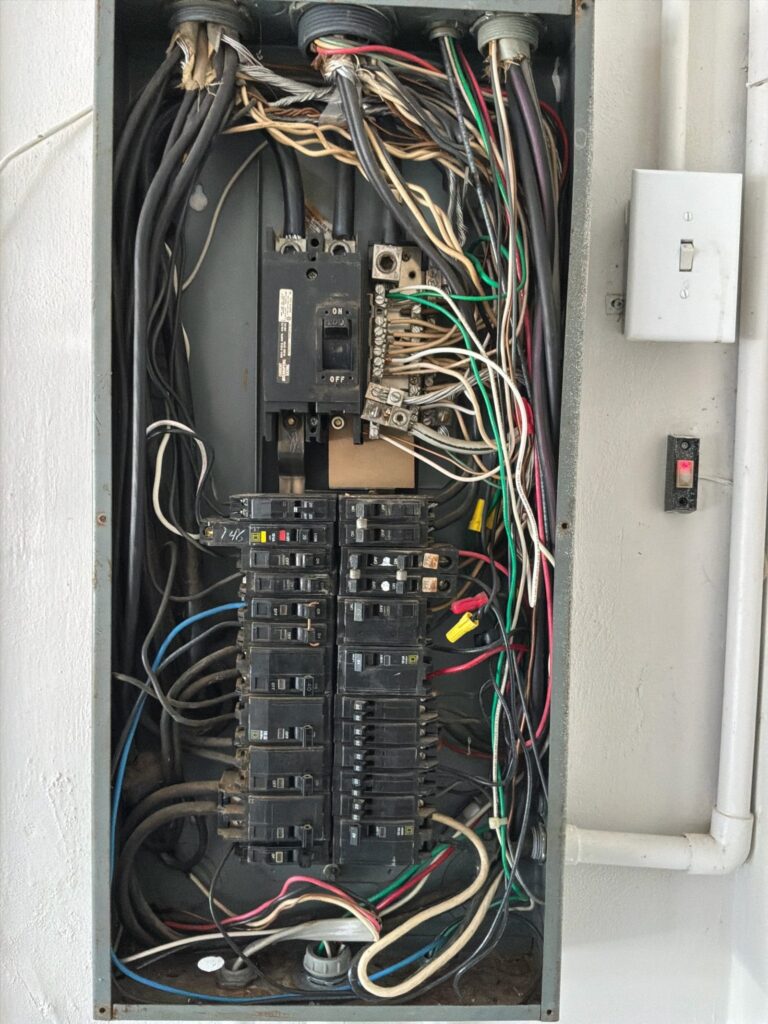
The original call was straightforward: repair a section of conduit and size the AC breaker correctly. Once our licensed electrician on-site completed that work, a walk-through inspection of the 150-amp GE panel and the home’s circuits revealed several areas worth modernizing.
“I tried to replace the outlet in the bathroom myself but couldn’t figure it out — I’m glad someone finally sorted it all out.”
Investigation
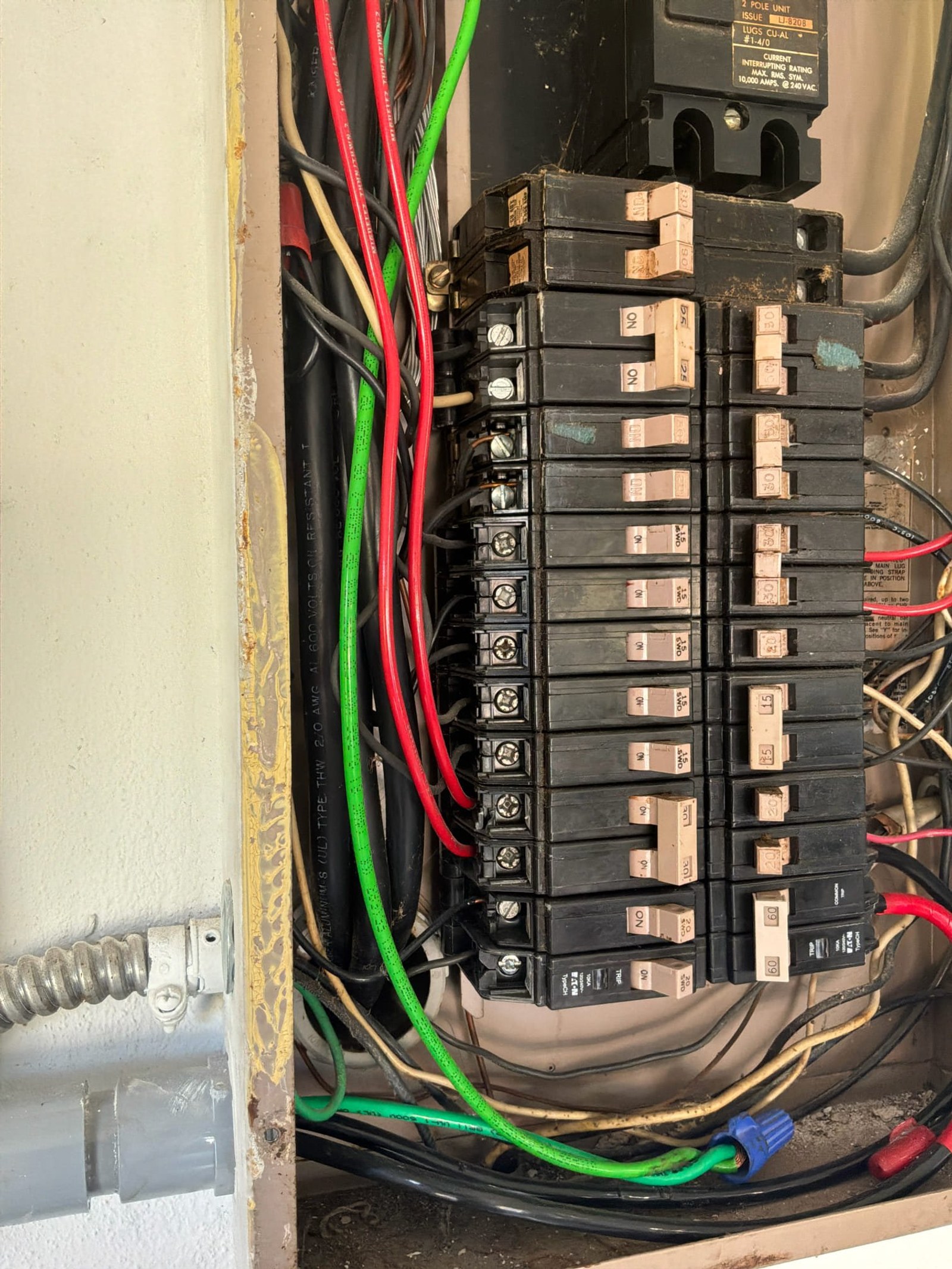
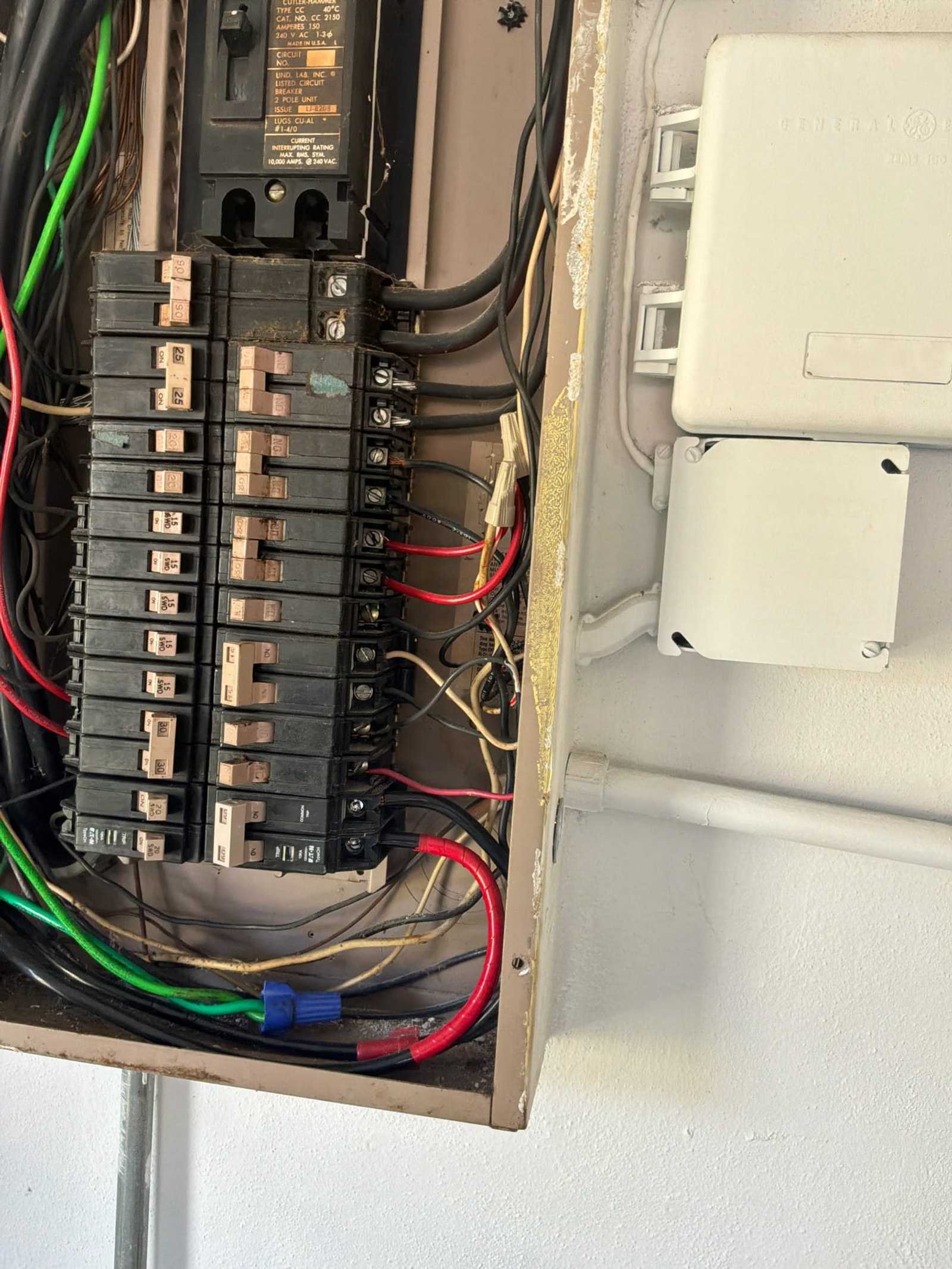
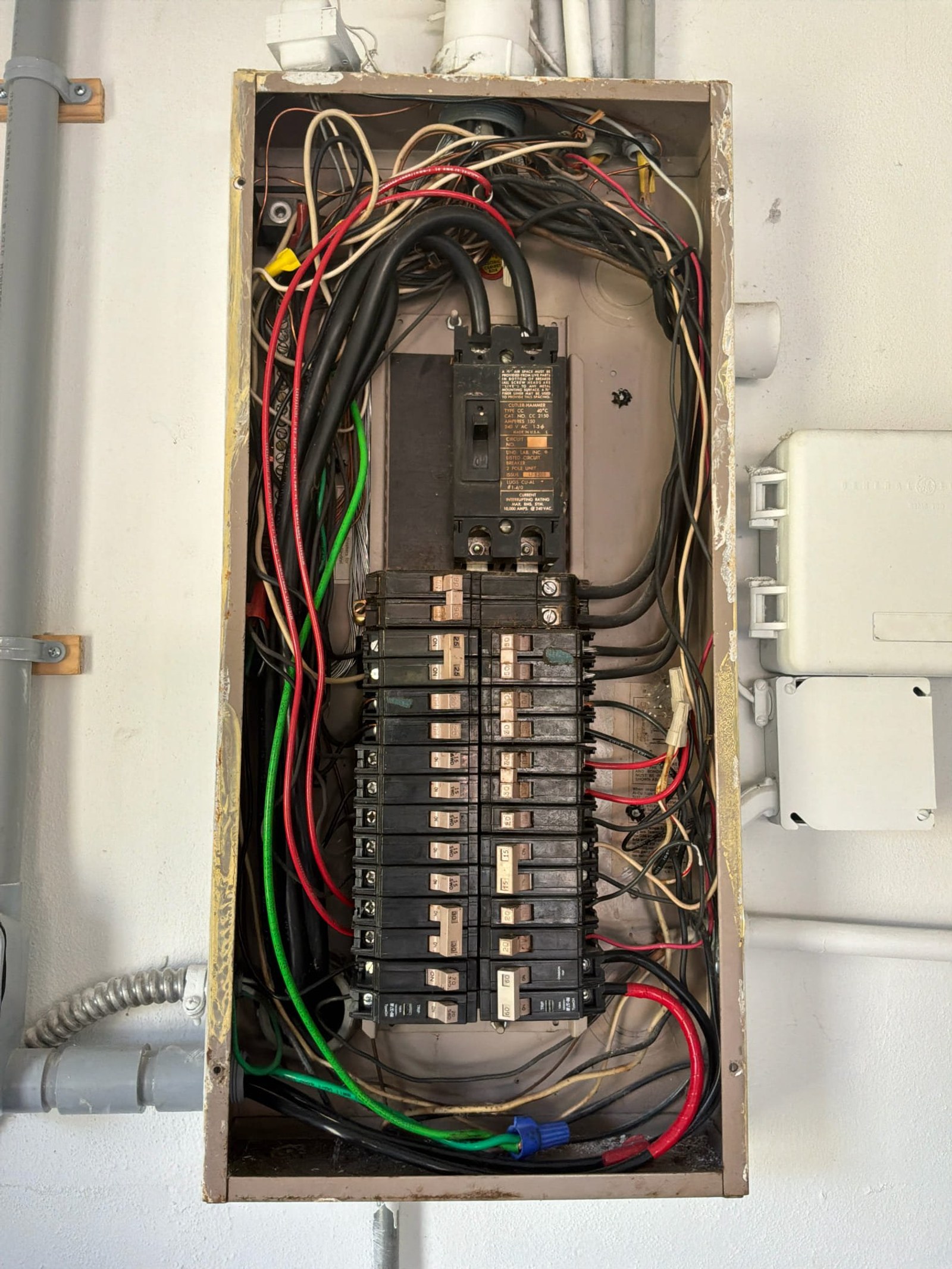
Our technician on-site started at the GE 150-amp panel and worked outward through the home. Here is what the inspection turned up.
Panel and Breaker Findings
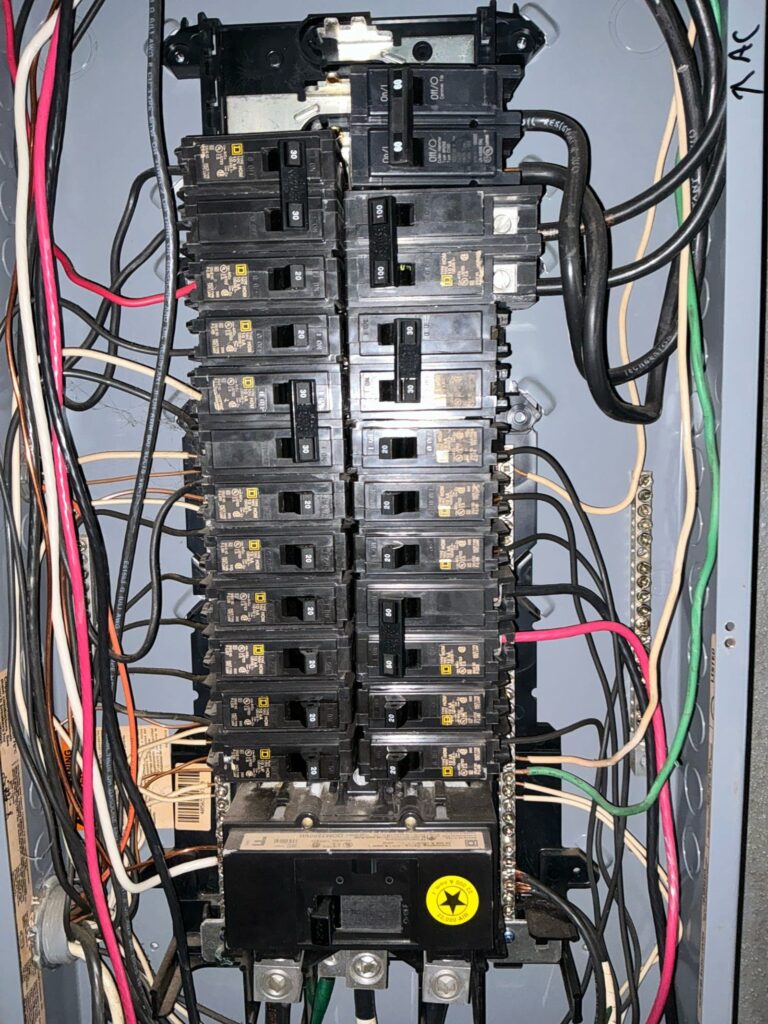
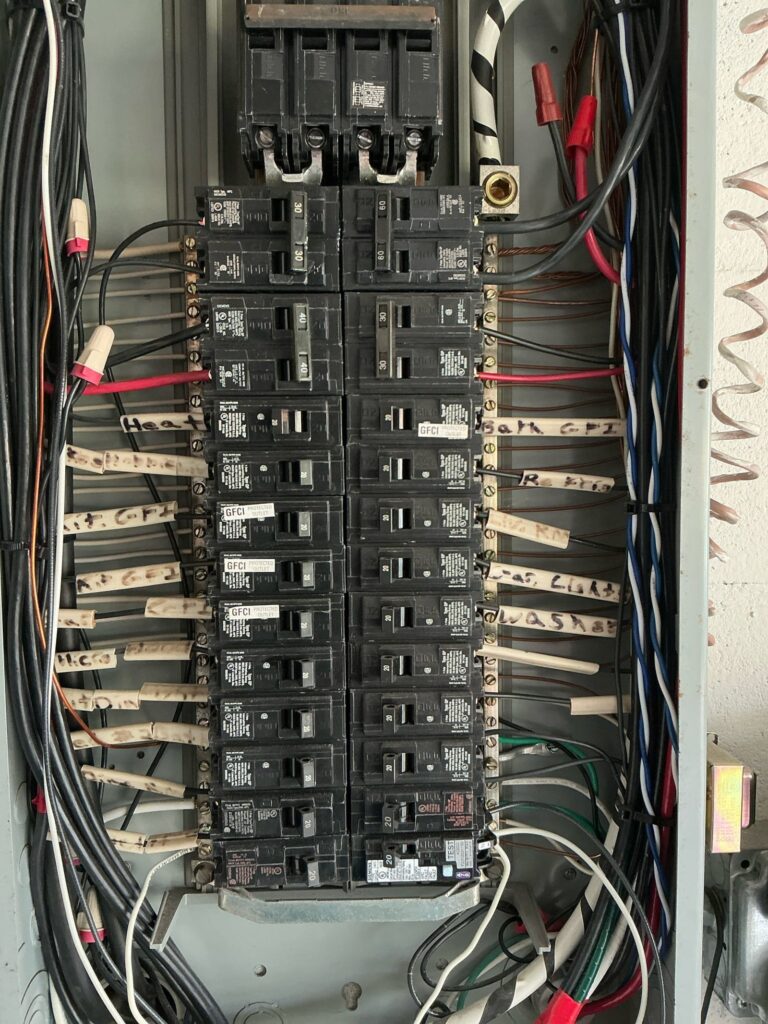
The panel itself was in serviceable condition — neutrals and grounds were separated, no double-tapped breakers, no open knockouts, and the directory was properly labeled. However, AFCI (arc-fault circuit interrupter) breakers were absent from circuits that current code now calls for. Additionally, the AC branch circuit carried a breaker that wasn’t sized to match the equipment load, and a 30-amp two-pole circuit needed a GE THQP230 replacement.
The team also noted the meter can showed signs of wear worth monitoring, and the service showed early-stage corrosion — consistent with coastal Florida homes of this age.
Outlets, Switches, and Wiring
Several outlets and switches throughout the home had been backstabbed — a common wiring shortcut used before roughly 2005. Over time, the spring-clip tension in backstabbed connections eases, contact resistance climbs, and you get the kind of intermittent flicker or warm outlet that homeowners notice but can’t quite explain. Replacing them with properly screw-terminated devices is a durable, lasting fix.
One kitchen outlet lacked GFCI protection, and the master bathroom outlet was in the same situation — both common findings in homes that predate the expanded NEC 210.8 requirements. Our crew also found that a bathroom outlet the homeowner had attempted to replace himself was left incomplete; we installed a new single-gang remodel box, a tamper-resistant 15A receptacle, and a proper cover plate to finish that job cleanly.
Some wires lacked proper connector protection at entry points — an easy correction that keeps conductors from wearing against metal edges over years of thermal cycling.
Smoke and CO Detection
Five areas of the home were missing smoke or carbon monoxide detection coverage required under NFPA 72. This is a frequent finding in older Florida homes where detectors have aged out or were never installed in every required location.
Surge Protection
No whole-home surge protective device was present — a gap that matters in Tarpon Springs, where afternoon lightning storms are a seasonal reality.
Pool Equipment
The inspection confirmed that pool equipment circuits lacked GFCI protection, which current code (NEC 210.8 and NEC 680.22) requires for receptacles and equipment in pool and spa environments.
What We Fixed
Our field team addressed every finding the inspection surfaced.
- Breaker replacements: We installed a Square D HOM115 single-pole 15-amp breaker and a Square D HOM240 two-pole 40-amp breaker where the panel needed updated overcurrent protection. The undersized AC breaker was corrected with a GE THQP230 two-pole 30-amp breaker, properly sized for the equipment load.
- Whole-home surge protection: We installed a PSP Vortex 120 kA whole-home surge protector on the GE panel, in line with NEC 230.67, which now requires surge protection at the service for new and substantially upgraded residential services.
- Smoke and CO detectors: Five 10-year sealed lithium smart smoke/CO combination detectors with interconnect were installed throughout the home, satisfying NFPA 72 placement requirements.
- Bathroom outlet: We installed a new single-gang old-work remodel box and a tamper-resistant 15A receptacle with a metal cover plate — completing the repair the homeowner had started.
- Switch replacement: One backstabbed decorator switch was replaced with a properly wired 15A single-pole decora switch at the existing location.
- Cord cap replacement: A 15-amp NEMA 5-15P cord cap was installed on an existing cord that had a damaged plug end.
All connections were made to screw terminals, torqued to specification per NEC 110.14(D), and documented before the panel cover was replaced.
Why This Tarpon Springs Surge Protection Matters for Homeowners
For a family in Tarpon Springs, the combination of upgrades completed here adds up to something genuinely useful: a home that quietly handles whatever the day — or the storm season — brings.
The PSP Vortex surge protector means the refrigerator, AC, computers, and televisions ride out Florida’s frequent lightning events without interruption. Your family doesn’t have to think about it. When a storm rolls through, the home just keeps running.
The five interconnected smart smoke/CO detectors now give every room in the house a voice. If one unit senses a change, every detector in the network responds — so whether the household is asleep, cooking dinner, or the kids are in the back bedroom, awareness reaches the whole home at once. That kind of coverage used to require a hardwired retrofit; today’s sealed-lithium smart detectors make it straightforward.
Finally, backstabbed connections and undersized breakers are the kind of thing that rarely announces itself — until a circuit stops working reliably at an inconvenient moment. Addressing them now means one less thing to wonder about on a busy weekday morning or heading into the weekend. That’s the real value: a home that works the way it’s supposed to, every day, without surprises.
Thomas Edison Electric holds Florida electrical contractor license EC13015487, and all work was performed to NEC 2023 standards.
Code Compliance Cited in This Job
Every fix above maps to a specific section of NEC 2023. Each card links to NFPA’s public NEC index.
GFCI Protection for Personnel
NEC 210.8 requires GFCI protection for receptacles in kitchens, bathrooms, garages, outdoor areas, and pool/spa equipment circuits. On this job, one kitchen outlet and the master bathroom outlet lacked GFCI protection — consistent with wiring practices that predate the expanded scope of this requirement. The field team corrected the bathroom outlet and documented remaining GFCI opportunities for the homeowner. NFPA reference ›
AFCI Protection
NEC 210.12 requires arc-fault circuit interrupter protection on branch circuits supplying outlets in bedrooms, kitchens, living areas, and other dwelling spaces. The inspection confirmed AFCI breakers were absent from applicable circuits in this home. The homeowner was advised of this opportunity to bring those circuits up to current standard. NFPA reference ›
Surge Protective Device at Service
NEC 230.67 requires a listed surge protective device at the service of new and upgraded residential installations. This home had no whole-home SPD prior to our visit. We installed a PSP Vortex 120 kA device directly on the 150-amp GE panel, satisfying this requirement and extending protection to all branch circuits in the home. NFPA reference ›
Type 2 SPD Installation Requirements
NEC 285.25 governs the installation of Type 2 surge protective devices at the load side of a service entrance. The PSP Vortex 120 kA unit installed on this job is a listed Type 2 SPD, connected in accordance with the manufacturer’s instructions and this code section. NFPA reference ›
Electrical Connections and Torque Verification
NEC 110.14(B) and (D) require that conductor terminations be made properly and torqued to the manufacturer’s listed specification. On this job, all replaced breakers and the new receptacle were terminated under screw-torque protocol and documented — replacing the spring-clip backstab connections found on several devices. NFPA reference ›
Tamper-Resistant Receptacles
NEC 406.12 requires tamper-resistant receptacles in all dwelling-unit areas. The new 15A single receptacle installed in the bathroom on this job meets tamper-resistant requirements, consistent with current code for replacement receptacles in occupied homes. NFPA reference ›
Common Questions
Questions homeowners ask after seeing this kind of work.
What are backstabbed outlets and why are they worth replacing?
Backstabbed outlets use a spring-clip hole on the back of the device instead of a screw terminal to secure the wire. This method was common in homes wired before roughly 2005. Over time, the spring tension relaxes, contact resistance increases, and circuits can become unreliable — showing up as flickering lights or outlets that feel warm to the touch. Replacing them with screw-terminated connections is a straightforward fix that restores solid, lasting contact. If you’ve noticed intermittent issues with outlets or switches in an older Florida home, it’s worth having a licensed electrician take a look before the next storm season.
Do I really need a whole-home surge protector if I already use power strips?
Power strip surge protectors guard only the devices plugged into them, and most are rated for just a few hundred joules — far less than a direct or nearby lightning strike can produce. A whole-home device like the PSP Vortex 120 kA installs at the panel and intercepts surge energy before it reaches any circuit in the house, protecting appliances, HVAC equipment, and electronics that aren’t even plugged into a strip. In a coastal Florida zip code like Tarpon Springs, where afternoon thunderstorms are routine, panel-level protection gives the whole household confidence every storm season. Schedule online to find out whether your home’s panel is compatible.
How many smoke and CO detectors does a home in Florida typically need?
Under NFPA 72, detectors are required inside every bedroom, outside each sleeping area, and on every level of the home including the basement if present. Carbon monoxide detection is also required on each level. Many older Florida homes were built before today’s placement requirements and simply haven’t had detectors added or replaced as the standards evolved. On this Tarpon Springs job, five locations were identified as needing coverage. If your home hasn’t had a detector audit recently, our team can book a 30-minute visual inspection so you know exactly where you stand.
How often should I have my home’s electrical system inspected?
A yearly inspection is the recommended baseline for most Florida homeowners. Homes built before 1990 — and homes that have gone through a significant storm season — often benefit from inspections more frequently, since older wiring and storm-related wear can develop conditions that aren’t obvious until a circuit stops working. An annual check-in gives you a current picture of the panel, grounding system, and life-safety devices so nothing catches you off guard. Schedule online to get your annual inspection on the calendar.
Why does my AC breaker size matter, and what happens if it’s wrong?
An AC breaker that’s too large won’t trip when the equipment draws more current than it should, which puts unnecessary thermal stress on the wiring and compressor over time. A breaker that’s too small trips nuisance-style on hot days when the unit runs hard. Either way, the equipment doesn’t perform the way it should and the household ends up chasing a problem that starts at the panel. Matching the breaker to the equipment’s minimum circuit ampacity — as specified on the unit’s nameplate — keeps the system running reliably and in line with current code. If your AC circuit has been tripping or you aren’t sure it’s properly sized, our team can check it for you.
Want to see more real jobs like this one? Browse our completed case studies or explore our services.