This Tarpon Springs breaker fix case study walks through the real diagnosis, the fix, and the code details from a recent service call. A homeowner in Tarpon Springs, FL called about a broken conduit and an AC breaker that needed resizing. What started as a focused repair visit turned into a full-picture inspection — and what our field team found gave the household a meaningful upgrade in comfort, reliability, and peace of mind.
The Problem
The homeowner noticed the conduit protecting some wiring had broken, and the breaker feeding the AC unit didn’t feel right. Beyond that, they’d already tried replacing a bathroom outlet on their own and run into trouble. They wanted a professional set of eyes on the whole system.
“The conduit was cracked and I couldn’t figure out the bathroom outlet — I just wanted everything working right.”
Investigation
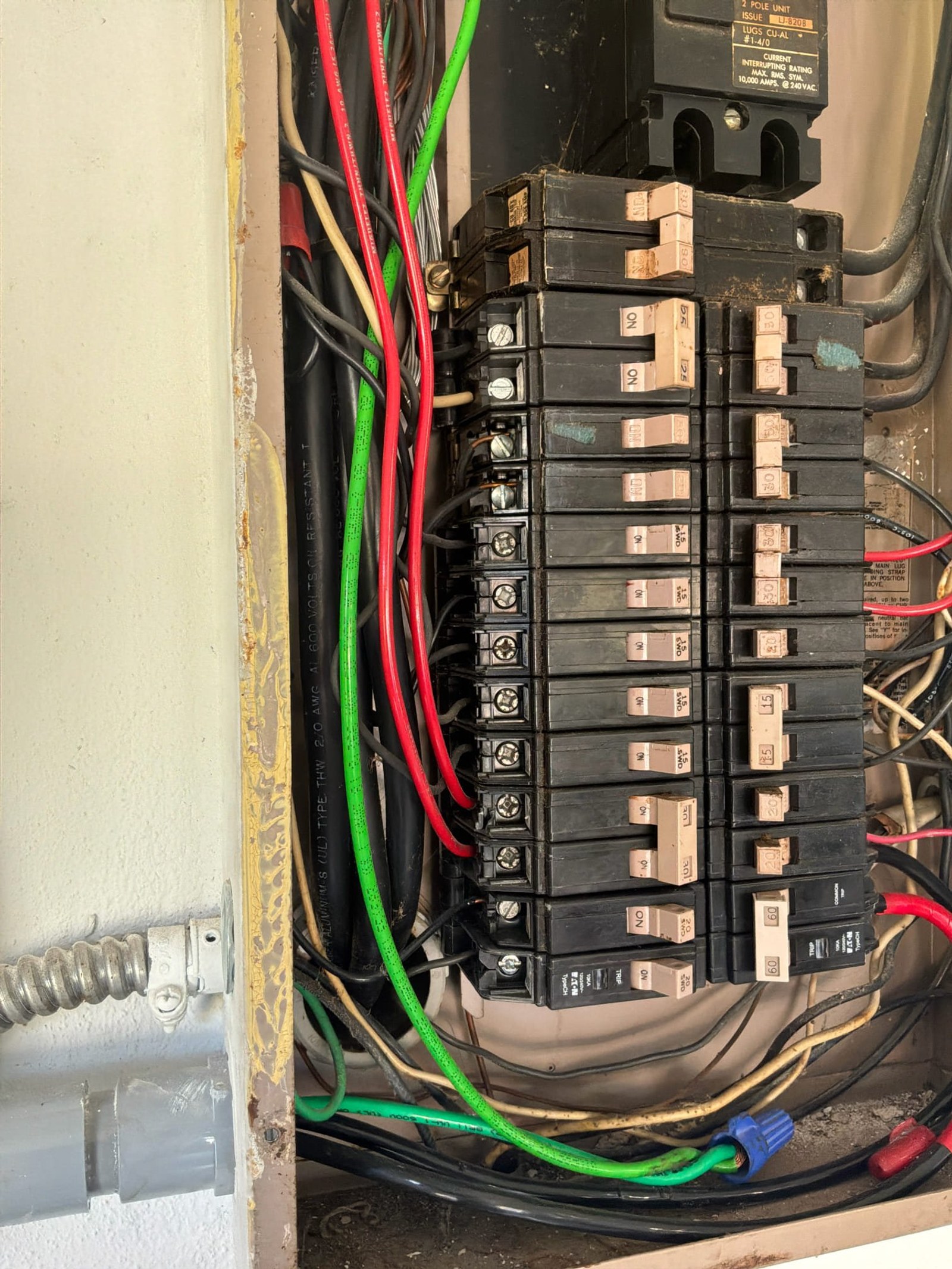
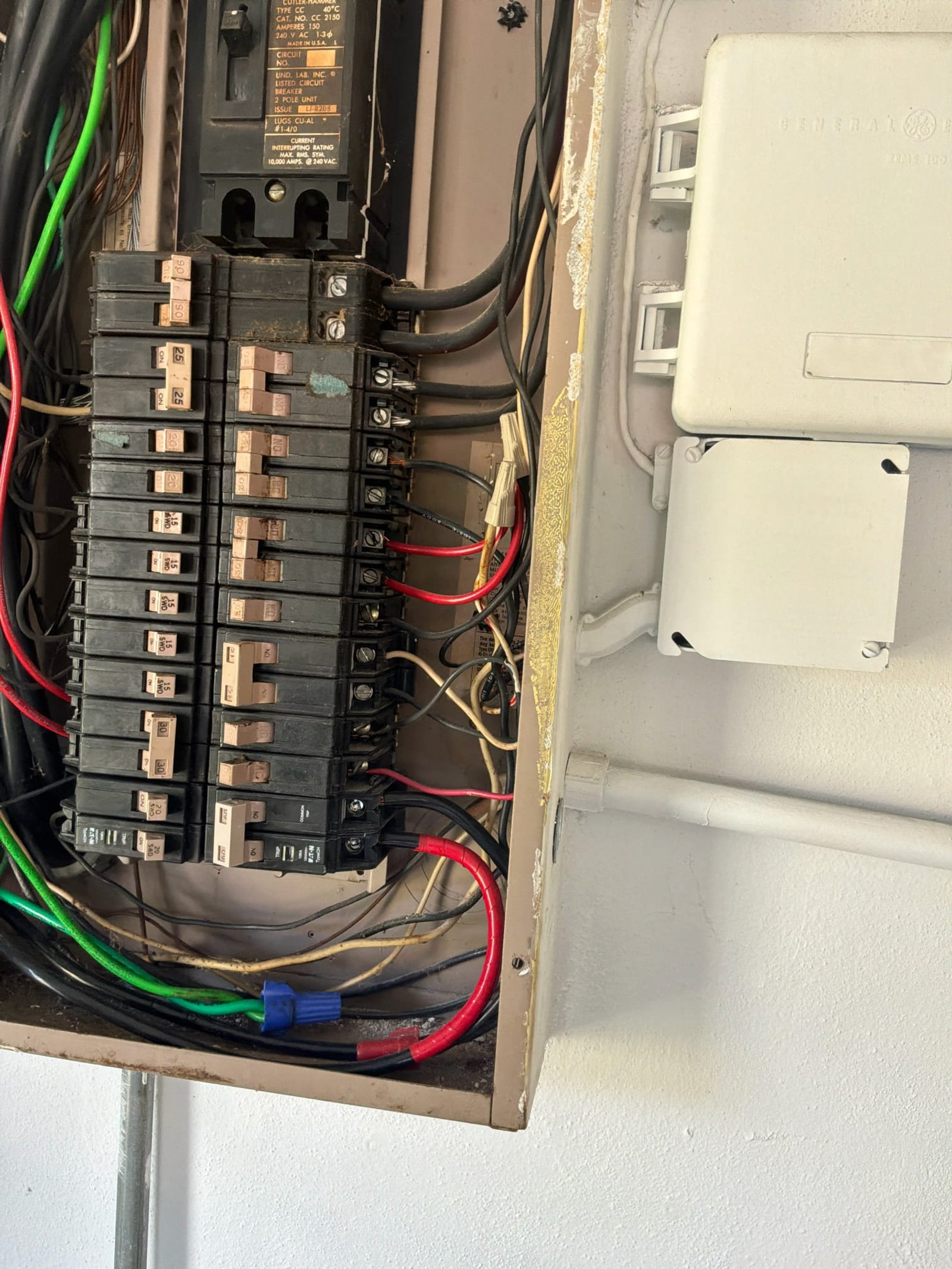
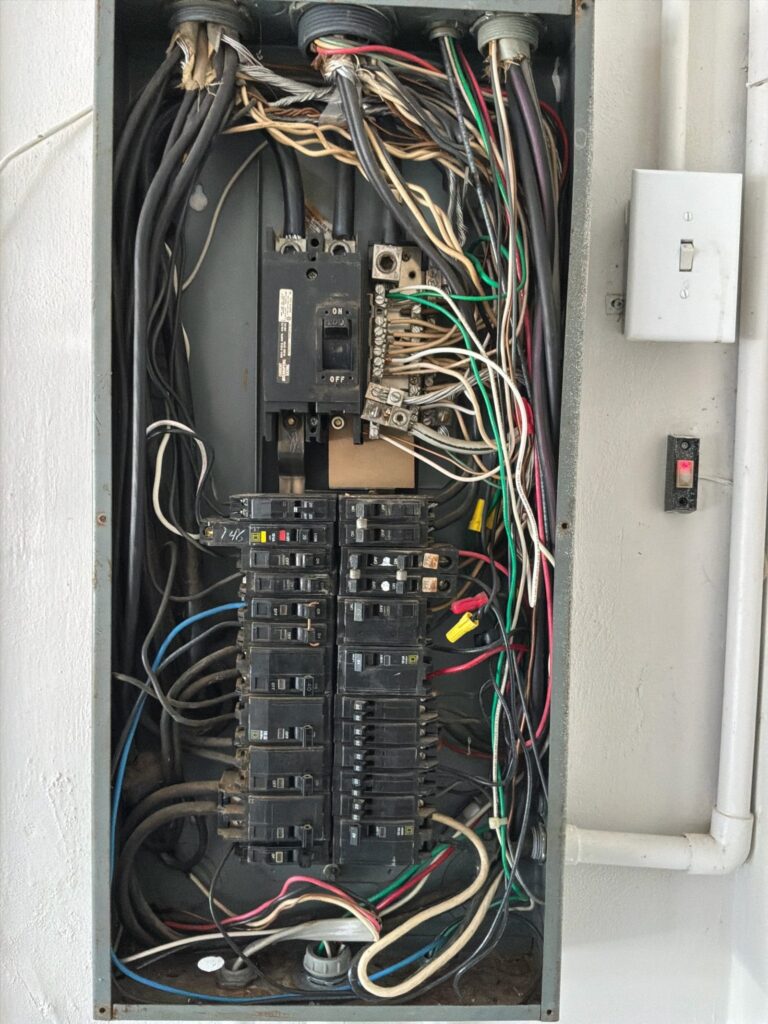
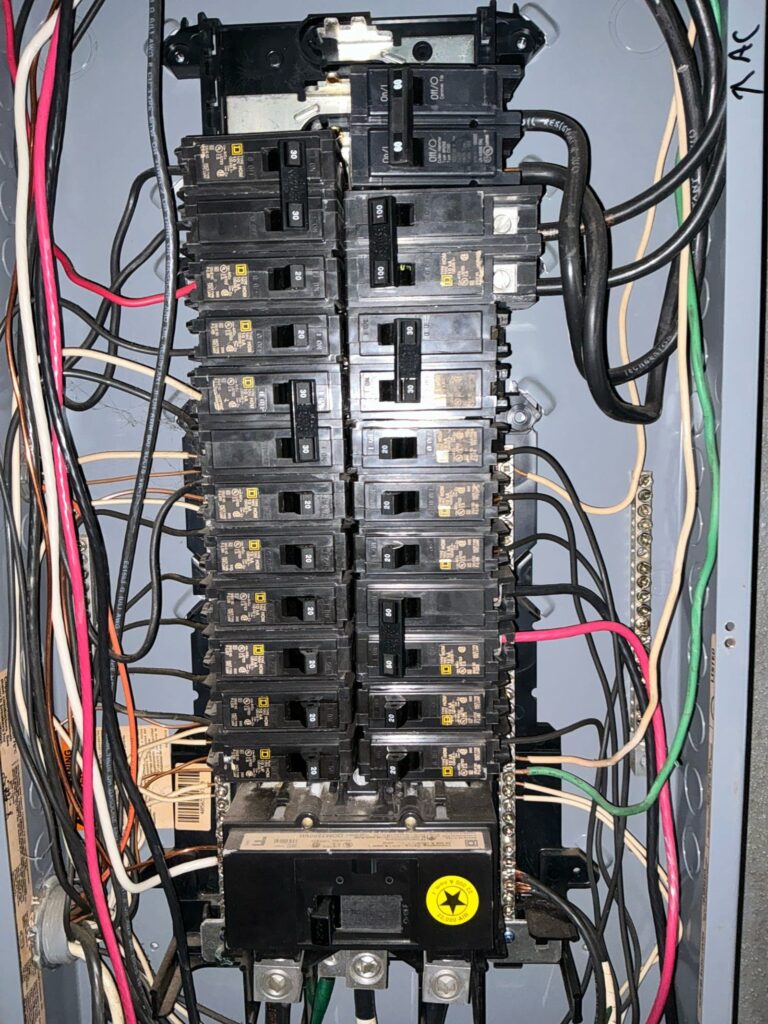
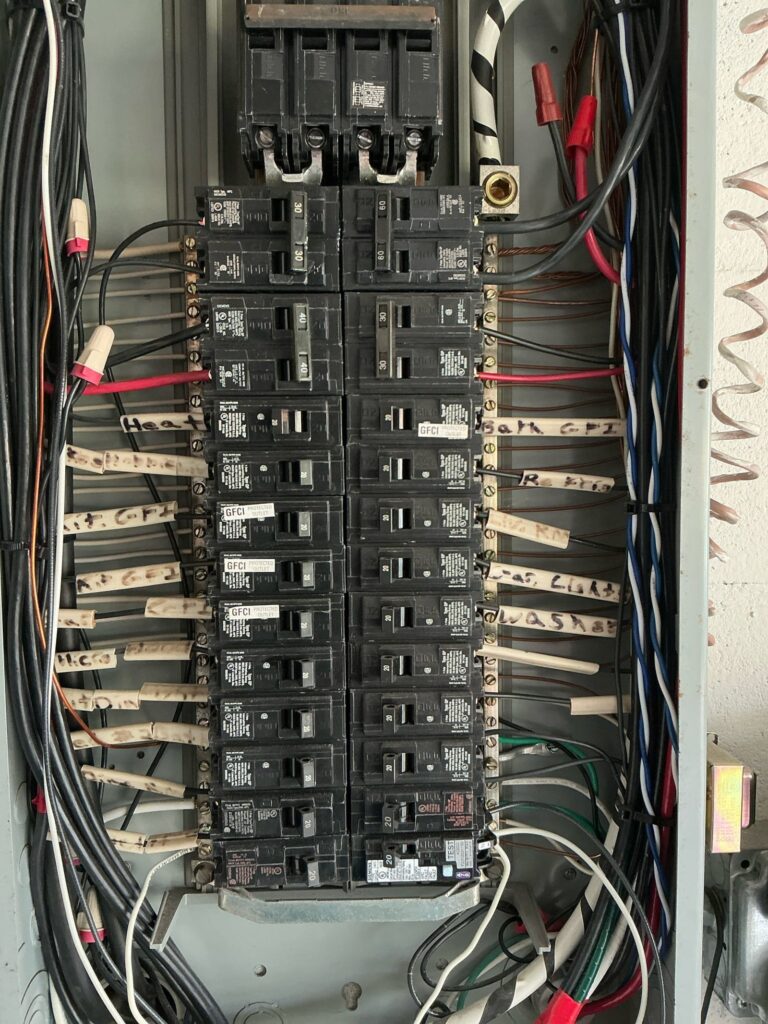
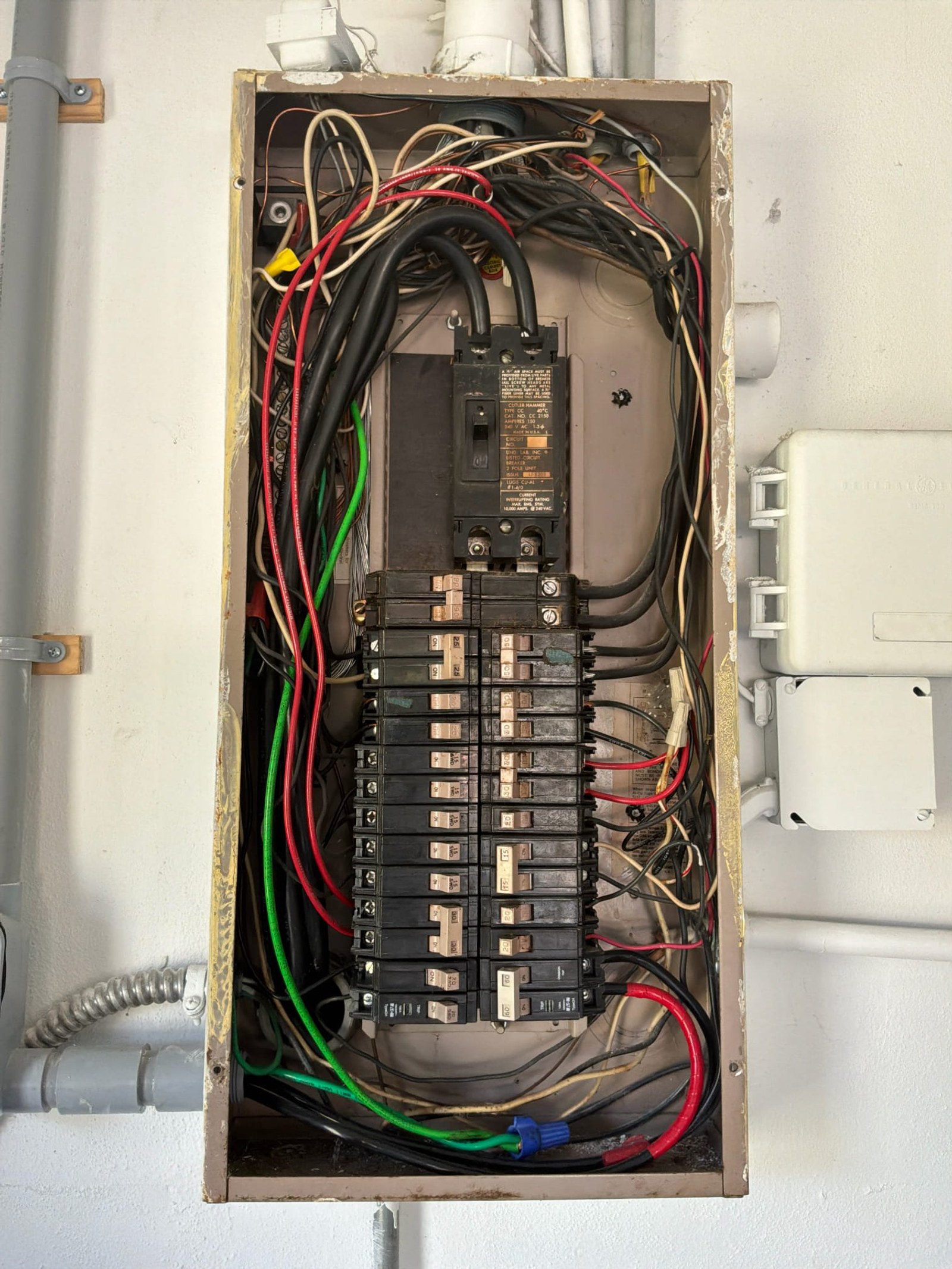
Our technician on-site started at the 150-amp GE panel and worked outward through every area the homeowner mentioned. Here’s a summary of what the inspection turned up.
Panel and Breaker Findings
The GE panel itself was in reasonable shape — neutrals and grounds were separated, no double-tapped breakers, and the directory was legible. However, the AC circuit was fed by a breaker that didn’t match the equipment’s nameplate rating. Additionally, AFCI breakers were absent on several branch circuits where current code now calls for them. A missing 2-inch bushing on a conduit knockout left a wire entry point without proper edge protection, and the polar tap (neutral/ground bar bonding screw) wasn’t seated correctly.
Our crew also found that the home lacked any whole-home surge protection — not unusual for a home of this era, but worth addressing given the frequency of afternoon thunderstorms in Pinellas County.
Outlets, Switches, and Wiring
Several outlets and switches throughout the home had been backstabbed — meaning the wires were pressed into spring-loaded rear slots rather than wrapped around the screw terminals. This was a common wiring shortcut used widely before the mid-2000s. Over time, the spring tension in those connections relaxes, contact resistance climbs, and you get the kind of intermittent behavior that frustrates homeowners. One kitchen outlet also lacked GFCI protection, and the master bathroom outlet the homeowner had attempted to swap out needed a proper cut-in box and a complete reinstall.
The pool equipment circuits were missing GFCI protection — standard for the era when this home was wired, but something today’s code specifically addresses. A few wires were also found without proper strain-relief connectors at their entry points.
Smoke and CO Detection
Five locations throughout the home were either missing detectors entirely or had units that were past their recommended service life. NFPA 72 requires smoke detectors in each bedroom, outside each sleeping area, and on every level of the home — the existing setup didn’t fully meet that layout.
What We Fixed
With a clear picture of the system, our crew moved through the repairs and upgrades methodically.
Breaker work: The field team installed a Square D Homeline HOM240 40-amp two-pole breaker to correctly size the AC circuit, and a Square D Homeline HOM115 15-amp single-pole breaker to address a branch circuit that needed attention. For the pool disconnect, a GE THQP230 30-amp two-pole breaker was installed to properly protect that equipment. The missing 2-inch bushing was added to protect wires at the panel knockout, and the polar tap was corrected.
Surge protection: Our technician installed a PSP Vortex 120 kA whole-home surge protector directly onto the GE panel. This Type 2 device sits between the utility feed and every circuit in the house. Your refrigerator, AC, computers, and televisions now ride through every storm without skipping a beat.
Outlet and switch repairs: The bathroom outlet was properly set in a new single-gang cut-in box with a tamper-resistant 15-amp receptacle and a metal wall plate — done right this time. A backstabbed switch was replaced with a new 15-amp decorator-style rocker switch, moving from the spring-slot connection to a proper screw-terminal wiring method. A new 110V cord cap was also installed on an existing appliance cord.
Smoke and CO detectors: Five 10-year sealed lithium smart smoke/CO combination detectors with interconnect were installed throughout the home. When one device senses a change, every unit in the network responds — so the whole household knows at once, no matter where anyone is.
Pool circuit GFCI: The pool equipment circuits were brought up to current GFCI requirements, consistent with NEC 210.8 and NEC 680.22 standards for equipment near water.
Why This Tarpon Springs Breaker Fix Matters for Homeowners
Homes in Tarpon Springs that were built or last wired before the early 2000s commonly show exactly the mix of conditions found here — backstabbed connections, absent AFCI coverage, no whole-home surge device. None of it was wrong when it was installed. Today’s code simply reflects better tools and a deeper understanding of how homes age.
For this family, the upgrades translate directly to daily ease. The AC runs on a properly rated breaker, so the system cycles the way it should — especially important heading into Florida’s long cooling season. The interconnected smoke/CO detectors mean the whole house responds together, whether the family is asleep, at work, or just spread across different rooms during a weekend morning.
Furthermore, the PSP Vortex surge protector quietly handles every voltage spike that rides in from the grid — the kind that follows a nearby lightning strike or a utility switching event. With that device in place, the home keeps running the way the household expects it to, through every storm and season. Above all, the work was done to current NEC standards by a licensed Florida electrical contractor (EC13015487) — so there’s nothing left to wonder about.
Code Compliance Cited in This Job
Every fix above maps to a specific section of NEC 2023. Each card links to NFPA’s public NEC index.
GFCI Protection for Personnel
NEC 210.8 requires GFCI protection at receptacles in kitchens, bathrooms, and areas near pool equipment. On this job, a kitchen outlet and the master bathroom outlet both lacked GFCI protection, and the pool equipment circuits were unprotected. Our crew brought each of these locations into compliance with current requirements. NFPA reference ›
AFCI Protection
NEC 210.12 requires arc-fault circuit-interrupter protection on branch circuits serving dwelling-unit living spaces, bedrooms, and kitchens. The panel inspection showed several branch circuits without AFCI breakers — consistent with a home wired before this requirement was widely adopted. The breaker replacements performed on this visit addressed the circuits that were in scope. NFPA reference ›
Surge Protective Device at Service
NEC 230.67 requires a listed surge protective device at the service of new dwelling units. This home had no whole-home SPD installed. Our team added a PSP Vortex 120 kA Type 2 device directly at the 150-amp GE panel to meet this requirement and protect the home’s circuits and connected equipment. NFPA reference ›
Type 2 SPD Installation Requirements
NEC 285.25 governs the installation of Type 2 SPDs on the load side of a service disconnect. The PSP Vortex unit was installed in compliance with this section, connected directly to the plug-on neutral Square D-compatible positions within the GE panel’s load-side bus. NFPA reference ›
Tamper-Resistant Receptacles
NEC 406.12 requires tamper-resistant receptacles throughout dwelling units. The replacement receptacle installed in the bathroom is a tamper-resistant 15-amp unit, bringing that location into current compliance when the outlet box and device were replaced. NFPA reference ›
Receptacles and GFCI Protection Near Pools
NEC 680.22 requires GFCI protection for receptacles and equipment within specified distances of pool water. This home’s pool equipment circuits were unprotected at the time of inspection. The GE THQP230 breaker replacement and GFCI measures applied to these circuits bring the pool area up to current standards. NFPA reference ›
Common Questions
Questions homeowners ask after seeing this kind of work.
What are backstabbed outlets and why is it worth replacing them?
Backstabbed outlets use spring-loaded slots on the back of the device instead of screw terminals on the sides. This wiring method was common in homes built before the mid-2000s and worked fine initially. Over time, though, the spring tension relaxes, the connection loosens, and you may notice flickering lights or outlets that stop working reliably. Switching to screw-terminal connections is a straightforward fix that restores dependable performance. If your home is from that era and you’ve noticed intermittent outlet behavior, our team can book a quick visual inspection to check.
How often should I have my home’s electrical system inspected?
A yearly inspection is a good baseline for most households. Homes built before 1990 and homes that have been through recent storms may benefit from more frequent check-ins, since older wiring and weather events can accelerate wear on connections, breakers, and grounding systems. An annual inspection is also a smart touchpoint any time you add a major appliance, finish a room, or prepare to sell. Schedule your inspection online and our field team will walk through the whole system with you.
Does a whole-home surge protector really protect against lightning strikes?
A whole-home Type 2 surge protector like the PSP Vortex handles the voltage spikes that travel through the utility lines — the kind that follow nearby lightning strikes, utility switching events, and even large appliances cycling on and off inside the house. It works alongside individual point-of-use strips for layered coverage. The result is that your AC, refrigerator, televisions, and computers all stay stable through the kinds of storms common to Pinellas County. If your panel doesn’t have one yet, our team can take a look and get it installed in a single visit.
Why does my pool equipment need GFCI protection?
Pool equipment operates near water, and NEC 680.22 specifically requires GFCI protection for receptacles and circuits in that environment to reduce shock risk. Homes wired before this requirement took effect were built to the code of their time — the update simply reflects what experience has shown about equipment near water over decades of use. Adding GFCI protection to pool circuits is a routine upgrade that keeps the pool area working the way you’d expect it to. Book a pool-circuit check if your home predates this requirement.
How many smoke and CO detectors does a Florida home need?
Florida follows NFPA 72, which requires a smoke detector inside each bedroom, outside each sleeping area, and on every level of the home including the basement if there is one. CO detectors are required wherever a fuel-burning appliance or attached garage is present. Interconnected units — where one alarm triggers all of them — give every room in the house the same awareness at the same time, which is especially helpful in larger homes. If your home is missing coverage in any of those areas, our crew can schedule a detector audit and installation to get everything in order.
Want to see more real jobs like this one? Browse our completed case studies or explore our services.